


You crushed it on Kickstarter. The money came in, backers are hyped, and then it hits you: what happens after? A Kickstarter campaign isn’t a business. It’s a launch. The founders who build something lasting take that momentum and turn it into a real, scalable business on Amazon.
Mark Pecota, LaunchBoom’s CEO, says it’s the single most common question his team hears once a campaign wraps: okay, now what?
For most founders, the answer is Amazon, since a successful Kickstarter has already done the hardest part. It proved people want the product and handed the founder a first list of buyers.
To map out exactly what comes next, Mark brought in Jeff and Jenna Lieber of TurnKey Product Management, an agency that manages Amazon accounts end to end, from listings and advertising to inventory and customer service, bringing dedicated expertise to every part of the account.
TurnKey specializes in taking products that already have some traction, often from a Kickstarter campaign, and building them into real Amazon businesses. Their client list includes a health and wellness brand they grew from just over $11,000 a month to $1.8 million in 90 days, and a pet brand they took from zero Amazon presence to more than $150,000 a month within six months.
On the advertising side, they’ve scaled a client’s PPC sales from $150,000 to over $900,000 in three months while keeping ad spend under 15 percent of revenue, and another client went from a $350,000-a-month plateau to $1 million a month in four months after TurnKey took over account management.
Here’s the five-step framework they walked through, along with the mistakes they see first-time sellers make.
Key Takeaways
- According to TurnKey’s Jenna Lieber, nine out of ten shoppers check Amazon before buying anywhere else, which makes it the default second stop after a Kickstarter campaign, not an optional one.
- A single hit product won’t scale on Amazon anymore. Brands that sell multiple products to the same customer see a meaningfully higher lifetime value per buyer.
- Amazon Brand Registry, which requires a registered trademark, is close to a prerequisite for a strong listing. Get the trademark process started before you launch.
- Getting to your first five reviews unlocks everything else, since strategies like PPC and Amazon Vine depend on having some social proof in place first.
- Outside traffic and Amazon’s own PPC and DSP ads work together, not separately. The traffic you already own (email, social, influencers) is often the fastest place to start.
Step 1: Why Amazon Is Worth It After Your Kickstarter
Before getting into tactics, it helps to understand why Amazon specifically, rather than a founder’s own website or another retailer. Jenna Lieber points to three shifts in buyer behavior:
First, Amazon has become the default research stop. Nine out of ten customers check Amazon before a purchase, often before they’d think to check a Target or Walmart.
Second, Amazon Prime’s reach is enormous: about 200 million people in the US alone use Prime, according to CIRP estimates.
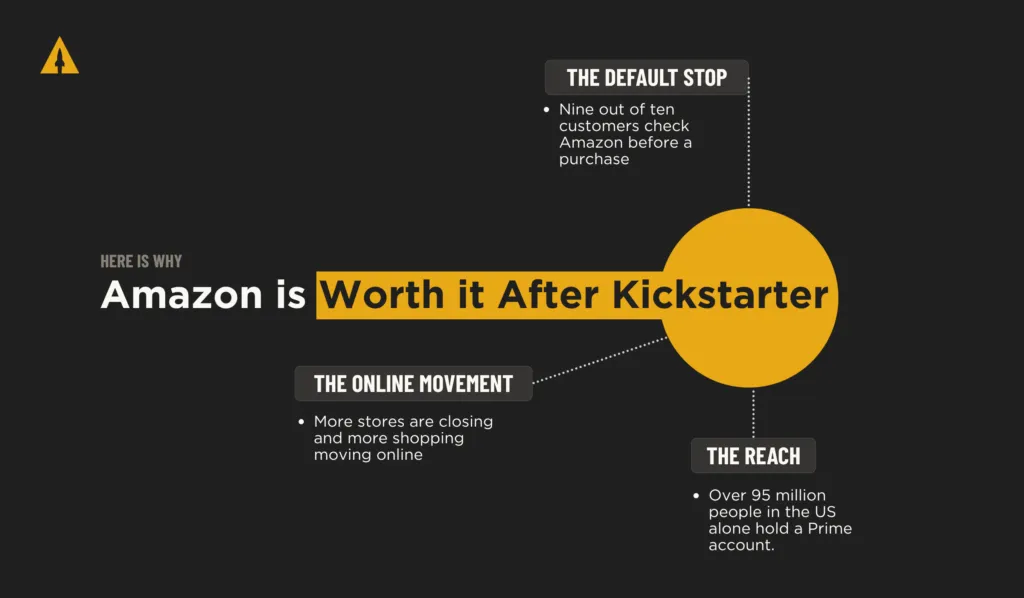
Third, retail itself is shifting, with more stores closing and more shopping moving online. Together, those three trends mean Amazon isn’t optional groundwork anymore. It’s where the buyers already are.
The results back that up. One TurnKey client in the pet space wasn’t selling on Amazon at all. Within six months of launching there, they were doing more than $150,000 a month and still growing. Another client, in the much more competitive health and wellness space, launched with a strong listing that converted at 35 percent and grew from just over $11,000 a month to $1.8 million within 90 days.
Step 2: Build a Brand, Not a Product
Listing one product on Amazon with no branding around it doesn’t work the way it used to, and relying on a single product won’t win either. The brands that scale sell multiple products that serve the same customer, the same way a founder selling a fish tank eventually adds the food and the fish that go with it.
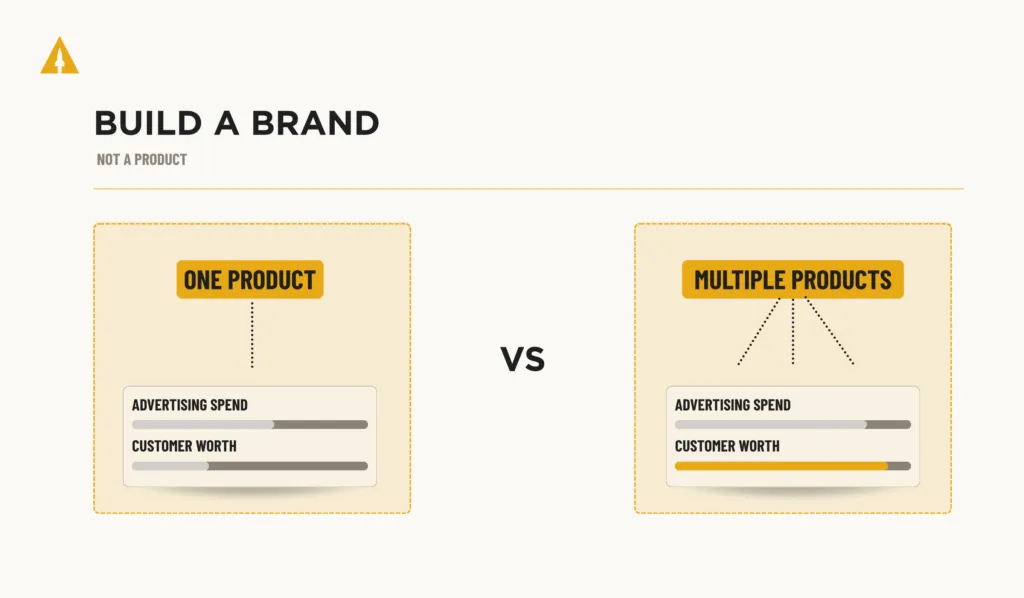
That range matters for two reasons. It creates upsell opportunities, and it creates repeat purchases, which is especially valuable with Amazon’s Subscribe & Save program. Jenna lays out the math simply:
One product company for twenty dollars versus a ten-product company with an average lifetime value of a hundred dollars gives that latter a huge advantage to scale.
A single-product brand can only spend so much to acquire a new customer before the math stops working. A brand with ten complementary products can afford to spend far more, because each customer is worth more over time.
One TurnKey client started with five products and has since expanded into a full lineup, from teas to collagen supplements, precisely because that range let them cross-sell instead of relying on one bestseller to carry the whole brand.
Step 3: Boost Your Conversion Rate
Traffic without conversion is wasted spend, so this is the step Jenna calls the foundation everything else sits on:
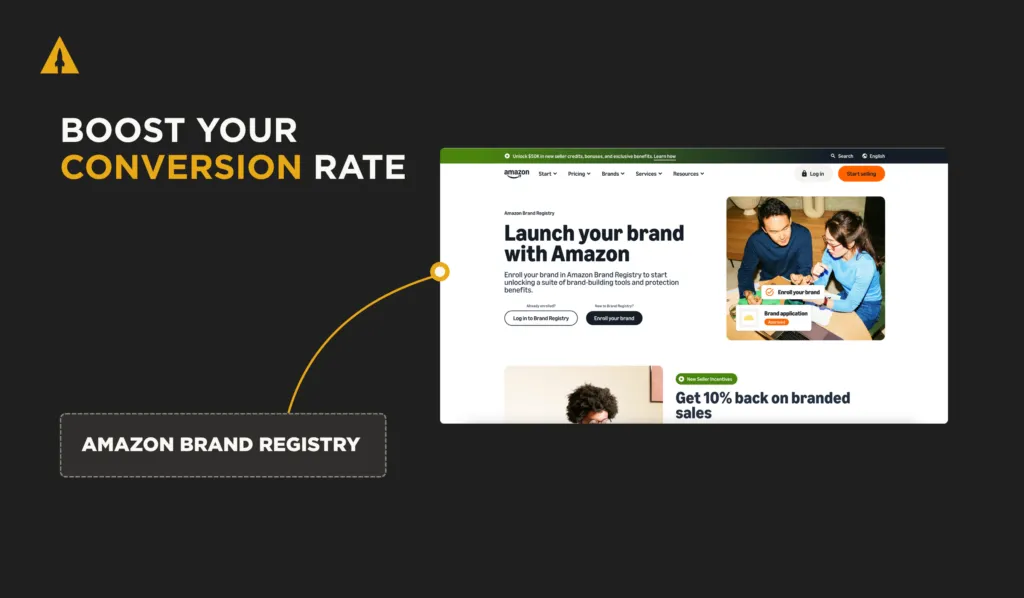
The first piece is Amazon Brand Registry, which requires a registered trademark. If you don’t have one yet, get that process started before you launch on Amazon, since it’s difficult to add products to Brand Registry after the fact. If a full trademark isn’t in place yet, Amazon’s IP Accelerator connects sellers with lawyers who can start the process, and Amazon grants Brand Registry access right away once you’re working with one of them rather than making you wait.
If you’re navigating trademark and IP questions as part of scaling past Kickstarter, The Expert’s Guide To Protecting Your Board Game’s IP is a useful companion read, since a lot of the same protections apply whether you’re heading to Amazon or just protecting your original campaign.
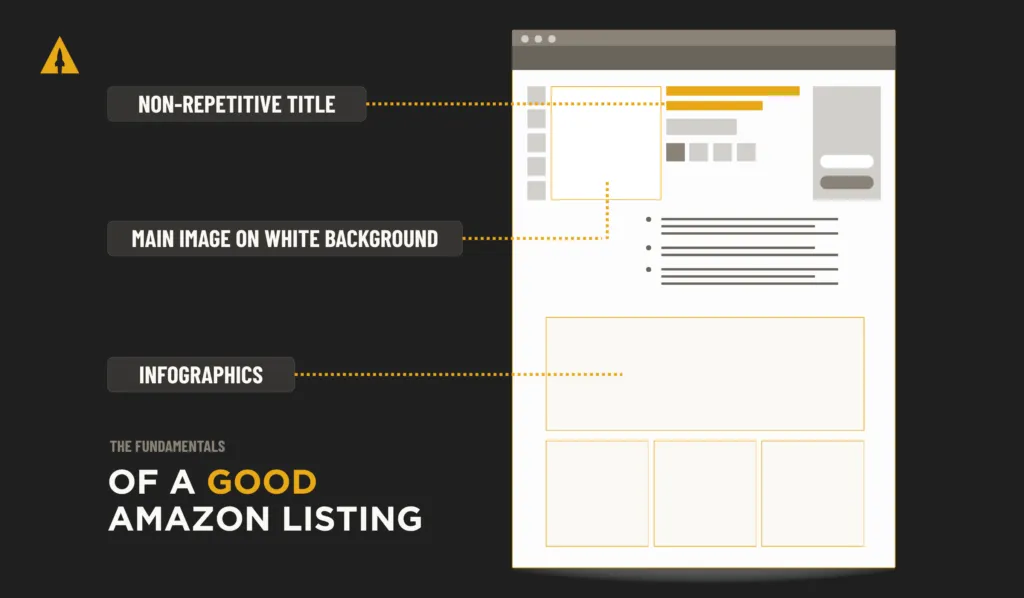
From there, conversion comes down to fundamentals: a strong, non-repetitive title, a compliant main image on a white background, and infographics that go beyond the bullet points most shoppers skip past. Reviews matter just as much. Amazon is a social proof platform, and a listing with no reviews struggles regardless of how good the product is.
We do love Amazon Vine, but what we have seen is some of these Vine reviewers think it is their sole duty to share every little bit of feedback about a product. So you want to make sure you are 100 percent confident in that product before getting it up on Amazon Vine.
The realistic goal isn’t a thousand reviews on day one. It’s five. Getting to your first five reviews is what makes strategies like PPC advertising actually work, since paid traffic converts far better once a listing has some social proof behind it. From five, the next milestone is 100, and reviews tend to accelerate naturally once you cross that mark.
Step 4: Win the Traffic Game With the Bullseye System
Jeff frames Amazon’s real secret in two parts: send outside traffic to Amazon, and run Amazon PPC and DSP ads, until Amazon’s own algorithm starts rewarding the listing with free organic exposure. Ranking on page one matters enormously. A listing buried on page two or three won’t see meaningful sales no matter how good the product is.
To find outside traffic sources worth testing, Jeff recommends a bullseye exercise. Start broad: write down every traffic source available, from an email list to a social following to influencer relationships to guest blog opportunities. Narrow that list to five or six of the strongest candidates, run each for one to three months, then double down on whichever ones perform best. If a founder built an email list through a Kickstarter reservation funnel, that list is often one of the easiest wins on the entire board, since it’s already owned and already warm.
If that reservation-funnel email list sounds unfamiliar, The 7-Step LaunchBoom Framework: How to Get Funded on Day One of Your Kickstarter Campaign covers exactly how that list gets built during pre-launch.
Paid traffic is where most of the real leverage sits, though. A quick test makes the point: search “scarf” on Amazon, and six of the first eight results are paid ads.
That doesn’t mean that they’re actually the best products for you. As much as we’d all like to think Amazon only puts the best products in front of shoppers, they also are paid to play, and they’ll put whoever’s willing to pay at the top of the search results.
That’s exactly why Amazon ads tend to outperform something like Facebook ads for this kind of product. A shopper searching for a “purple cashmere scarf” is actively trying to buy one in the next minute, rather than being interrupted mid-scroll. One TurnKey client scaled from $150,000 to over $900,000 in monthly PPC sales within three months while keeping ad spend under 15 percent of total sales. On the DSP side, a lesser-used ad platform that only about two in ten sellers run, one client saw close to an 8x return on ad spend, with a high-water mark of 27x on a particularly strong campaign.
Step 5: Build the Right Team
Amazon looks simple from the outside. List a product, and you’re off. In practice, five distinct skill sets tend to determine whether a brand succeeds: PPC and DSP advertising, account and listing maintenance, customer service, inventory and logistics, and overall sales growth strategy.
Trying to cover all five alone is where a lot of first-time sellers stall out. One TurnKey client was doing a respectable $350,000 a month but had plateaued. After bringing in support across those five areas, they grew to $1 million a month within four months, and the brand now does roughly $3 million a month.
Inventory and logistics deserve particular attention here, since the same shipping and fulfillment mistakes that hurt a Kickstarter campaign can just as easily hurt an Amazon launch. If you haven’t already tightened up your post-campaign fulfillment process, 5 Pledge Manager Mistakes That Drain Your Kickstarter Profit is worth reading before your Amazon inventory planning compounds the same errors.
Frequently Asked Questions
How soon after my Kickstarter campaign should I launch on Amazon? There’s no fixed timeline, but most founders move to Amazon once fulfillment is underway and they have real customer feedback to work with. Waiting until you have at least a few product reviews and a stable supply chain tends to produce a stronger launch than rushing a listing live the moment your campaign ends.
Do I need a registered trademark before I sell on Amazon? Not strictly to sell, but you’ll need one for Amazon Brand Registry, which meaningfully affects how well your listing performs and how protected your brand is from counterfeits. If you don’t have a trademark yet, Amazon’s IP Accelerator program can get you into Brand Registry sooner by connecting you with a lawyer who starts that process on Amazon’s terms.
How many reviews do I actually need before advertising works? Five is the realistic first milestone, since paid traffic converts poorly on a listing with zero social proof. From there, aim for 100 as your next target, since review velocity tends to pick up naturally once you cross that threshold, rather than trying to force your way to hundreds of reviews immediately.
Should I focus on Amazon PPC or on my own traffic sources first? Both, but not necessarily at the same time. Amazon PPC and DSP ads are close to mandatory for ranking well in search, while your own owned traffic (an email list, a social following) tends to be the fastest and cheapest source to test first, since you already have access to it without an ad budget.
Can one product succeed on Amazon, or do I need a full product line? A single product can generate real revenue, but it caps how much you can profitably spend to acquire each customer. Brands with several complementary products tend to have a meaningfully higher lifetime value per customer, which lets them outspend single-product competitors on advertising and still come out ahead.
If you’ve funded your Kickstarter and you’re weighing what comes next, whether that’s Amazon, another retail channel, or your next campaign, you can talk it through with LaunchBoom’s team. Bring where you are in fulfillment, and we’ll help you map out the right next move.
