

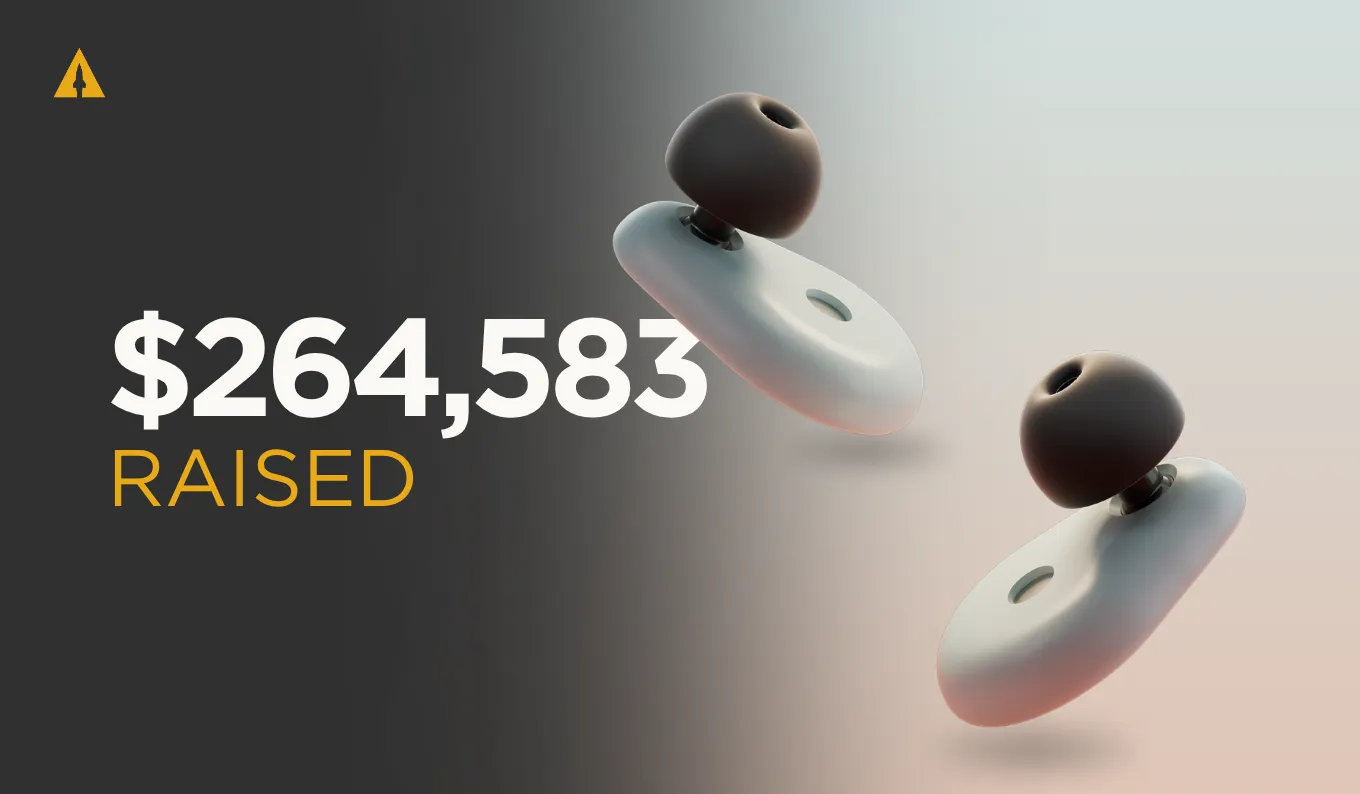
Keith Phillips had a problem that most motorcyclists know all too well. After 25 years of organizing motorcycle tours as a serious hobby, he’d watched too many friends develop permanent tinnitus from road noise.
The wind screaming past your helmet at highway speeds hits over 100 decibels. That’s loud enough to damage your hearing within minutes.
Riders need to hear their communication systems, GPS navigation, and talk to their passengers. Most people solve this by wearing earplugs, then cranking up the volume on their helmet speakers. It doesn’t work.
Keith, a computer systems designer by trade and self-described tech geek, had been searching for years for a better solution. He’d tried wired setups that flapped and broke in the wind. He’d experimented with various earbuds that were too bulky and uncomfortable under a helmet.
That’s when he stumbled across something unexpected.
For the full story in Keith’s own words, listen to the podcast episode here:
Key Takeaways
- Build your audience before you launch: Keith initially planned to launch directly on Kickstarter, but learned that a strong pre-launch audience was essential to avoid getting lost among competing campaigns.
- Small changes can have a major impact: A simple A/B test adding the US dollar price alongside the UK price increased reservations by 40%, showing the importance of continually testing and optimizing the pre-launch funnel.
- Curiosity needs to be balanced with clarity: A curiosity-driven ad initially performed well, but its performance dropped when people didn’t understand that SomniBuds were sleep earbuds. Adding “sleep” prominently restored performance, demonstrating that intriguing messaging still needs to clearly communicate the product.
- Optimize for buyers, not just cheap leads: UK audiences over 50 generated inexpensive email registrations but converted poorly into Kickstarter reservations. Younger US audiences cost more to acquire but were more comfortable with crowdfunding and ultimately represented better-quality leads.
- Give your pre-launch strategy time to mature: SomniBuds launched with around 1,300 reservations and 10,000 email registrations and generated about $80,000 on day one, but Keith believes starting earlier would have allowed Meta to optimize more effectively and the team to build a stronger VIP audience before scaling.
Getting Inspired By Exam Cheating Gadgets
Keith was reading about students who were cheating on exams using tiny magnetic beads.
These kids would drop a magnet, smaller than a pinhead, deep inside their ear canal. Then they’d wear a wire around their neck connected to a Bluetooth receiver hidden under their shirt. The setup created a magnetic wave that made the tiny bead vibrate against their skin. Not with great audio quality, more like bone or skin conduction, but enough to hear someone talking. If an examiner walked past, there was nothing visible in the ear. To remove it, they’d just stick a metal rod in their ear and the magnet would attach and pull out.
“They actually still sell them on Amazon as exam cheating kits,” Keith explains. “They’ve got photographs of people sitting there taking their exams. It’s ridiculous.”
But Keith saw something different in this technology. If you could make a magnet vibrate about nine inches away, maybe you could create a diaphragm sensitive enough to produce high-quality audio. Especially if the transmission coil wasn’t under your shirt, but right next to your head in a motorcycle helmet. He started building prototypes.
The Focus-Shifting Question
Keith was on one of his motorcycle tours a couple years ago, testing his first helmet prototype. One of the passengers, a woman riding on the back of her partner’s bike, asked him a question that would completely change his business direction.
“Can you do it for people who sleep?” she said. “When I’m at home, I kick him into the spare room. But when we’re on holiday, I don’t have that luxury. I had no sleep and I’m getting increasingly more irritable every day that passes.”
Keith and his team looked at the market. They were staggered by how many people get significantly better sleep when they sleep with audio. And obviously, there are way more people who sleep than ride motorcycles. They decided to pivot, and that’s how the SomniBuds were born.
Solving The Battery Problem
As Keith researched the sleep earbud market, he discovered there was a fundamental problem that nobody had managed to solve. With sleep earbuds, you want the battery as small as possible so you can’t feel it in your ear. But you also need it to last all night because if you’re blocking out snoring or environmental noise and the battery dies at 3 AM, you wake up.
Lots of companies have tried to make those batteries last but batteries don’t like being charged from full to flat every single night.
The two big problems in the market were clear: comfort and size, and battery life. By taking the battery out completely, Keith’s solution solved both problems at once.
The Crowdfunding Epiphany
By October 2024, Keith had a working prototype, and the quality kept getting better and better. He noticed another sleep product in the market that had done extremely well on crowdfunding. That’s when he thought crowdfunding might work for SomniBuds too.
When you start talking to factories, lots of them want minimum orders. If you can show up with pre-orders, you get a much better deal and they take you more seriously.
Keith knew nothing about crowdfunding. He’d read a bit online and was pretty much ready to launch the product on Kickstarter. That’s when he found LaunchBoom.
“I saw your video on YouTube and I found a forum where some people were discussing it,” Keith remembers. “I suddenly thought, hang on, we’ve got this wrong. My first post on your Skool was, ‘Nice to be here, we really nearly got this wrong.’”
Keith thought you just put your campaign on Kickstarter and people would find it. He had good media, great video, the whole story was real and compelling. He figured that was enough. He didn’t realize there was a whole process. You had to build an audience before you launched.
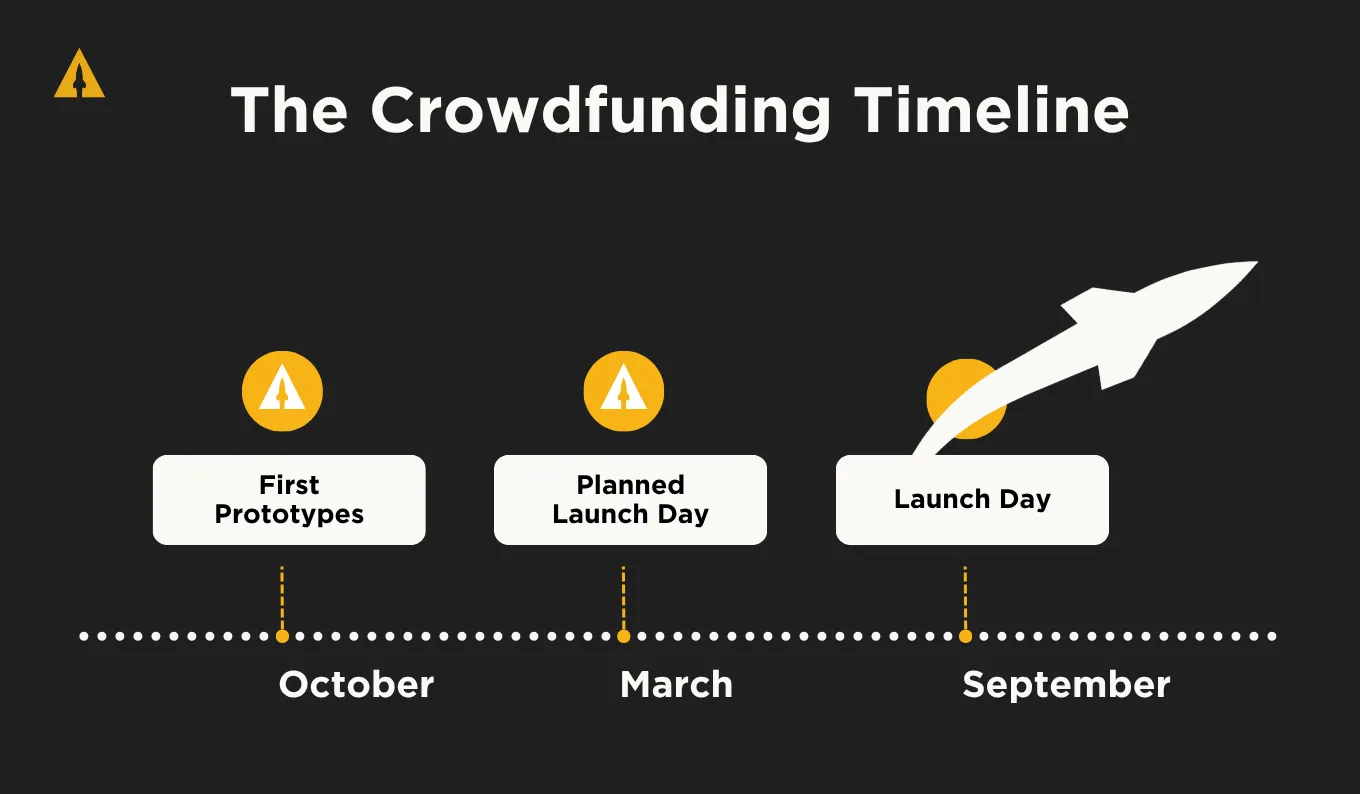
They were planning to launch in March. Instead, they stopped everything and started doing it the right way. They eventually launched in September.
The Pre-Launch Strategy
Keith’s biggest concern going into the campaign was credibility. “My first feeling, having spoken to people who had our prototypes, was that people weren’t gonna think it was real,” he explains. “There’s very few completely new things in this space. Most of them are kind of different versions of something else. So when something completely new comes along, people are understandably skeptical.”
He knew he needed a polished video that gave them some credibility, but he thought that was the whole strategy. Make it credible, show the story, then launch.
Working with LaunchBoom taught him something different. He learned how to think like a Kickstarter expert, which led him to launch a successful campaign. Without a good list of engaged followers, the chances were high that they’d just disappear into the fog of a thousand other launches and never get any traction.
Keith started learning about Meta advertising. He didn’t know anything about it before. He was amazed by how accurately you could track results, and how tiny changes could make massive differences.
He had to learn all about building an effective pre-launch landing page which converts. For example, on their funnel page where they got people to register, Keith initially only listed the price in pounds because his company is British. He couldn’t display multiple currencies on the same page.
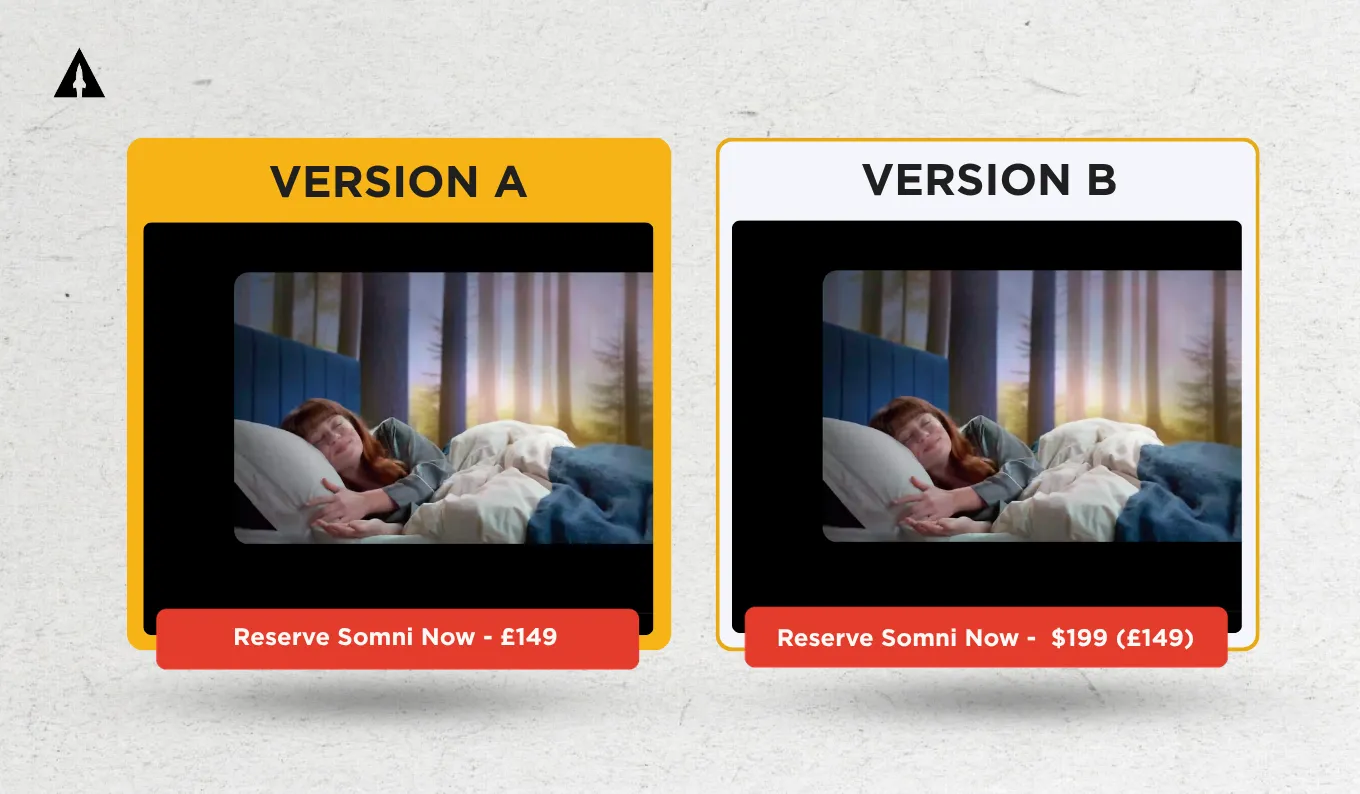
When he ran an A/B test and just added the dollar rate in brackets, reservations increased by 40%. “A little tiny change,” Keith says.
The Curiosity Hook Experiment
One of the benefits Keith found working with LaunchBoom was the community of other creators. He accidentally crashed another podcast recording early and connected with Oliver from Blisstil, another creator in a similar market space. They started bouncing ideas off each other. Keith saw another product that had been getting incredibly low reservation costs with a curiosity hook. He created an ad that said, “These are not Bluetooth earbuds, but they’ll stream audio all night long.”
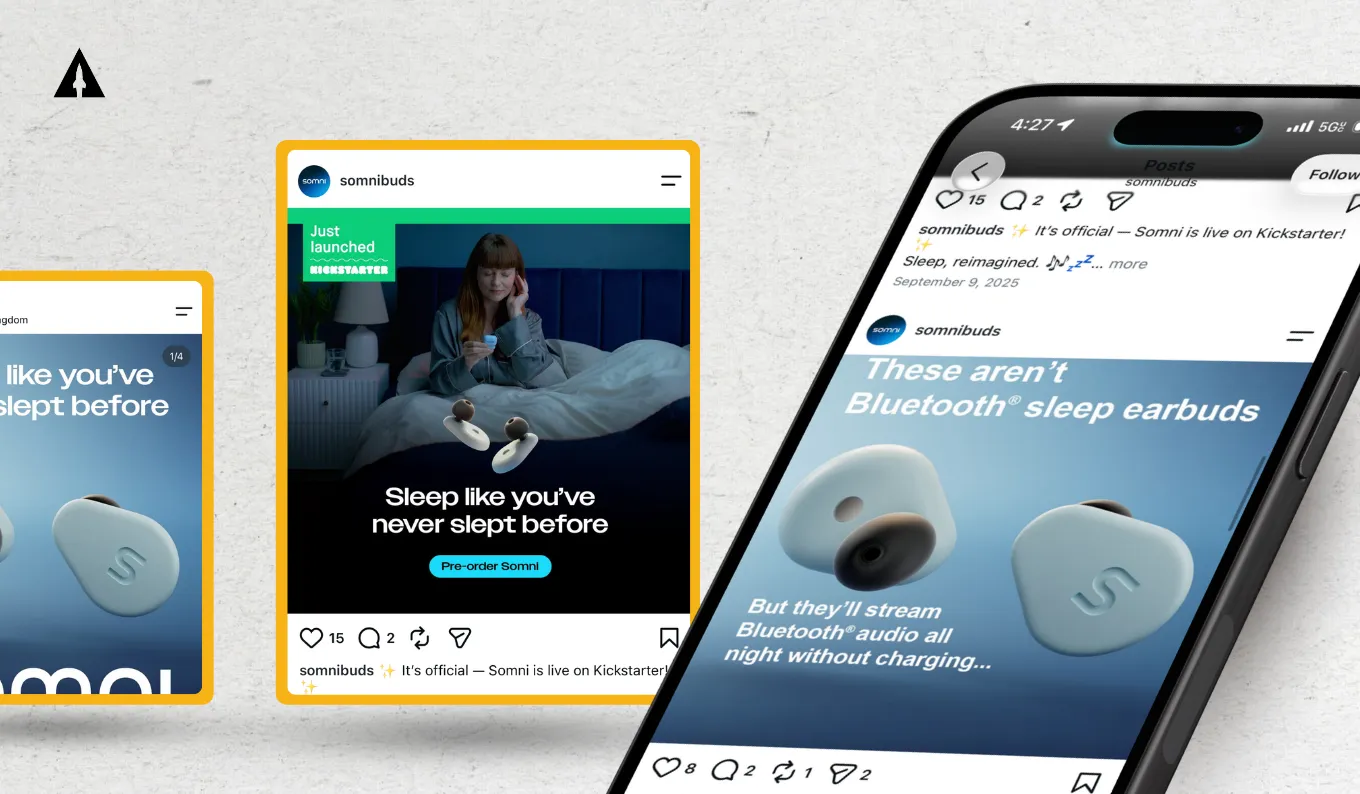
They got great results. Then, it suddenly crashed. Keith had no idea why at first.
The problem was that he didn’t say they were sleep earbuds in the ad. People thought it was interesting and clicked. But then they started leaving comments on the ads saying, “But you can only use them in bed. You mean you can’t walk around with them?” The negative comments killed the ad’s performance.
Keith went back, redid the ad with the word “sleep” prominently featured, and it picked up again. “It was crazy to me how these tiny little things can massively affect the campaign,” he reflects.
The Market Segmentation Discovery
Keith learned something counterintuitive about advertising costs across different markets. In the UK, they could get email registrations much cheaper than in the US. Probably 50% cheaper. They could get lots of registrations from people over 50 because that demographic has the biggest sleep problems.
“We thought, well this is great, we’re just gonna advertise to people in England over 50 and it’s really cheap,” Keith explains. But those people didn’t want to buy on Kickstarter. They didn’t understand it.
When Keith’s team tried to convert those email registrations into dollar reservations, the fall-off was huge. People didn’t want to enter their credit card information. It was actually cheaper to spend more money advertising in the US to younger demographics who were comfortable with crowdfunding, even though the cost per registration was higher.
“It was interesting for us, but it’s also in a strange way encouraging,” Keith notes. “We know that when we have the product in stock and we’re selling it on our website or on Amazon, places that my generation is more familiar with, we should do really well.”
Launch Day: £64,000 in 24 Hours
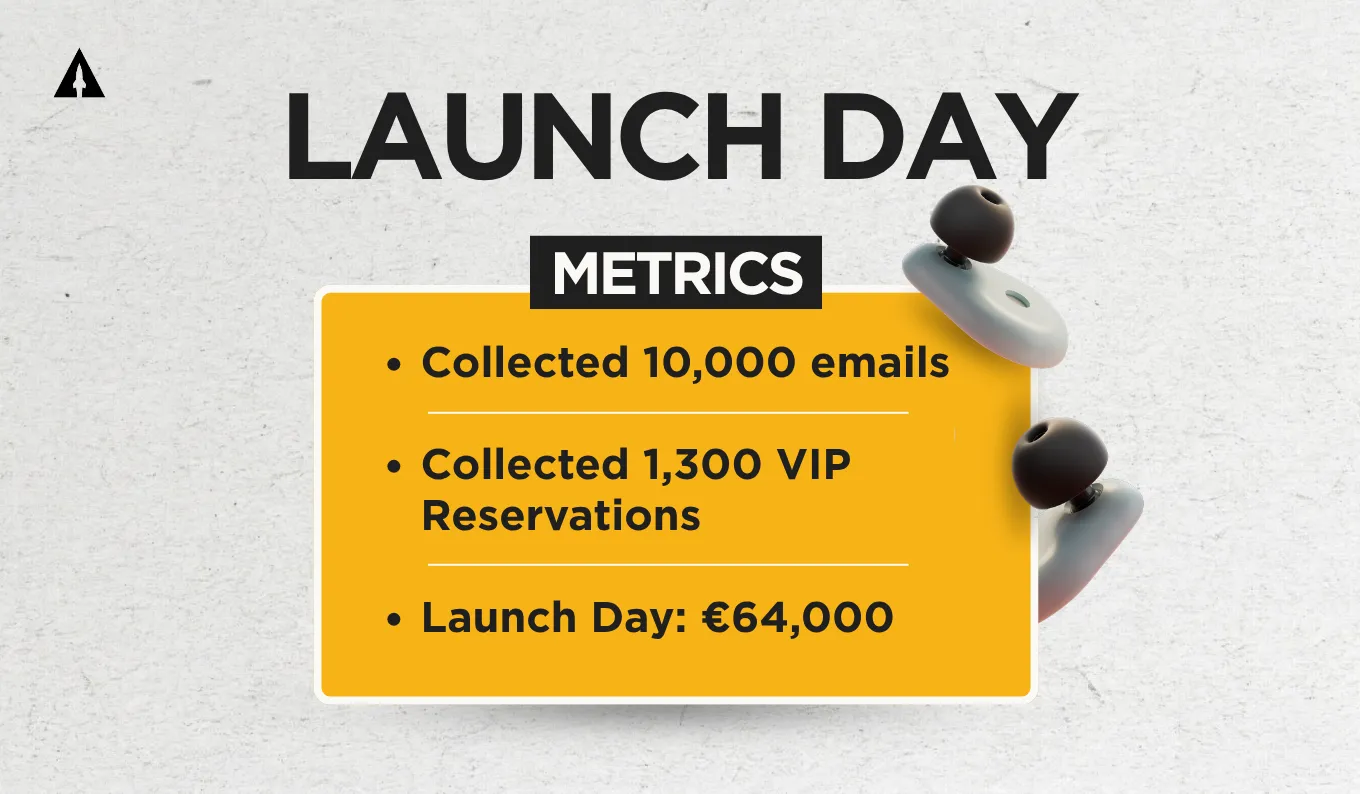
Keith’s team launched with about 1,300 dollar reservations and 10,000 email registrations. On day one, they did 64,000 GBP (about $80,000).
They knew about Jellop, a platform for driving traffic to crowdfunding campaigns. Because they’d done so well with their VIP registrations in terms of cost, they were confident they’d get good returns on ad spend. In the first week, they were getting about 6x return on ad spend. “We were really ready to scale,” Keith says.
After a strong first week, momentum slowed more quickly than expected. Keith attributes this to two factors: a competing product that launched shortly before SomniBuds likely captured many early buyers, and skepticism created by another sleep earbud campaign that later faced delivery concerns. As confidence in similar crowdfunding projects declined, SomniBuds also encountered increased hesitation from potential backers.
In response, the team paused its Jellop campaign before exhausting its budget, preserving funds for a possible second launch on Indiegogo.
The One Thing He’d Change
If Keith could go back and give himself advice from a year ago, it would be simple:
Start the process with LaunchBoom sooner.
Keith learned that increasing ad spend too quickly gives you worse results in terms of value for money. You can’t put pressure on those markets because you need people to be turning over. Go too fast and you hit the same people repeatedly, spending lots of money advertising to people who’ve already seen it.
Because they nearly launched without any pre-campaign, when they decided to do it right. “If I could go back, I would have spent more time letting Meta learn how to get the best value for money, building our VIP list,” Keith says.
He was actually quite good at engaging with people on their VIP Facebook page. From his years running motorcycle forums, he was used to asking questions and letting discussions develop. He could have kept people engaged while slowly increasing spend, trying different approaches, and finding a formula that gave the best value for money.
The biggest lesson? Keith just didn’t know what he was doing initially. He had this idea that agencies were there to help you after you launched. He didn’t realize the journey should have started so much earlier. “If we ever do it again, I’ll know,” he says.
Your Turn
Keith’s story shows something important about launching products today. The funding is great, but it’s just one piece of the puzzle. The real value is in the testing, the learning, the community you build, and the doors that open when you do it right. Keith learned about his market, discovered which demographics convert best, figured out his messaging, and attracted wholesale partners and manufacturing relationships that will serve his business for years.
If you’re sitting on a product idea right now, wondering when to start your crowdfunding journey, the answer is probably sooner than you think. Even with just photorealistic renders, you can start testing your market, gathering data, and learning what resonates with your audience.
Ready to talk through your product launch strategy? Book a call with our team to chat about your project and explore how we can help you avoid the mistakes Keith wishes he’d avoided and capitalize on the strategies that helped him raise a quarter million dollars.
