

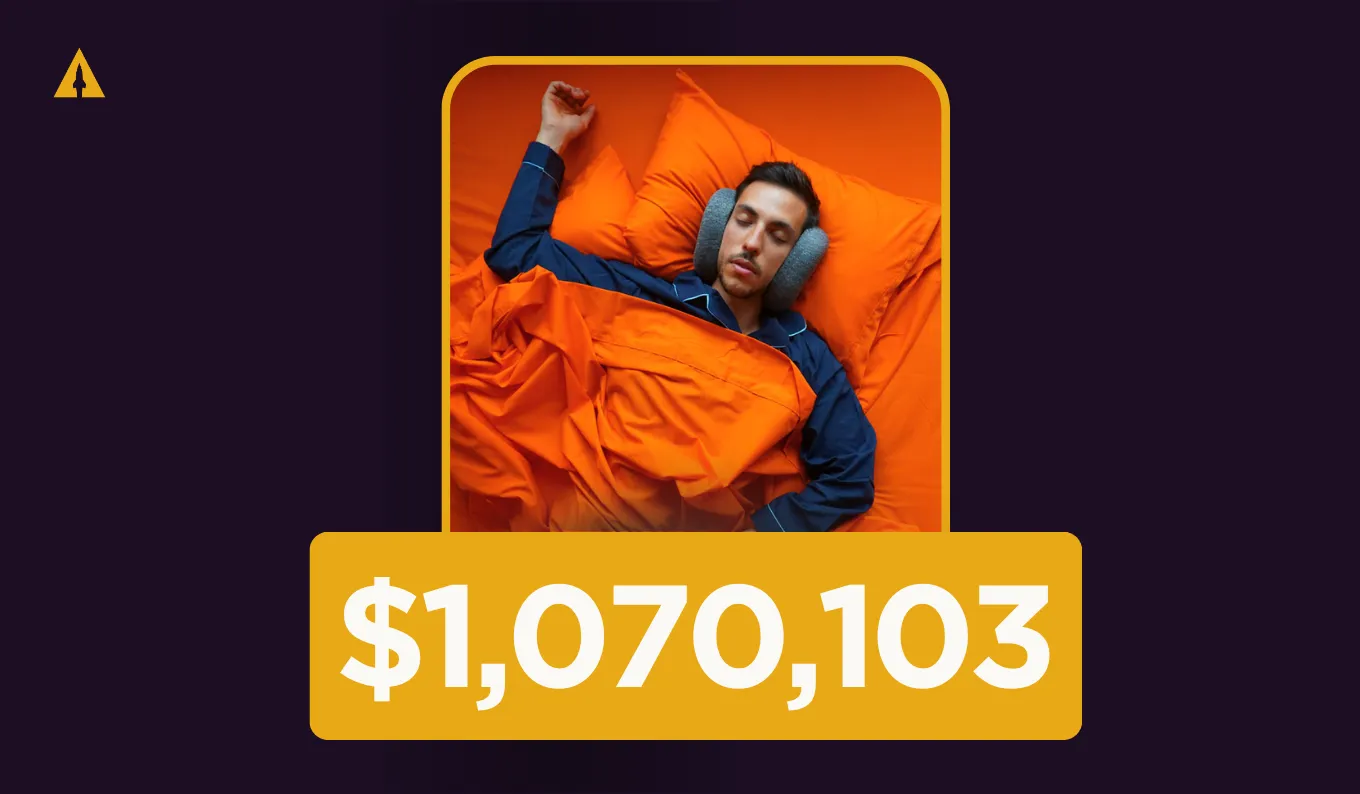
Oliver Masson couldn’t sleep. Not because of stress or anxiety but because of constant, disruptive noise.
The earplugs he was trying to use were terrible. They hurt his ears, barely blocked sound, and the harder he pushed to block noise, the more painful they became.
So one night, he did something a little unconventional. He grabbed a pair of construction earmuffs from his day job and fell asleep wearing them.
It worked… sort of. The earmuffs blocked way more sound than earplugs and they didn’t hurt his ears. They did, however, hurt other parts of his face. Not exactly the best for sleep.
Still, there was something there. A spark. A product idea.
That spark eventually became Blisstil, a hardware company focused entirely on products that block out noise in a comfortable way while you sleep. And their latest product, the Serenade, pre-sold over $1 million on Kickstarter.
Leaving The Corporate World Behind
Before Blisstil existed, Oliver was working as a sustainability engineer for a consulting firm in buildings and infrastructure. The mission was great. He was helping people make buildings more sustainable. The environment, though, was high-paced, full of egos, and deeply unsatisfying for someone with an entrepreneurial itch.
Oliver had already dipped his toes into business before, selling baked goods at farmers markets with a friend. He’d learned a lot about face-to-face sales. He had one foot in entrepreneurship and the other in a corporate career.
Then came the night of the earmuffs, and the subsequent decision in the light of day after a good night’s sleep: “Screw it. I’m just gonna do it.”
He told his wife he wanted to quit his job and go all in on this product idea. Her response was supportive but grounded. She laid out ground rules: he needed to find a job that covered their expenses, and he had six months to prove the idea had legs.
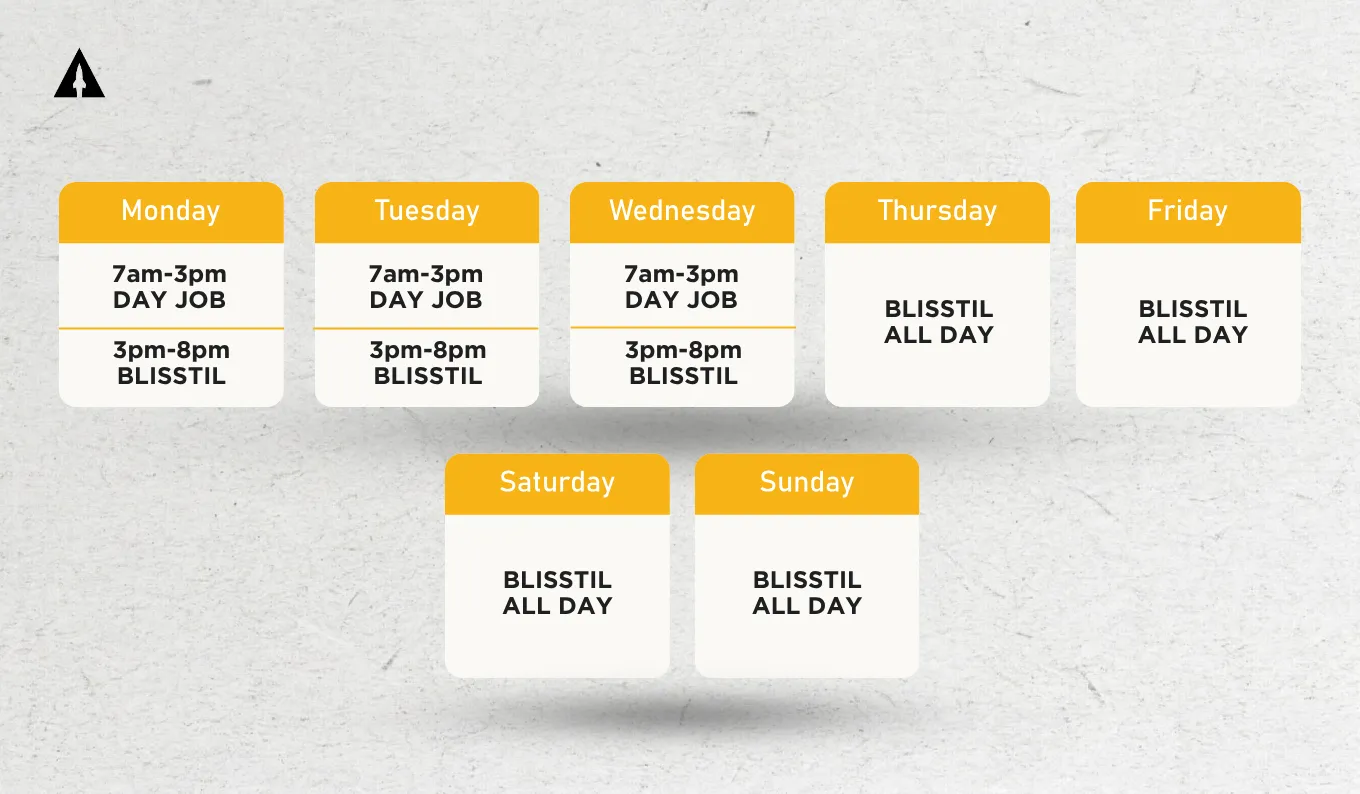
So Oliver picked up carpentry. He worked on a job site three days a week, from seven to three. When he got home around four, he’d work on the product until seven or eight. The other two days and most weekends were dedicated entirely to building Blisstil.
His wife saw something important during this time: she saw him happier and more motivated than he’d been at the consulting firm. And as Oliver started testing prototypes with friends and family, the feedback was overwhelmingly positive. People loved it. They could see themselves using it on planes, at home, everywhere. The idea had legs.
The First Launch: $100K on Kickstarter
In November 2020, Oliver launched his first product, the SleepMuffs, on Kickstarter. It was his first time ever launching a campaign. He’d never done anything like it before.
His preparation was scrappy. He read every book he could find. Listened to every trustworthy podcast. He studied successful campaigns, mimicked how they organized their pages, created renders, and built a list of interested people.
Before the campaign, he’d spent roughly $8,000 in total. His Facebook ads were not great. He had a ROAS below one, meaning he was spending more money than he was making on every single ad. He pulled the plug on paid advertising pretty quickly.
Then something unexpected happened. Someone reached out offering to handle his Kickstarter SEO and asked for account access, which sounded risky but Oliver needed the help.
Kickstarter SEO means optimizing a campaign’s title, description, and tags so it appears more prominently in Kickstarter searches and on Google. Using clear, relevant keywords helps more people find the project and improves click-through rates. More visibility and early engagement increase the chances of the campaign being promoted by Kickstarter’s algorithm.
Together, they got the SleepMuffs into the top 20 of its category on Kickstarter. And because Kickstarter works a lot like Amazon, where people go to browse and buy, being visible on the platform was enough. People saw the campaign, clicked on it, and backed it.
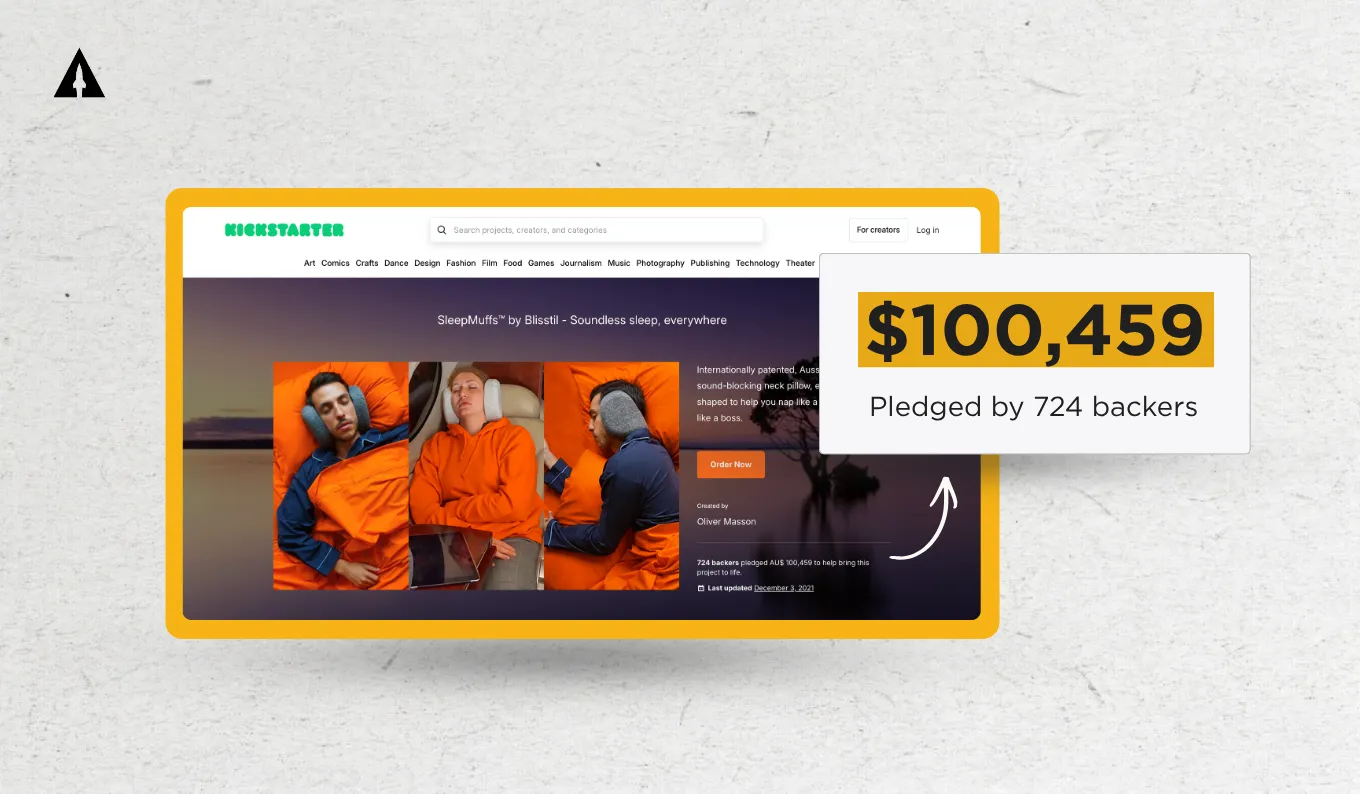
The campaign raised over $100,000 AUD (roughly $65,000 USD). Oliver paid $1,500. Best money he ever spent.
Now, that tactic probably doesn’t work anymore. Oliver tried reaching out to the same person again later and never got a response. But the point is this: the first campaign validated the idea. People wanted what Blisstil was building.
Five Years of Grinding Between Launches
After delivering the SleepMuffs to backers (about nine months after the campaign, with a three-month delay), Oliver started collecting feedback. Some of it was great. Some of it wasn’t. As human beings tend to do, he focused on the bad.
There were some complaints about shipping, duties, and taxes. Customers shared product feedback about sizing and comfort for side sleepers.
Instead of overhauling the product to respond to each bit of slightly negative feedback, Oliver made a strategic call. He adjusted the messaging and marketing copy to better align with what customers should expect, making sure that the benefits of the SleepMuffs stood out and made investing in the product worth it to customers.
Over the next four years, Blisstil sold through roughly $300,000 worth of stock. Not massive numbers per year but those sales did something more important than generate revenue – they fueled the next chapter.
The positive feedback and steady revenue gave Oliver the conviction to keep going. He knew what needed to improve: sizing, comfort for side sleeping, and better sound blocking. Solving those problems became the focus.
The Hardest Part: Ergonomics
Developing the next product, the Serenade, was a grind. The core challenge was ergonomics.
When you’re designing something like a water bottle or a lamp, the product interacts with inanimate objects. It’s relatively straightforward. When you’re designing something that has to fit comfortably on a human head while they sleep, the complexity explodes. Different neck sizes. Different head sizes. Different jaw sizes. Different ear sizes. You have to create something that works for 90% of people, and there’s no way to know how it feels until someone actually wears it.
Oliver and his team went through 36 different design iterations. A new design every single month. Designing, 3D printing, testing. Over and over and over again.
He worked alongside Chris Knight, an industrial designer and long-time contractor, for five years. Another friend came on board to handle electronics development, which was its own beast. The Serenade’s printed circuit board has 140 different components on it, all of which need to work reliably and be mass manufacturable. They secured licensing agreements with Qualcomm for Bluetooth technology, which also isn’t something just anyone can get.
All of this was funded by the ongoing sales of the SleepMuffs. The product that “only” did a few hundred thousand in revenue over four years was steadily keeping the lights on while Oliver poured everything into building something better.
Approaching the Second Launch Differently
When it came time to launch the Serenade, Oliver knew he couldn’t rely on a mysterious SEO guy or lucky timing. He needed a real, solid product launch strategy.
Understanding Every Single Cost
The first and most important shift was getting crystal clear on the true cost of launching and selling a product. Oliver built a comprehensive list of every expense that needs to be covered by each unit sold:
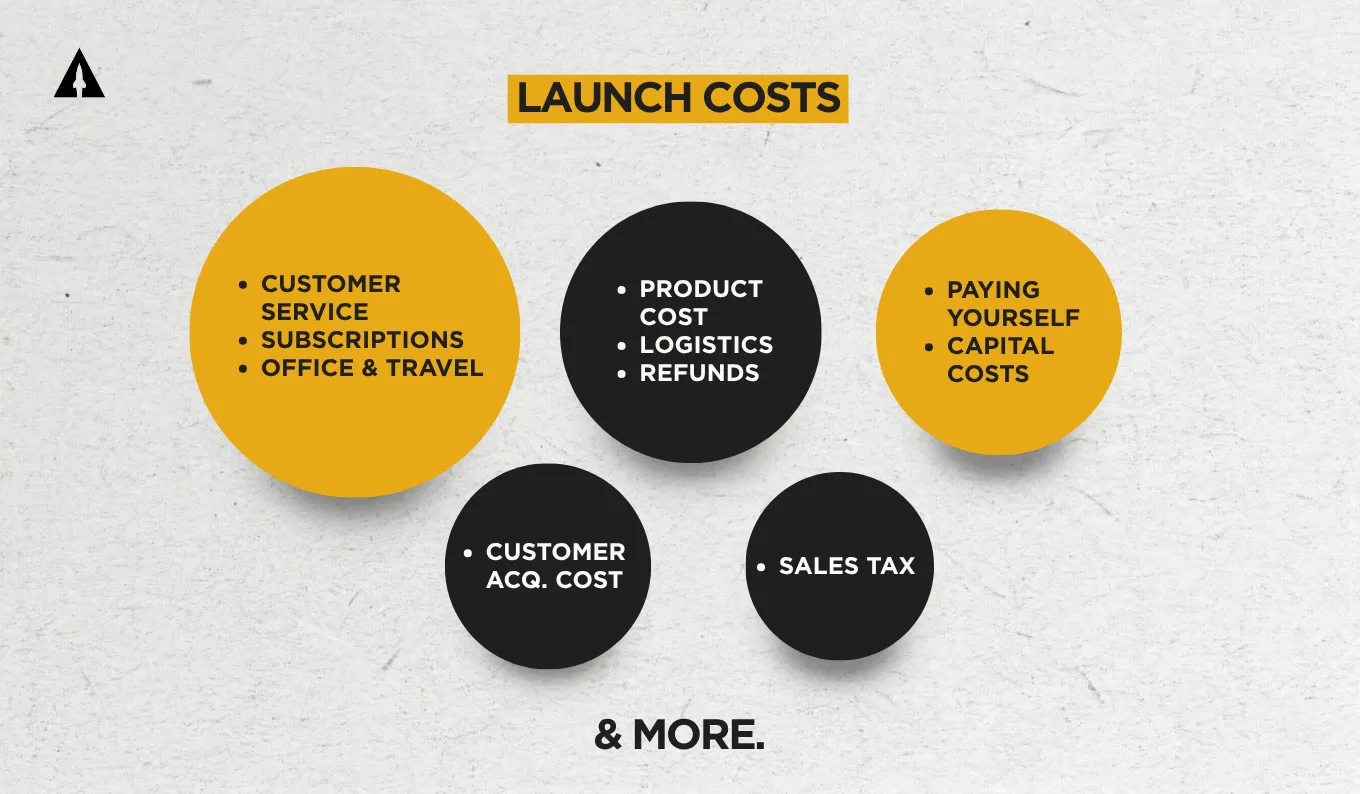
Oliver can’t stress this enough for anyone planning a crowdfunding campaign. Most of the help available online doesn’t cover all the costs associated with building a product and maintaining a company. If you don’t understand these costs and build margin into your pricing, your customer acquisition will eat you alive. Especially early on, when nobody knows your brand and trust is zero.
Getting Help With Marketing
For the first campaign, Oliver’s marketing strategy was essentially nonexistent. Facebook ads failed. He got lucky with organic Kickstarter traffic. That wasn’t going to work a second time.
He needed a system. A repeatable, testable approach to bringing in customers and converting them. He needed to build what he calls a “money printing machine.”
It was time to choose the best crowdfunding marketing agency for his needs, and get some help.
That’s when Oliver reached out to LaunchBoom. He’d heard about us repeatedly over the years and had even spoken with a team member a couple of years prior. When it came time to get serious about the Serenade launch, the decision was clear.
Working with LaunchBoom helped Oliver every step of the way towards launching a successful Kickstarter campaign. Building a pre-launch system was one of the most valuable parts of working with LaunchBoom. Instead of guessing how to prepare, Oliver followed a structured, data-driven process that broke the work into clear, manageable steps and removed uncertainty from the equation.
He started by identifying and understanding his “superfan”, the exact type of customer most likely to love the product. This became the foundation for everything that followed, shaping his messaging, visuals, and overall campaign narrative so it spoke directly to the right audience rather than trying to appeal to everyone.
From there, he focused on creating high-converting assets early: ad creatives and a solid landing page with clear positioning.
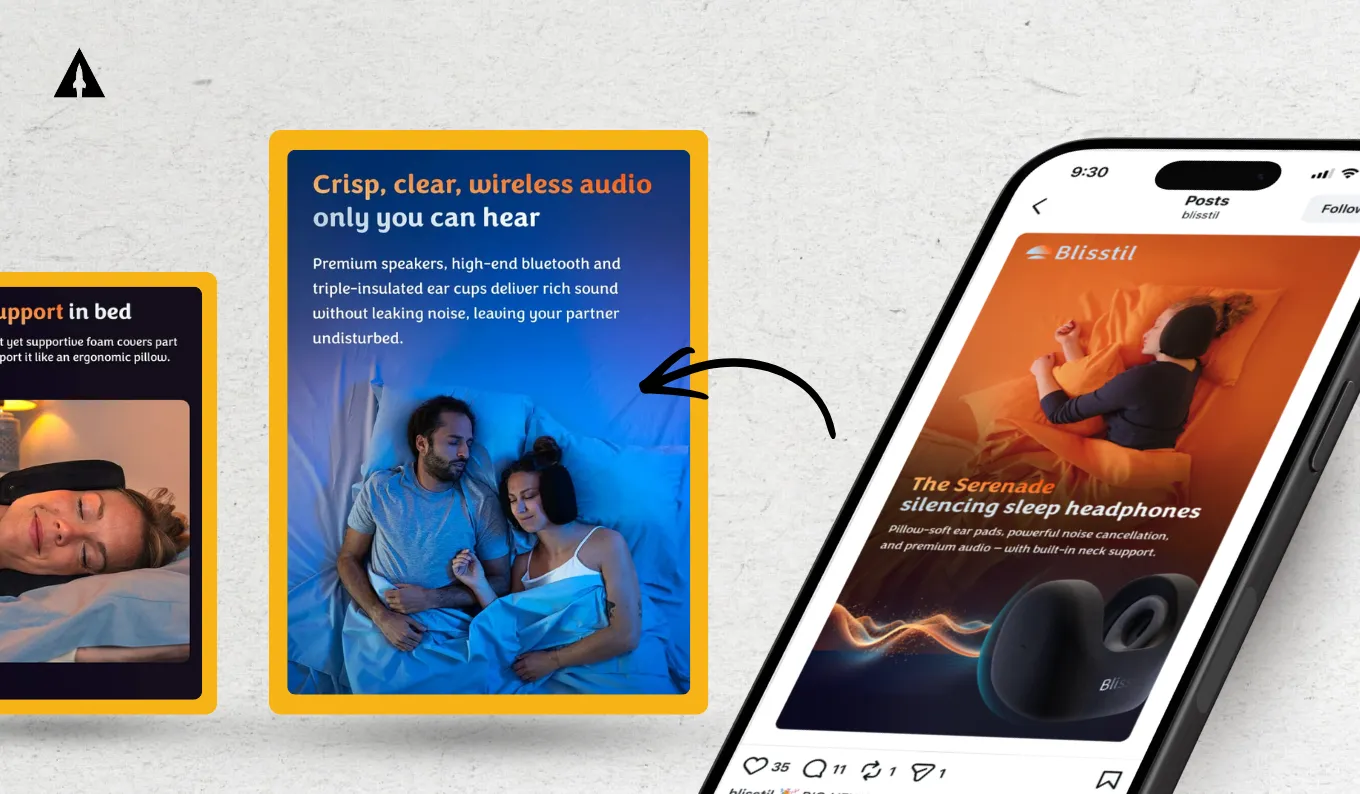
Rather than waiting until launch to see what worked, he used the pre-launch phase to actively test different angles, headlines, and visuals. This allowed him to gather real performance data and refine his messaging based on what actually resonated rather than going off assumptions.
A key part of the system was building a reservation funnel. Instead of passively gathering leads, Oliver guided potential customers through a structured journey from ad click to landing page to email capture, designed to identify high-intent backers and predict future sales more accurately.
At the same time, his pre-campaign was carefully designed so every component worked together: paid traffic drove targeted visitors, the landing page converted them into leads, and email marketing nurtured those leads in the lead-up to launch. This created momentum before the campaign even went live, ensuring he wasn’t starting from zero.
By testing audiences and creatives in advance, Oliver was also able to validate demand and optimize his targeting. He knew who his best customers were, what messaging converted, and which channels performed best—turning launch from a gamble into a calculated execution.
By the time he approached launch, he wasn’t just hoping things would work. He had already built and validated a complete system designed to generate traffic, capture demand, and convert it into backers from day one.
Accountability also played a critical role throughout the process. As a solo founder, Oliver was responsible for every decision, which made it easy to second-guess himself or lose momentum.
Having a team behind him meant regular check-ins and clear expectations for progress. This external structure helped him stay consistent even through the more challenging days. During what he described as “insane moments of doubt,” that support made it easier to keep moving forward.
Connecting with the right partners extended the impact beyond what Oliver could do alone. One of those partners was Jellop who handled paid advertising during the live campaign. This ensured that traffic generation and ad optimization were managed by experts. With the right people in place, Oliver could focus on running the campaign while knowing key growth channels were in capable hands.
Making A Million in Pre-Sales
When the Serenade launched on Kickstarter, the preparation paid off in a massive way. The campaign pre-sold over $1,000,000. Some days, they were doing $47,000 in a single day. Multiple days like that added up to something amazing.
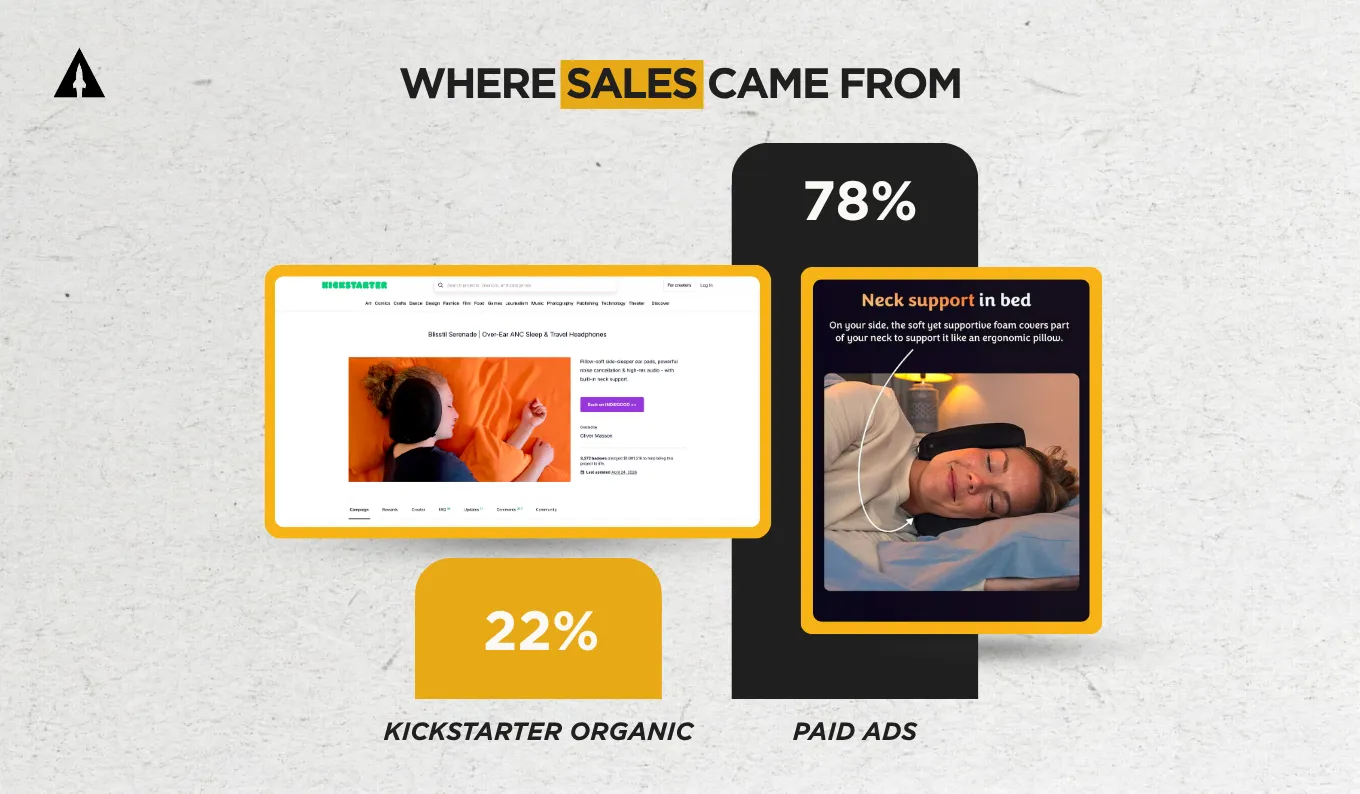
The breakdown of where sales came from tells the story of just how important paid advertising during the prelaunch phase was: about 78% came from those paid ads.
The paid ads that ran before the launch would send people to Blisstil’s prelaunch landing page where they could join the VIP email list. Since the VIP subscribers were already interested in the product, when the campaign went live, they converted at a much higher rate. This means the ads were really about building a warm audience ahead of time, not just driving last-minute sales.
Once those early backers came in, the campaign was off to a good start, which in turn helped it get more visibility on Kickstarter. That early momentum brought in extra organic traffic, creating a nice snowball effect and leading to the Serenade’s overall success.
The Takeaway
Oliver’s journey from sleeping in construction earmuffs to building a million-dollar crowdfunding campaign took years of iteration, financial discipline, and the willingness to get help where it mattered most.
He says that if he could go back, he wouldn’t change a thing about his own path. Every struggle, every failed ad, every uncomfortable prototype, every late night after a day of carpentry work. It all led to this. The numbers and Oliver’s success speak for themselves.
Want to launch your product like Oliver did? If you’re building something and want a proven system to take it to market through crowdfunding, we’d love to chat. Book a free call with a LaunchBoom expert to talk through your project and see how we can help.
