


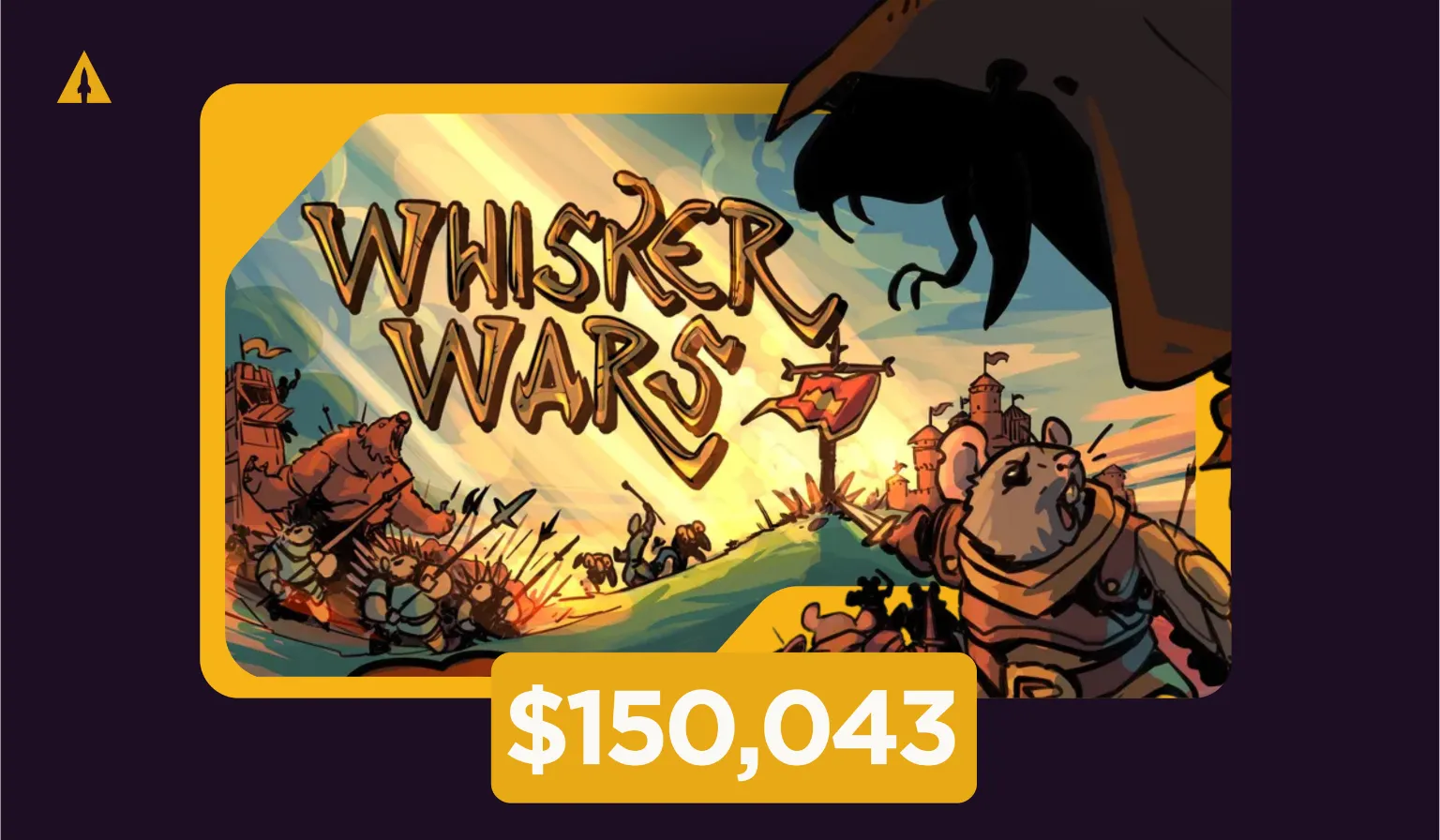
Three guys with zero advertising experience, a card game about anthropomorphic animals, and a marketing strategy built almost entirely on humor. That’s the short version of how Glasshouse Games raised over $150,000 on Kickstarter for their debut game, Whisker Wars.
The longer version involves an 8-hour prototype, a GoFundMe campaign, a mouse with a sword, and a whole lot of lessons learned along the way.
If you’ve ever tried to introduce someone to Magic: The Gathering cold, you know what that looks like. Card after card of exceptions, rule changes, and interactions that make a newbie’s head spin.
Whisker Wars was designed to be the gateway. The game you hand someone before Magic. The one that teaches the core mechanics without getting overwhelming.
From COVID-Era Prototype to Kickstarter Launch
The story starts back in 2020. Mike and Sean, two of Glasshouse Games’ co-founders, both worked in film and TV in Brooklyn. During the pandemic and later the writers’ strike, they had time on their hands and a shared desire to play D&D but neither of them could find a party.
So they started building their own game. They pulled pieces from board games they owned. They grabbed props from sets they’d worked on. From day one, they were figuring out how to prototype a board game without wasting any money.
The first time future co-founder Logan Fitz played through it, the game took eight hours to finish. Still, even in that marathon session, Logan saw something. The mechanics were solid. The theme was engaging. It captured the spirit of D&D in a tabletop brawler format. He encouraged Mike and Sean to keep developing it, tighten the gameplay, and make it faster.
A couple months later, they came back to Logan with a second prototype and a question: would he help bring the game to life? Logan had a business degree and was working in supply chain (eventually landing at LEGO), so he was the perfect person to handle the operational side. The three of them formed Glasshouse Games.
A GoFundMe to Fund the Kickstarter
Here’s something you don’t hear every day. Before they ever got to Kickstarter, the team ran a GoFundMe to raise their initial capital. They put together a video explaining who they were, what they were building, and how they’d use the money. Friends and family chipped in.
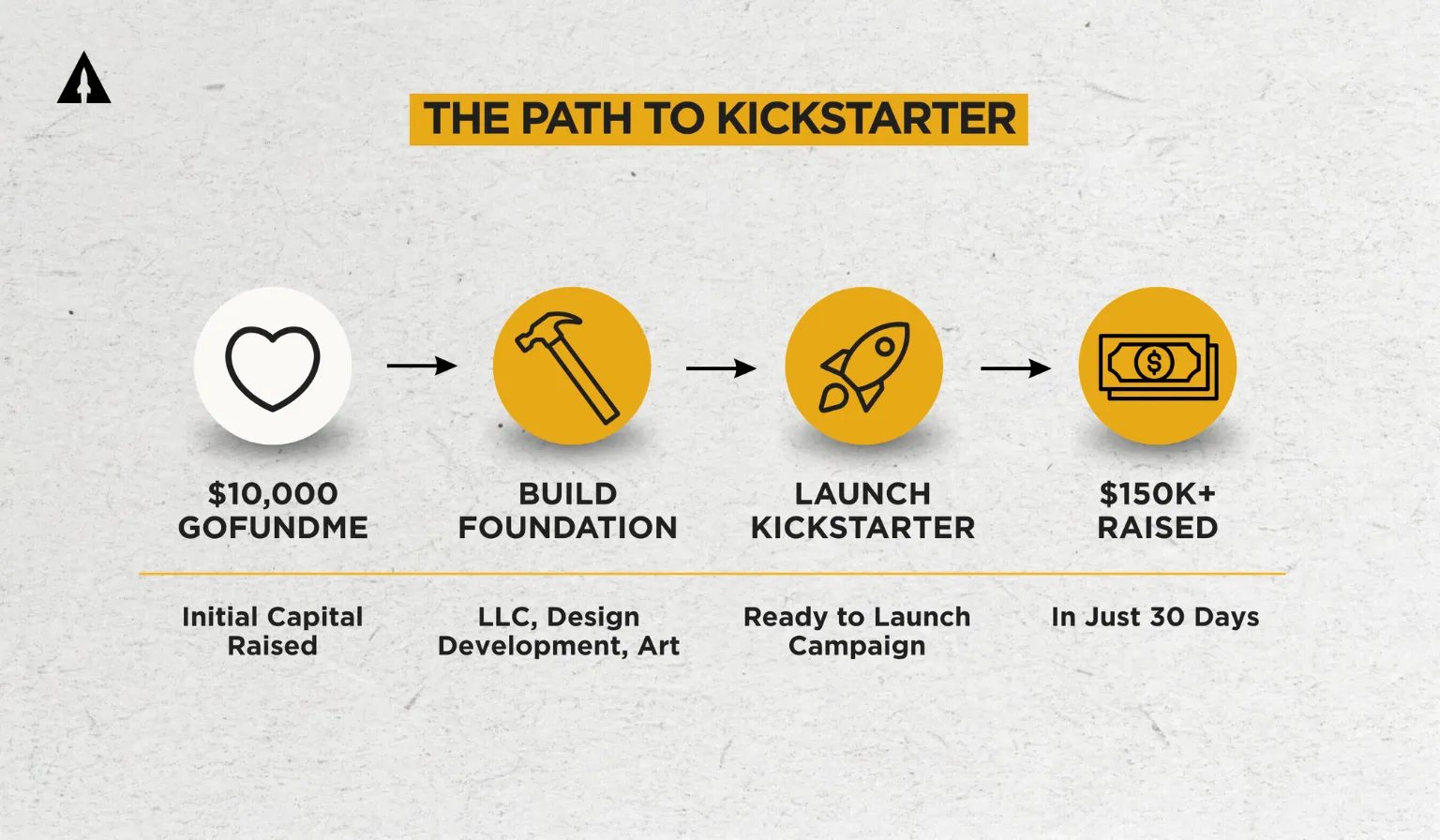
They raised just over $10,000. That money went toward forming their LLC, paying for design, development, and art. It was, as Logan put it, “the kickstart to the Kickstarter.”
The Game-Changing Pivot
At the end of 2023, the team attended PAX Unplugged for the first time. They walked the floor, talked to as many people as possible, and came to a critical realization: their big D&D-lite game couldn’t be their first product. It was too ambitious for a debut. They needed something smaller they could use to learn the entire process of kickstarting, manufacturing, fulfilling, and marketing a game.
On the car ride home from that convention, the idea for Whisker Wars was born.
Mike and Sean were ambitious. They wanted the game done and on Kickstarter within a month. Reality had other plans. After attending the Unpub Festival and talking with manufacturers like Panda, they learned their timeline was way too aggressive. The team from Panda essentially told them: take more time to figure this out.
So they pushed. And pushed again. Their original goal was to launch at the top of 2025. They eventually launched in May.
Building the Pre-Launch Engine
Logan and the team knew from conversations with other creators, the Kickstarter team itself, and the LaunchBoom team whom they’d met at PAX Unplugged, that the days of launching a Kickstarter and hoping for organic traction were largely over. Today, you need to bring your own audience. You need to do the work before launch day so that when the campaign goes live, there’s already a wave of committed backers ready to pledge.
Their initial goal was modest: 1,000 email subscribers. As they got deeper into the process and started using a VIP reservation system, they realized they needed to build a much bigger email list. Specifically, they needed at least 1,000 VIPs, people who had put down a dollar to reserve a copy of Whisker Wars.
The VIP offer was bold for a first-time project. Anyone who put down $1 before launch would receive a free early release booster pack from the second Whisker Wars set. Looking back, Logan admits this was a little ambitious since it banked on the first campaign succeeding. Yet it worked. The pack would normally cost $7 as an add-on, so the perceived value was real.
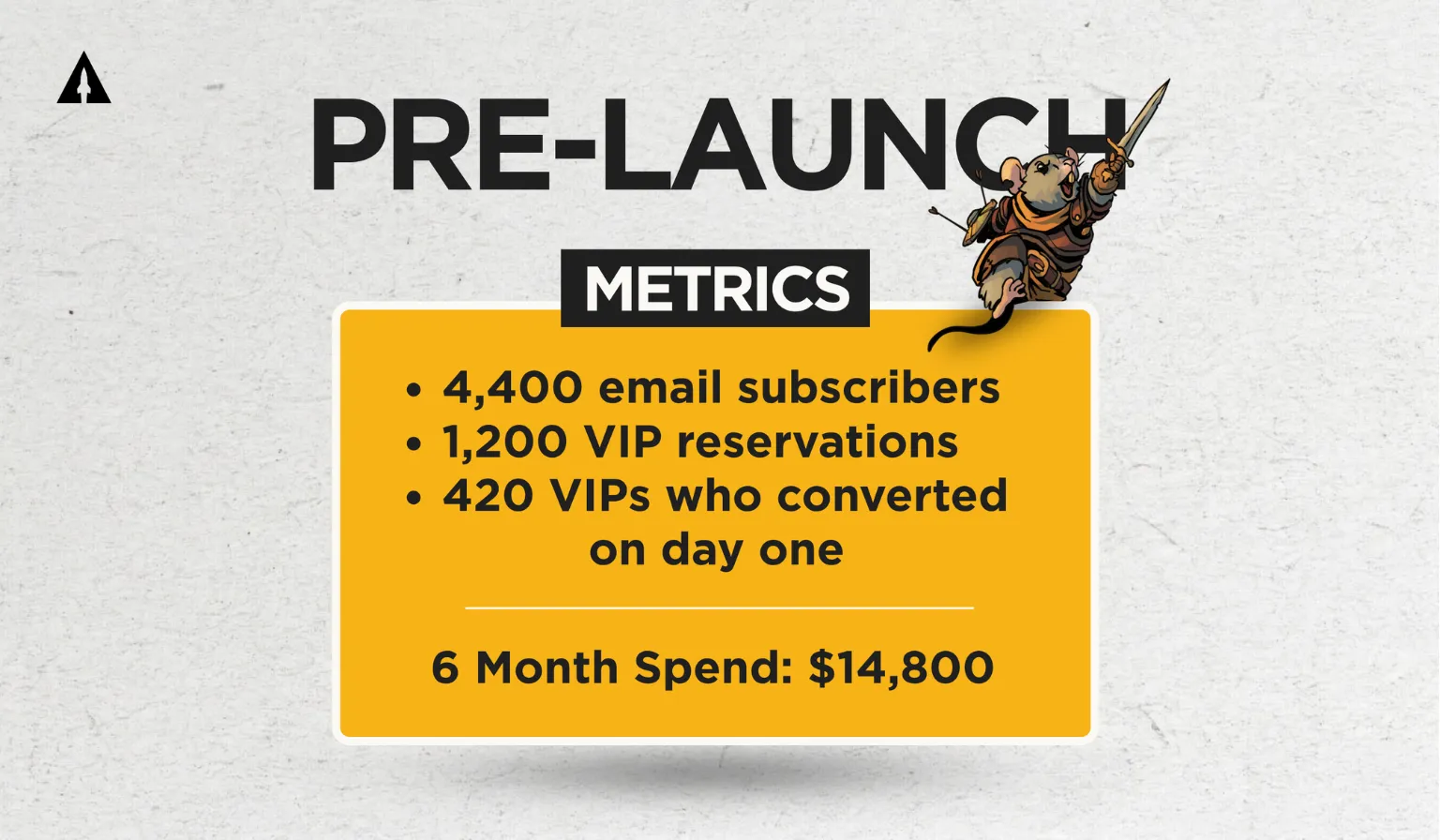
Over a six-month pre-launch period, the team spent $14,800 on marketing. That generated:
- 4,400 email subscribers
- 1,200 VIP reservations ($1 deposits)
- 420 VIPs who converted to backers on day one
Those 420 conversions alone recouped the entire pre-launch ad spend and then some, all within the first 24 hours.
The Unexpected Ad Strategy
Here’s where the story gets really interesting. Logan had never run ads before and those first two weeks of testing were rough: He was learning how to advertise a game in real time, and he burned through about $3,000 of his $14,800 budget just figuring out which ads resonated with their audience.
The LaunchBoom team kept reassuring him: this is part of the process. The spend will become more manageable as you learn what works.
So what did they test? The typical top performers for tabletop games, things like product shots, box art on clean backgrounds, and pictures of the cards, just weren’t clicking. Even though one of the most common pieces of feedback they received was that people loved Whisker Wars’ art, there was a disconnect. Those ads looked like ads and people scrolled right past them.
Then one night, Logan was messing around in Photoshop and had a funny idea. He created an ad based on the children’s book If You Give a Mouse a Cookie, except it said “If You Give a Mouse a Sword” and featured one of their mouse characters. He ran it almost as a joke.
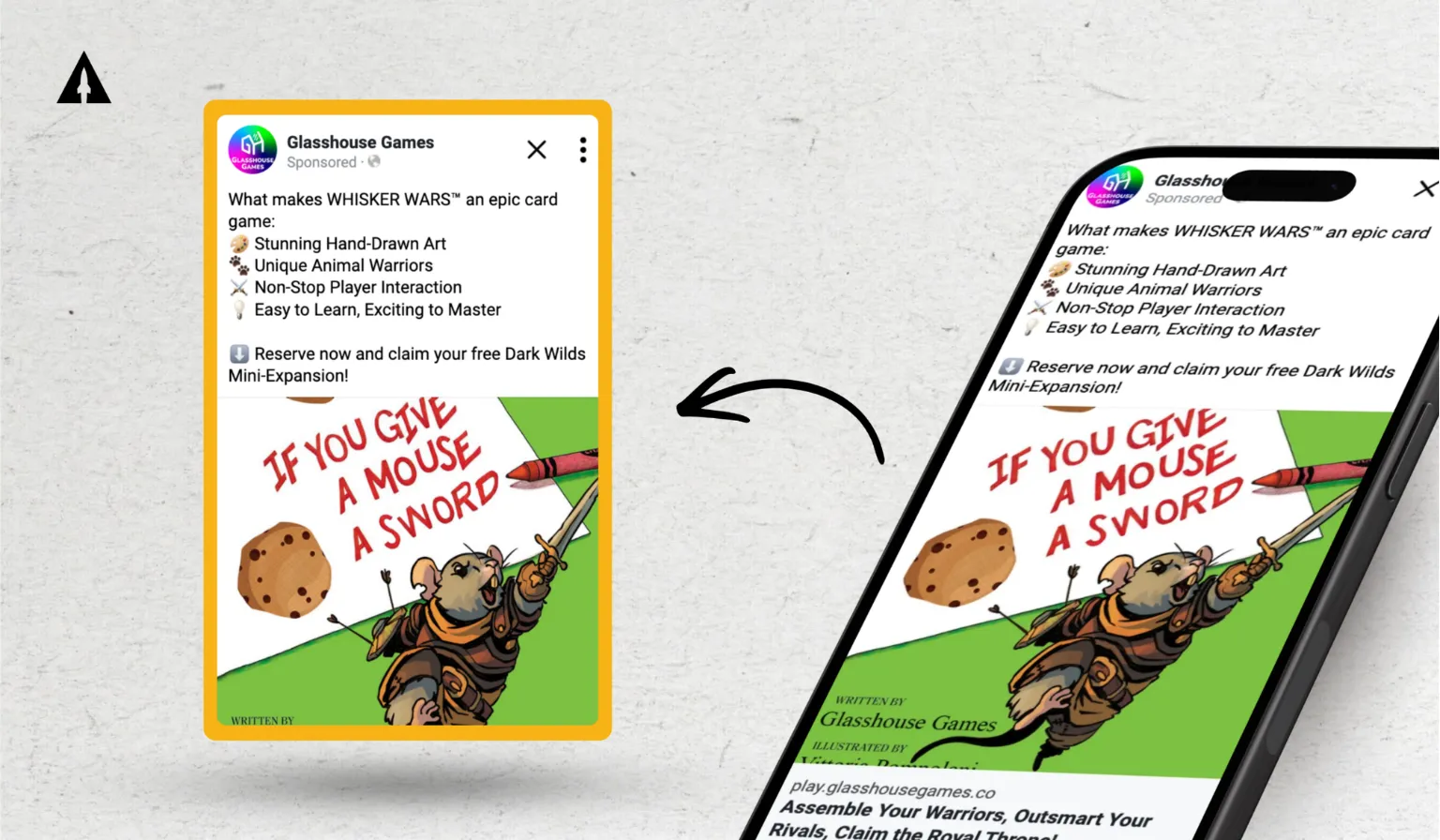
It outperformed everything. The floodgates were open.
The team started leaning hard into humor. They designed ads that looked like in-universe characters posting tweets about the game. They created meme carousels, the kind you’d see scrolling Instagram where you swipe through joke after joke and send them to friends. Except every meme was Whisker Wars content.
In the final two to three months of pre-launch, the team shifted nearly all their ad spend to humor-based creative. The results spoke for themselves: higher engagement, better click-through rates, more comments, and more sign-ups on their landing page.
Logan’s theory on why it worked? People were actually engaging with the ads. They were swiping through carousels, commenting, sharing. All of those signals told Meta’s algorithm to show the ads to more people, which drove down costs and increased reach.
The inspiration for these ads didn’t come from studying other Kickstarter campaigns. It came from Logan simply paying attention to what he engaged with while scrolling Instagram. When he noticed he always stopped for meme carousels, he thought: what if we made one of those? That instinct turned into their highest-performing ad format.
Discord and the Power of Social Proof
Alongside their ad strategy, the team built a Discord community. This served a dual purpose.
First, it gave potential backers a place to engage with the game before launch. People could playtest on Discord, ask questions, and connect with other fans.
Second, it created social proof. When someone clicked on a Whisker Wars ad, visited the Instagram page, and saw an active community with real people talking about the game, it signaled legitimacy.
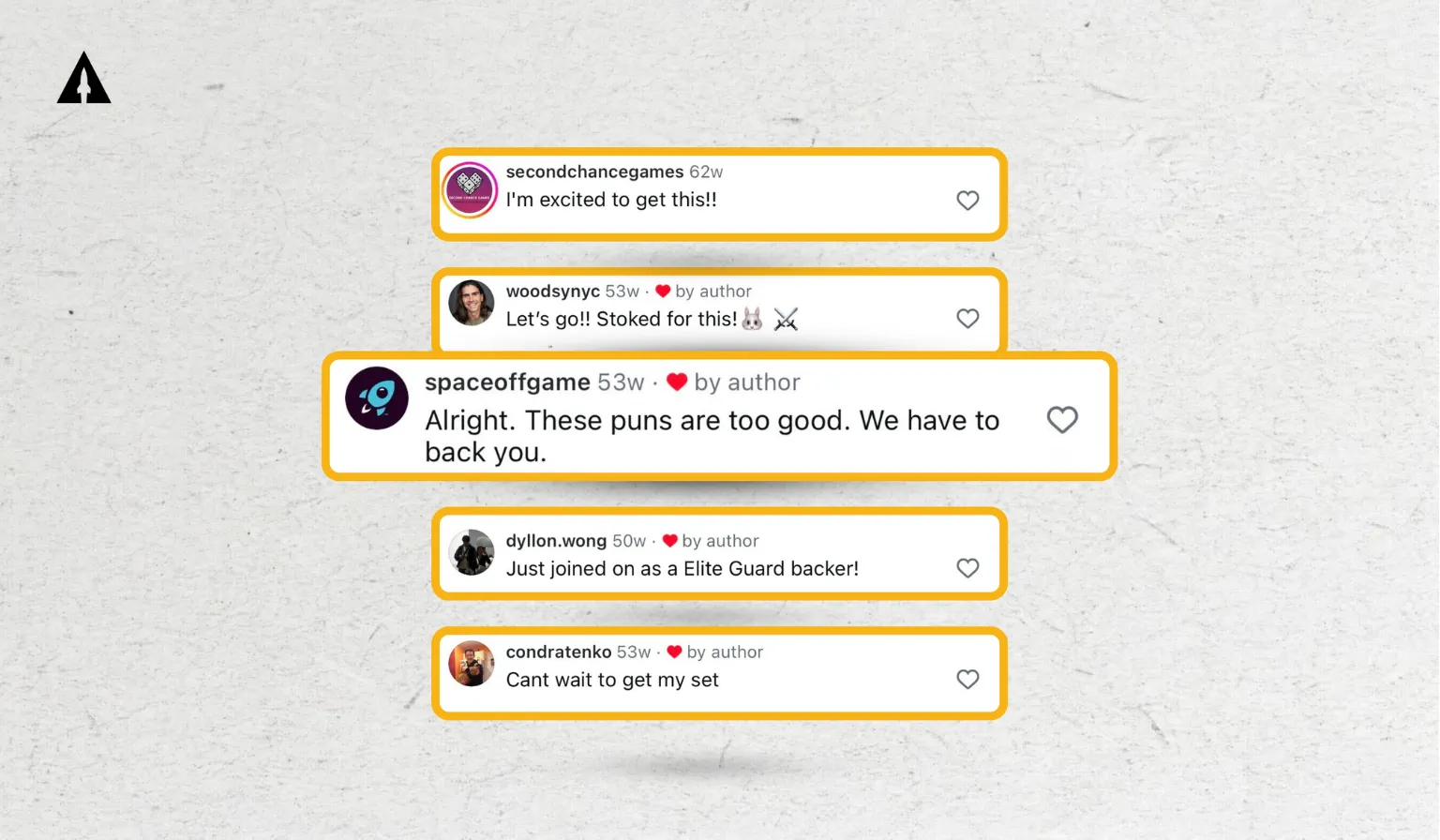
As Logan put it, sometimes you see an ad for a product and think, “Am I actually going to get this if I order it?” Having an active Discord, a content-rich Instagram page, and a community of engaged fans eliminated that doubt.
Launch Day: $37,000 in 24 Hours
The three co-founders were on a call together when the campaign went live. They watched the numbers tick up faster than any of them had anticipated. Whisker Wars funded in 24 minutes. Within the first two hours, they’d crossed from $20,000 to $30,000. By the end of day one, they’d raised $37,000.
The pre-launch work had paid off. The community showed up. Logan described the feeling as “really surreal.” After months of preparation, testing, and learning, seeing the numbers validate all that effort was powerful. His takeaway? If you do the work and make sure everything is ready, you very well may be rewarded at launch.
Keeping Momentum Through the Campaign
A strong day one is great. Going from $37,000 to $150,000 over the full campaign? That takes sustained effort.
The team came in prepared. Sean had built a day-by-day schedule mapping out what they’d post, what they’d say, and what community activities they’d run for every single day of the campaign. Rest days were built in, but the overall cadence was consistent. Community engagement activities included:
- A choose-your-own-adventure story
- Community votes on new card names
- Art reveals for community-selected cards
- Alternate art stretch goals (which proved wildly popular)
Behind the scenes, the team was also running heavy paid advertising during the campaign. They shifted to a live campaign ad strategy with a strong focus on remarketing, targeting people who had already signed up or put down a dollar during pre-launch. The message was simple: the game is here, and you can get it now. Those remarketing ads performed far and away the best.
They also had influencer videos lined up to drop the moment the campaign launched. As those videos gained traction organically and through paid boosts, they kept driving new backers to the page throughout the campaign.
When The Humor Ads Stopped Working
Here’s something Logan didn’t expect. The humor-based ads that dominated during pre-launch completely tanked once the campaign was live.
His theory? During pre-launch, humor ads built excitement about a world. People engaged because they were curious, entertained, and intrigued. Once the campaign was live, the click-through link took people to a Kickstarter page where they were being asked to spend real money. The disconnect between “funny meme” and “purchase this product” was too jarring.
Product-based ads, the kind that showed the actual game and what you’d be getting, performed much better during the live campaign. The influencer videos also helped bridge that gap because they showed real people playing and enjoying Whisker Wars.
It’s a valuable lesson: the creative that works in pre-launch isn’t necessarily the creative that works during the campaign. Be ready to adapt.
Advice for First-Time Creators
Logan’s number one piece of advice? Go out and ask questions.
The Glasshouse Games team read books on crowdfunding, including our CEO Mark Pecota’s (get your free audiobook copy here!). They attended conventions, and talked to literally everyone they could.
Booth to booth at PAX Unplugged, they introduced themselves as new publishers and asked for guidance. Most of the people they approached were happy to help. The tabletop industry, Logan says, is one where everyone wants all boats to rise.
Beyond conventions, he recommends tapping into resources like Unpub for playtesting, connecting with manufacturers early, and not being afraid to push your launch date if you don’t feel ready. The Whisker Wars team pushed their date multiple times, and each delay made the final product and campaign stronger.
Want Results Like Whisker Wars?
Glasshouse Games went from zero advertising experience to a $150,000 Kickstarter campaign by building a community, testing relentlessly, and leaning into what made their brand unique. The LaunchBoom team was part of that journey from the very first convention meeting. If you’re working on a product and want to build a launch strategy that actually converts, book a free call with a LaunchBoom expert. We’ll talk through your project and figure out how to give it the best possible start.
