



Aaron Smith’s journey is proof that even a failed crowdfunding campaign can be turned around with the right strategy. After a stumble on Gamefound, Aaron came back stronger, raising an impressive $672,720 on Kickstarter.
But what exactly made the difference? The short answer: perfecting his advertising strategy. The long answer: Adam Cuadra, Games Launch Consultant at LaunchBoom, and Aaron himself break down the exact steps they took to make the relaunch a massive success.
If you want to dive deeper, be sure to watch the full video where Aaron and Adam walk through their process in detail:
1. Building Aaron’s Superfan
At the core of the campaign was a crystal clear understanding of Aaron’s superfan—the person most likely to back Sea Beasts and spread the word. Aaron and LaunchBoom created a detailed profile of this ideal backer, whom they called “Zack.”
Zack represents a hobby gamer who doesn’t have unlimited time to play but craves immersive experiences when he does. He’s often a family man balancing responsibilities, yet he loves strategic games and deep themes. Zack enjoys games with fast setup and relatively short playtime but wants the thrill of cooperative challenges and thematic depth.
This personification allowed the team to design every part of the campaign—from messaging to targeting—to resonate with Zack’s interests and expectations.
The superfan profile includes demographic details like age and gender but, more importantly, focuses on what drives the backer’s enthusiasm: the Viking theme, the ocean crawler gameplay, and the cooperative strategic combat against legendary sea beasts. This focus ensured the campaign’s marketing efforts felt authentic and relevant to the right audience.
2. Creating a Landing Page That Speaks Directly to Your Superfan
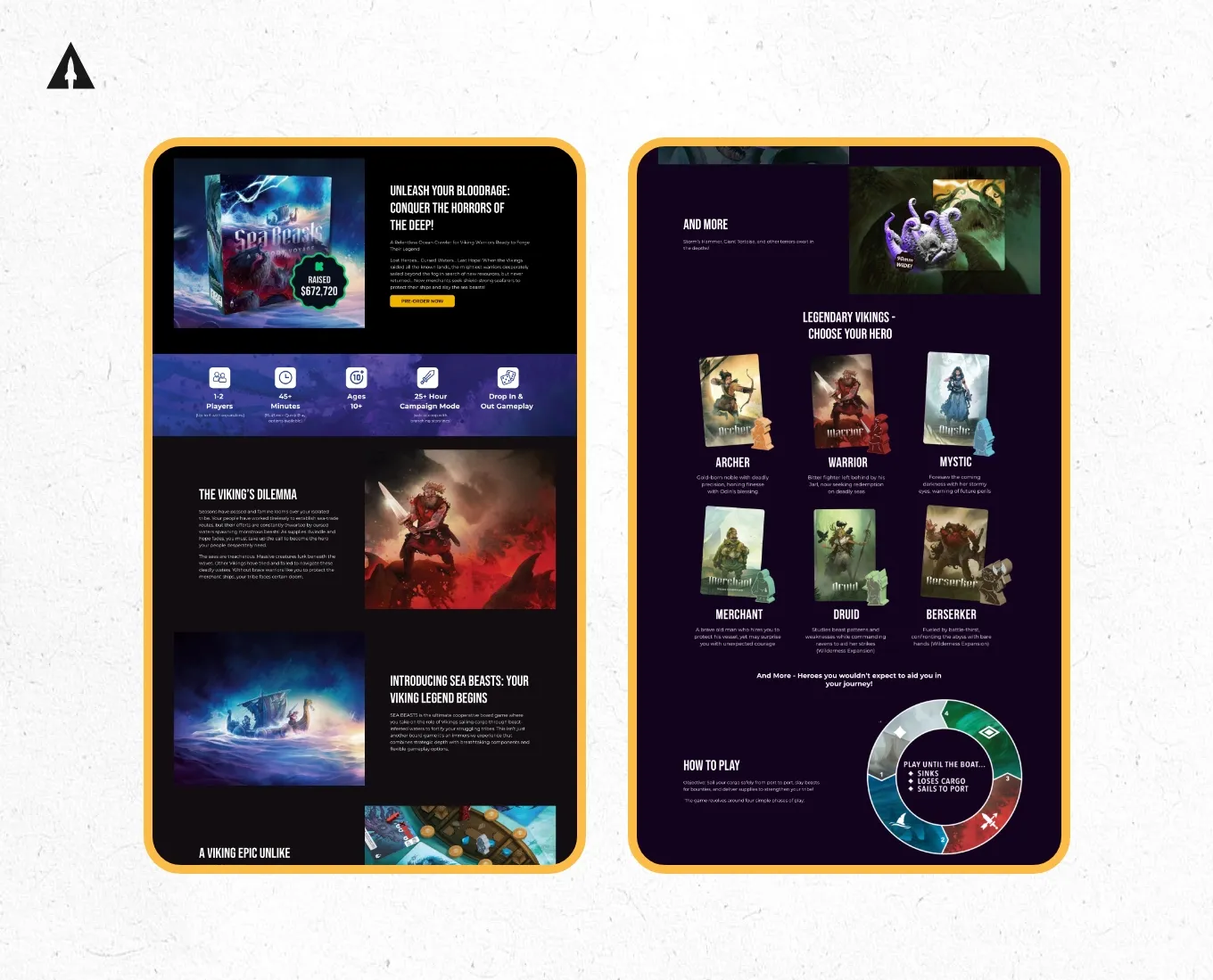
With Zack in mind, the next step was building a landing page that speaks directly to him. The landing page was designed to capture Zack’s excitement and help him visualize owning and playing the game.
At the very top, the landing page features the game box on a rich thematic background that reflects the Viking ocean crawler world. The headline boldly states this is the ultimate game of Vikings versus beasts, pulling Zack into the theme instantly.
There is a call to action right away, making it easy for visitors who are already hooked to sign up without scrolling. Multiple CTAs are placed throughout the page, so Zack never has to scroll back up or search to pledge once he’s convinced.
The page then dives into beautiful, immersive Viking art that helps set the mood. This art and component focus brings the game’s world to life visually, helping Zack put himself in the seat.
Gameplay details follow, breaking down playtime (~45 minutes), player count (1–4), and age suitability (10+). This transparency helps Zack know the game fits his lifestyle. He won’t be committing to weeks-long campaigns or complex rules that take hours to learn.
Overall, the page flows from hook to story to key info seamlessly, making it easy and enticing for Zack to convert.
3. Perfecting Creative Visuals for Ads
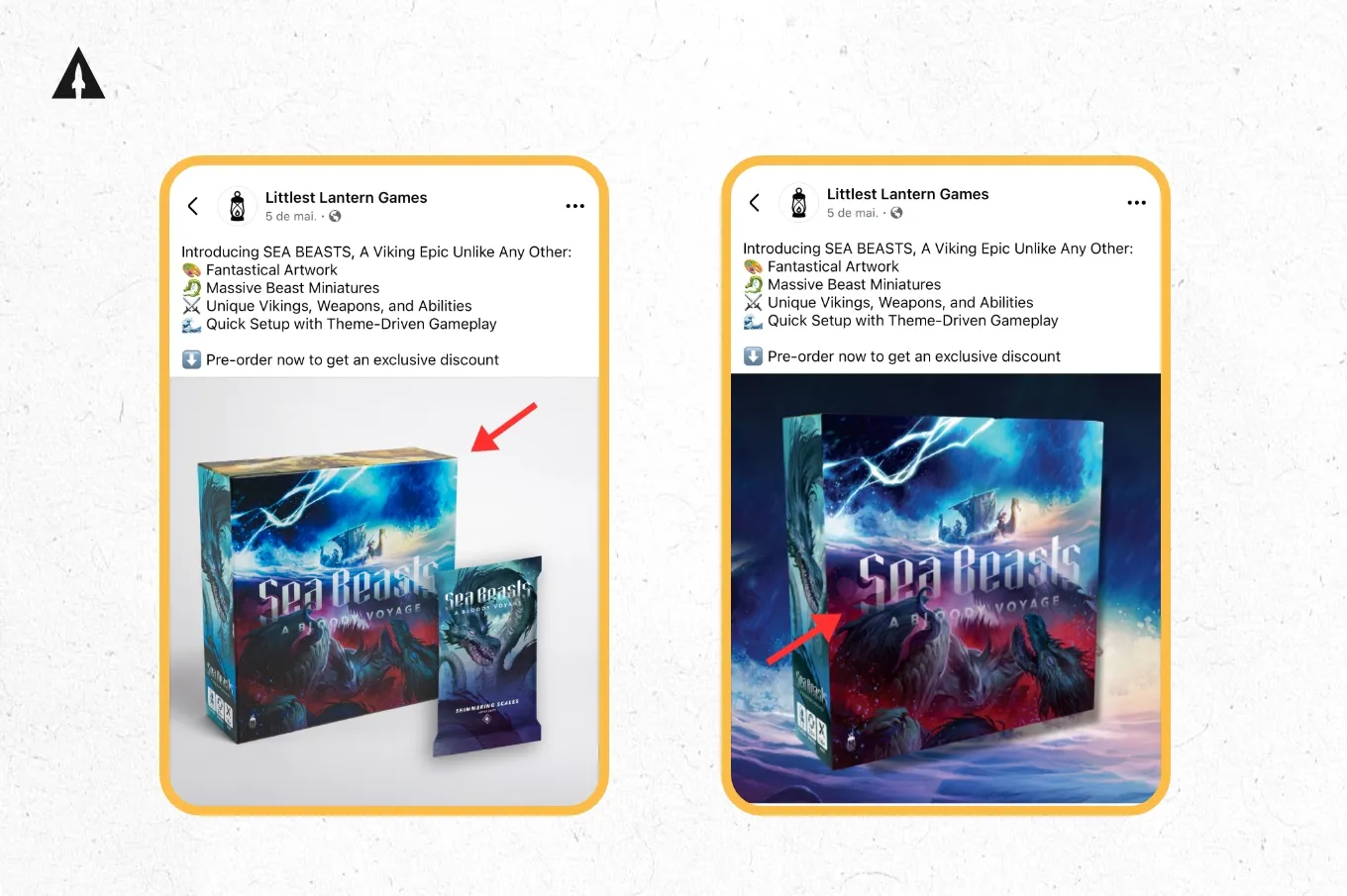
Creative visuals were tested extensively with the goal of grabbing Zack’s attention amid a sea of ads. Four unique creatives were created and tested:
- The game box displayed on a thematic Viking background, full of mood and storytelling.
- The box and card pack on a clean white background with a red arrow, designed to pop visually and stand out in feeds.
- A detailed layout of the game board, pieces, and cards to showcase gameplay components clearly.
- Closeups of the miniatures, which are a significant selling point and generate excitement among collectors and hobby gamers.
The creation process leveraged both Adobe Illustrator and Canva. Illustrator was used to create the raw artwork assets, while Canva helped adjust the formatting and ratios needed for different ad placements. The hardest part was the packaging render with the red arrow visual, which required careful adjustment to stand out cleanly.
Importantly, these images didn’t need to be highly intricate or complicated. Simple, clear visuals that resonate with Zack’s interests performed well. This shows that ads don’t require huge budgets or complex production to be effective.
4. Writing Powerful Copy That Tells Your Story
Copywriting was as crucial as visuals. The ads needed to convey the game’s story and hook potential backers in just a few seconds. Several headline styles were tested:
- Bold, authoritative hyperbole such as “The ultimate game of Vikings versus beasts” used strong language and attention-grabbing emojis to generate curiosity and FOMO.
- Descriptive headlines like “Fast-paced Viking-themed ocean crawler” communicated gameplay style and thematic appeal clearly.
- Simple but effective action focused headlines: “Survive, explore, and fight monsters in a strategic co-op” distilled core gameplay mechanics and goals.
- Cheeky or punchy calls to action like “Viking warriors wanted” provided an easy rallying cry for the target audience.
Primary text copy was broken down into different formats:
- Bulleted feature lists clearly outlined gameplay highlights, including thematic emojis to break up text and add personality.
- Simple product descriptions explained the game succinctly, as if answering a direct question about what the game is.
- Specific testimonials were used to build trust and credibility. For example, “Sometimes you sink fast, so it’s easy to quickly start another voyage” gave a genuine insight into gameplay pacing, rather than generic praise from unnamed beta testers.
- Audience callouts targeted likely backers directly, such as “Not enough time for big boss battles or DnD? Try Sea Beasts, an easy-to-learn boss battler with quick setup, gameplay, and immersive storytelling.” This spoke to Zack’s pain points and preferences clearly.
5. Identifying and Targeting the Right Audiences
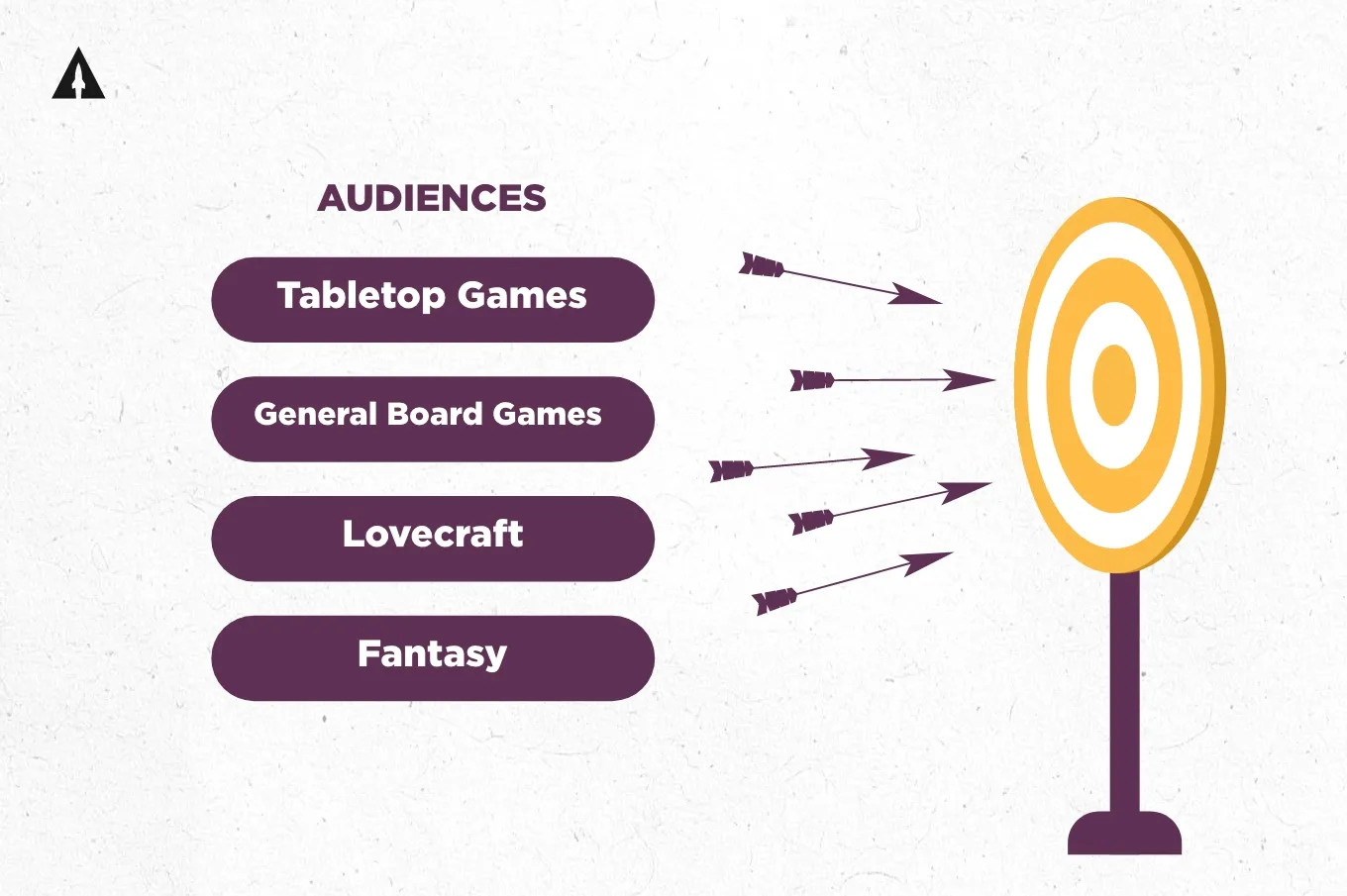
With a clear superfan profile and landing page in place, the next critical step was identifying who the ads should actually reach. The strategy started broad to gather sufficient data.
Narrow targeting early can lead to audience fatigue, where the same small group sees your ads repeatedly without enough new eyes to sustain momentum or meaningful testing. Broad targeting allowed the campaign to gain insights on which audiences performed best before focusing more tightly.
The initial audience pools included general tabletop gamers and board game enthusiasts, both broad but relevant categories. Fantasy fans were added due to the Viking and mythical sea beasts theme, which fits well into that genre. Lovecraft fans, while somewhat narrower, were included because the dark oceanic themes and monstrous foes aligned closely with the game’s atmosphere.
Geographically, the campaign focused on the US first. This balanced broad reach with manageable targeting to establish performance baselines before expanding internationally.
By testing these audiences against different creatives and copy, the campaign could see which groups engaged most and at what cost per lead or purchase.
6. Running Smart Ad Tests
Testing is both an art and a science. Aaron and Adam ran a series of single variable tests, isolating one element at a time to optimize ads efficiently.
The testing sequence began with creative visuals. Four distinct images were tested with the same copy to identify which grabbed attention and drove the best engagement and conversion. From there, the winning creative moved on to headline testing, where four headlines ran against the same primary text and visuals. Lastly, primary text variants were tested using the best performing creative and headline. This systematic approach ensured clear insights about what was truly driving performance.
The results from the creative test showed a cost per lead slightly above benchmark at $4.77 and a cost per purchase just over $26, with a landing page conversion rate of 13.43%. While a bit high, it provided a baseline.
Headline testing improved the cost per lead to $4.10 and boosted landing page conversion to 23.62%, a notable gain that confirmed the power of well-crafted headlines.
Primary text testing saw cost per lead climb to $6.65 and cost per purchase rise to $101, with landing page conversion dropping to 14.81%. This indicated some audience fatigue and possibly a mismatch in messaging for that test group, but still valuable data to refine strategy.
By compiling these results, the campaign could confidently move into scaling with the best combinations.
7. Analyzing Results and Scaling Your Campaign
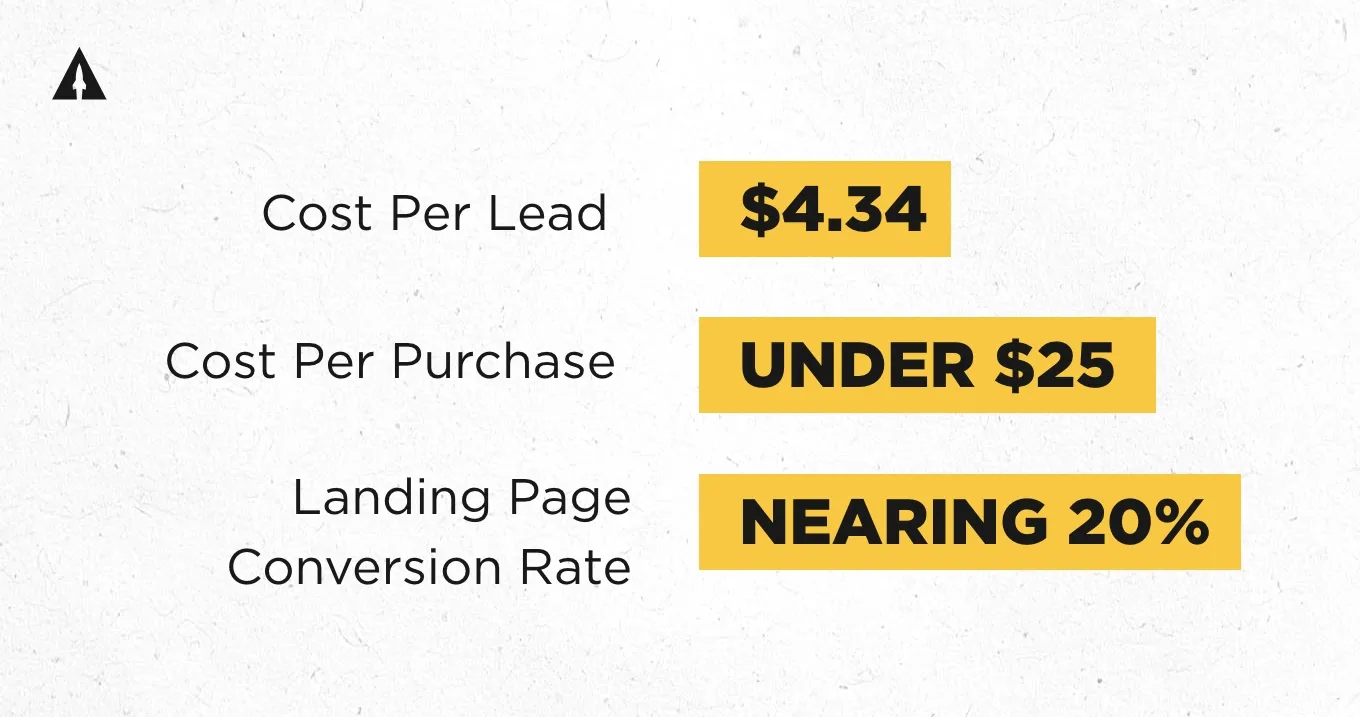
Data analysis was the key to moving beyond tests and growing the campaign. Overall, the combined tests delivered a cost per lead of $4.34 and a cost per purchase just under $25, with a landing page conversion rate nearing 20%. These results indicated a strong foundation for scaling.
The data predicted roughly a 2x return on ad spend, which is an excellent outcome. Doubling your investment in advertising is a solid benchmark that many campaigns aim for before scaling.
Scaling strategies focused on leveraging VIP lookalike audiences—those who had already signed up or placed reservations. Once the VIP pool reached a minimum size (at least 100 people), lookalike targeting allowed the ads to reach fresh potential backers similar to the most engaged fans.
Additionally, the campaign scaled by targeting top-performing audiences in other regions outside the US. This international expansion, informed by initial data, helped grow volume efficiently without wasting spend.
The VIP lookalike campaigns produced spectacular results with a cost per lead as low as $2.39, a cost per purchase at $8.64, 633 purchases, and a landing page conversion rate of 23.93%. Targeting other regions brought even lower cost per lead of $1.54 and similar strong metrics. These successes bolstered confidence in investing more budget into proven audiences and creatives.
Conclusion
Aaron’s journey from a failed campaign on Gamefound to raising over $670,000 on Kickstarter shows just how crucial smart advertising, clear messaging, and data driven decisions are for crowdfunding success. By understanding his superfan, crafting a landing page that truly speaks to them, testing creatives and copy methodically, and targeting the right audiences, Aaron turned his game into a major success story.
This deep dive into his campaign strategy reveals that success isn’t about guesswork, it’s about learning, testing, and optimizing every step of the way.
If you want to see Aaron and Adam break down this entire process in their own words, check out the full video here. It’s packed with even more insights and behind-the-scenes details you won’t want to miss.
Got questions about ads or crowdfunding? Chat with one of our experts today.
Q: How did Aaron raise over $670,000 on Kickstarter after failing on Gamefound?
A: Aaron’s success came from a focused approach to advertising. After his initial campaign on Gamefound failed, he redefined his core audience, built a landing page tailored to that group, and tested different ad visuals and copy. By carefully analyzing data from ad tests, he optimized his marketing to target the right backers and spent efficiently, which ultimately helped him raise over $670,000 on Kickstarter.
Q: What is a Kickstarter superfan?
A: A Kickstarter superfan is the ideal supporter who’s highly interested in your game’s theme and gameplay. This person is more likely to back your campaign early, share it with friends, and help create buzz. Understanding their age, interests, favorite games, and frustrations helps you create marketing that speaks directly to them, improving your chances of success.
Q: How do I make a Kickstarter landing page that converts?
A: To create a landing page that converts visitors into backers, use clear, compelling visuals of your game box and components. Start with a strong headline that highlights the game’s theme and gameplay style. Include immersive descriptions and showcase key features like miniatures or unique mechanics. Add multiple call to action buttons so potential backers can easily pledge whenever they feel ready without scrolling back up or down.
Q: What kind of ad images work best for Kickstarter campaigns?
A: Effective ad images are usually simple but eye-catching. Show your game box with thematic backgrounds, detailed miniatures, or gameplay components. Using a mix of realistic photos and clean graphics can help you reach different audience segments. Keep your images consistent with your game’s style and use tools like Canva or Illustrator to create formats optimized for social media ads.
Q: How do I find the right audience for my Kickstarter ads?
A: Begin by targeting broad interest groups such as tabletop games and general board games to gather enough data. Then, based on ad performance, narrow your audience by including related interests like fantasy or Lovecraft themes if relevant to your game. Start targeting in the US before expanding globally. This step-by-step approach prevents audience fatigue and helps you find the backers most likely to support your campaign.
Q: Why is testing my Kickstarter ads important?
A: Testing allows you to identify which images, headlines, and ad copy resonate best with your audience. Running single variable tests means changing one element at a time to see what improves performance metrics like cost per lead and purchase rates. Testing helps avoid wasting budget on ineffective ads and provides data to refine your campaign strategy for maximum impact.
Q: How do I know if my Kickstarter ads are working?
A: Measure key metrics such as cost per lead (how much it costs to get someone interested), cost per purchase (how much you spend per backer), and landing page conversion rate (percentage of visitors who back your game). If these numbers fall within or better than industry benchmarks, your ads are performing well. Tracking these metrics over time helps you optimize spending.
Q: What is the best way to scale my Kickstarter ads?
A: Once you identify your best-performing ads and audiences, scale by increasing your budget on those ads and creating lookalike audiences based on your most engaged backers (VIPs). Expanding to similar regions outside your initial market can also increase reach. Scaling with data driven decisions helps maintain efficiency and maximizes your return on ad spend, ultimately driving more backers to your campaign.
