


We’ve all seen those big Kickstarter campaigns – you know, the ones that raise $250,000, $500,000, even $1,000,000 or more. But those creators didn’t just flip a switch and magically hit those numbers.
They had to invest in their games first, creating something compelling enough that thousands of people would think, “I need this in my life.” But how much was that investment, really?
How much does it cost to publish a board game and launch it through crowdfunding? I’ve been diving deep into this question because we all want to know what we’re getting ourselves into before we take the plunge.
If video is more your style, you can see a whole breakdown on this topic here:
I wanted to get as precise an answer as possible, so – I called up my friends and experts across the entire industry. Game designers, legal experts, manufacturers, advertisers, fulfillment centers, you name it.
I wanted to do all the math and share with you exactly what to expect cost-wise when bringing your game to life.
I’ve broken this down into 8 key cost categories for publishing a board game:
- Game Design & Art
- Legal
- Manufacturing
- Marketing
- Advertising and Promotions
- Platforms & Payment Processing
- Freight, Taxes and Tariffs
- Campaign Management
But here’s what’s both exciting and slightly terrifying – each of these categories exists on a spectrum. There are things you could totally DIY if you needed to, and there are things you’re going to have to pay for no matter what. Stick around to the end and I’ll summarize your totals for what’s nice to have versus what you absolutely have to have.
Key Takeaways
Before we dive into the nitty-gritty details, here are the main things you need to know about the cost to publish a board game:
- Total publishing costs can range from $20,000 to over $100,000 depending on how much you DIY versus outsource
- Manufacturing and shipping costs vary dramatically based on your game’s components, weight, and complexity
- Advertising for a well performing campaign typically requires 15-25% of your funding goal to be effective
- Legal protection for your intellectual property is essential but can be done affordably with some DIY elements
- Platform fees are consistent across Kickstarter, Gamefound, and BackerKit at around 8% of funds raised
Cost Category #1: Game Design & Art
You’ve got this amazing idea bouncing around in your head, but now you need to make it tangible – something you can actually playtest, gather feedback on, and eventually turn into your final product. This is where the rubber meets the road with design, prototypes, and art.
So how much should you spend on a prototype? Does the money you put in at this stage directly impact how well your game will be received?
I had an amazing conversation with Joe Slack, creator of Board Game Design Course, and his insights totally gave me some perspective.
Joe told me something that made me feel so much better about getting started: “For an early prototype, I suggest doing it as basic as possible. Spending as little dollars as possible, printing it out yourself, that type of thing. Just making it look good enough.”
That’s reassuring, right? You don’t need to break the bank right out of the gate.
The Two-Phase Prototype Approach
Here’s what Joe taught me about prototyping – there are really two phases:
Phase 1: The Playtest Prototype – This is your “work out the kinks” version. You could spend literally $0 on this by using index cards, construction paper, buttons, and components from other games lying around your house. At most, you might spend $20 at a craft store or office supply shop.
Phase 2: The Presentation Prototype – This is when you need something that looks the part for marketing purposes, like sending it to content creators for reviews. A single prototype from a manufacturer will run you around $150-200, depending on your game’s complexity. The breakdown looks something like this:
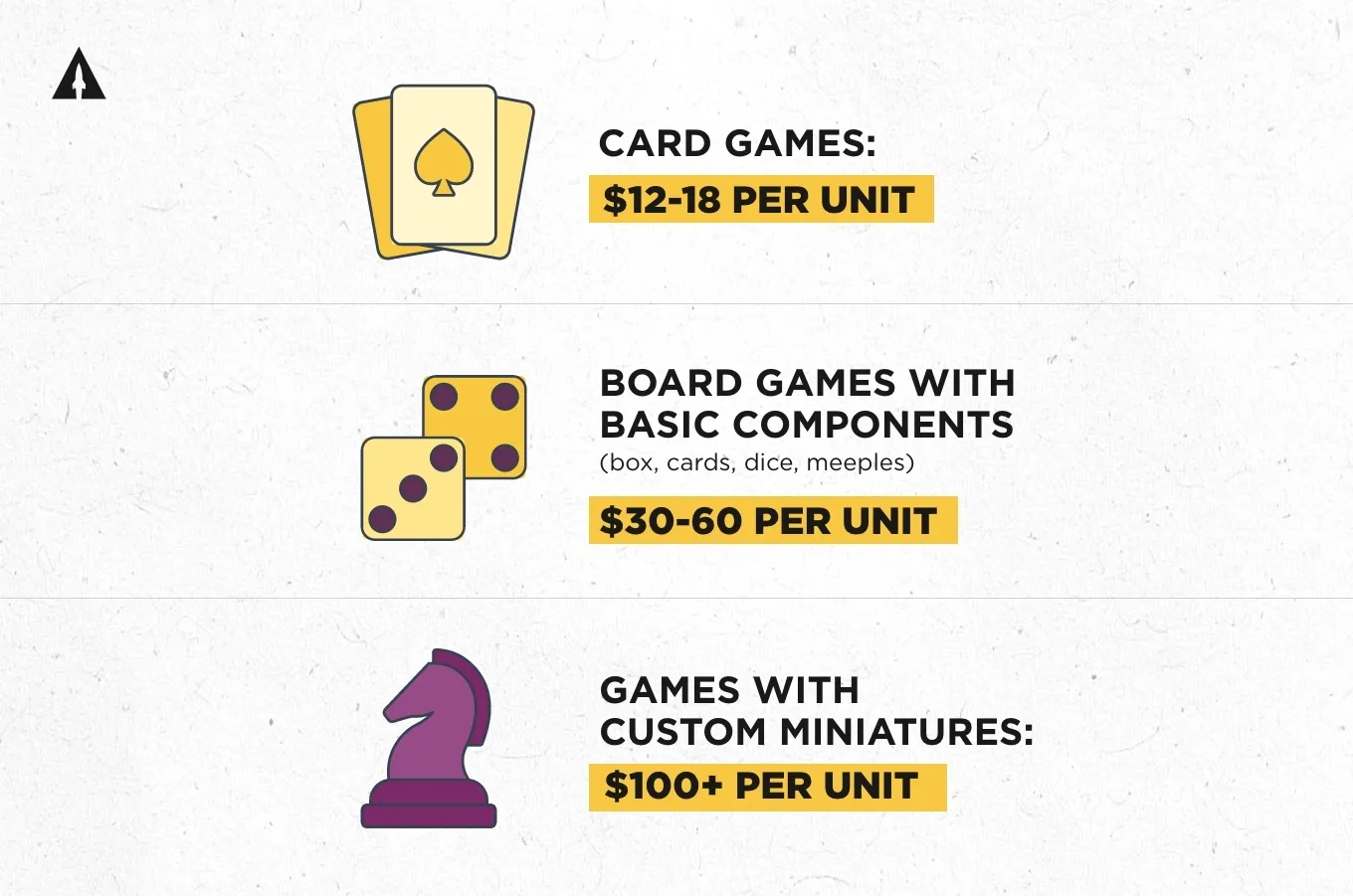
- Card games: $12-18 per unit
- Board games with basic components (box, cards, dice, meeples): $30-60 per unit
- Games with custom miniatures: $100+ per unit
Our Director of Games, Victor Shiu, is a perfect example of this process in action. He’s working on bringing his game Hover to life, and his original prototype was made entirely from index cards and components he had lying around his house. Now he’s moving into that second phase with a manufacturer to create something more polished.
The Art Investment
We can’t talk about design costs without diving into art – and oh boy, this is where things can get interesting. Art is so subjective, and the costs can vary wildly based on your strategy.
Joe gave me some solid intel on this: “You can DIY any number of these steps, but if you’re planning to hire for each step, that could be up to the $10,000 range for art, graphic design, and rulebook editing/layout combined.”
Some artists work hourly at $50-65 (or more or less depending on experience), while others charge flat rates or per-item pricing. For example, a box cover might run around $1,000, while individual card images could be $50-100 each.
But here’s where it gets really interesting – I spoke with Tim O’Brien, creator of the card game Gudnak, and he revealed something that really opened my eyes.
He and his co-founder are both graphic designers, so they saved money on formatting the rulebook, packaging, and website work by doing it in-house. But for them, art IS the differentiator, and between their core game and three expansions, they’ve invested over $100,000 on art alone.
One hundred thousand dollars on art. That really shows you how this category can exist on such a massive spectrum.
Playtesting Costs
Once you have that prototype, you need to get it in front of people to test. This can be as simple as a $0 DIY approach with friends at your local board game cafe, or you can level up by attending conventions. Convention playtesting might include:
UnPub: Badge around $75, travel $500-1,000
Larger conventions (Origins, GenCon, PAX): Badges $200-350, travel $500-1,000
If we’re planning for the higher end of convention attendance, playtesting brings our total for the Game Design and Art category to an estimated $12,626.
Cost Category #2: Legal
Wait, you need a lawyer to launch a board game? Yes, no, kind of – let’s talk about it, because this was definitely one of those areas where I learned something new.
Your game is your intellectual property, and there are certain things you’ll need to do to protect that as you move forward in the publishing process.
I sat down with Zack Strebeck, board game lawyer extraordinaire (seriously, this guy represents some of the biggest names in the space like Stonemaier Games and GameJolt), to understand what costs creators should expect. Zack talked about two main costs you can plan for:
Filing Your LLC
This is essentially making your publishing company real in the eyes of the law. As Zack explained, “We typically do that because we want to limit your personal liability for any legal issues with the project.”
You can DIY this, but hiring a lawyer ensures it’s all done correctly and on time. If you take the DIY approach you can expect to pay around $125.
For filing an LLC, expect lawyer fees between $600-1,000 depending on whether there’s a single member or multiple members. “That fee includes all the agreements between everyone to outline everyone’s rights and voting rights and ownership and vesting of their ownership over time,” Zack told me.
Clearance Searches & Trademark
If “clearance searches” is an unfamiliar term, don’t worry, you’re not alone, and I asked Zack to break this down for me.
This is essentially the step before filing your trademark. It’s a deep dive the lawyer does to make sure no one else is already using the name you want, and then filing on your behalf so that no one in the future can use that name but you.
The clearance search, lawyer fees, and trademark filing combined costs about $1,350, with $350 being the actual trademark filing fee.
Remember, this isn’t a case where a lawyer would ever work on contingency based on how your campaign performs – these are fees you want to plan to pay upfront to protect your intellectual property as you prepare to launch.
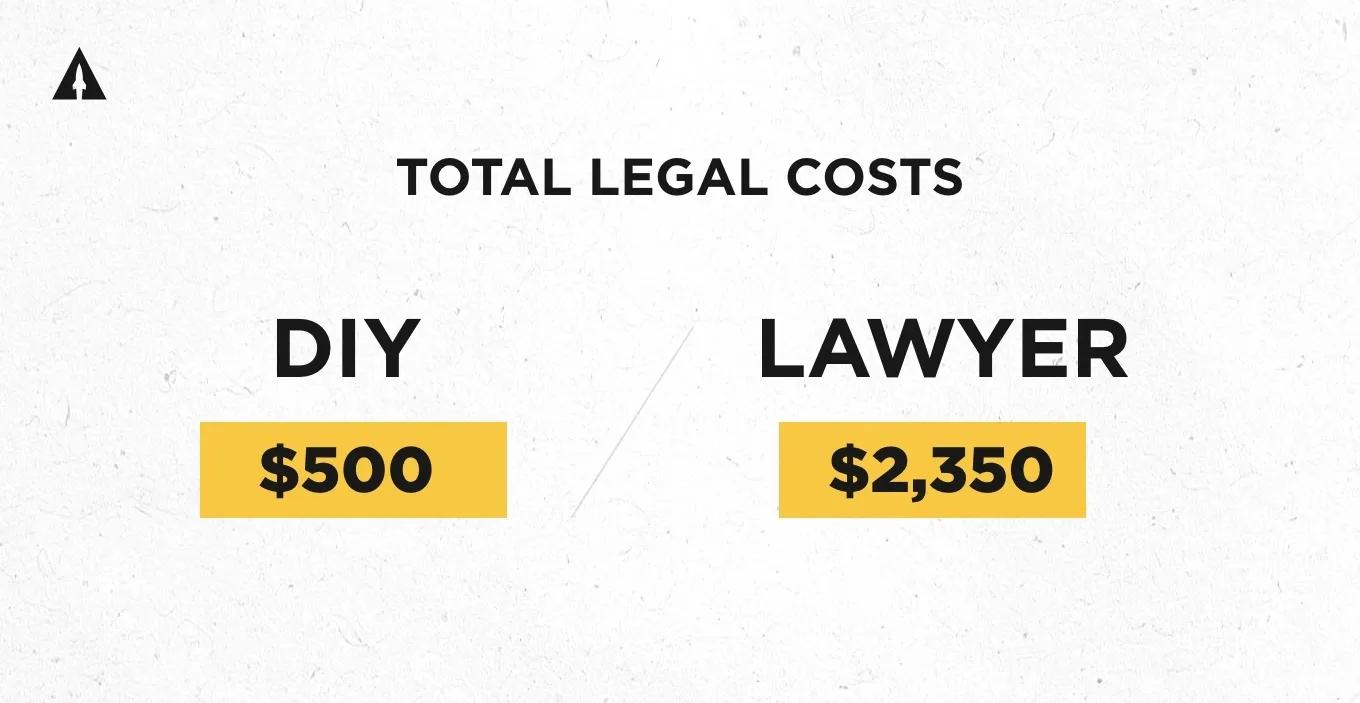
Total legal costs: Around $500 if you DIY everything, or $2,350 if you use a lawyer for the full package.
Cost Category #3: Manufacturing
Let’s move on to one of the more financially daunting categories for a lot of folks: manufacturing. How much is it actually going to cost to physically make your game? I called up Tyler Lipchen, Senior Project Manager at Panda Game Manufacturing, and he walked me through all the expected costs and how you can estimate them specifically for your project.
Understanding the Key Cost Components
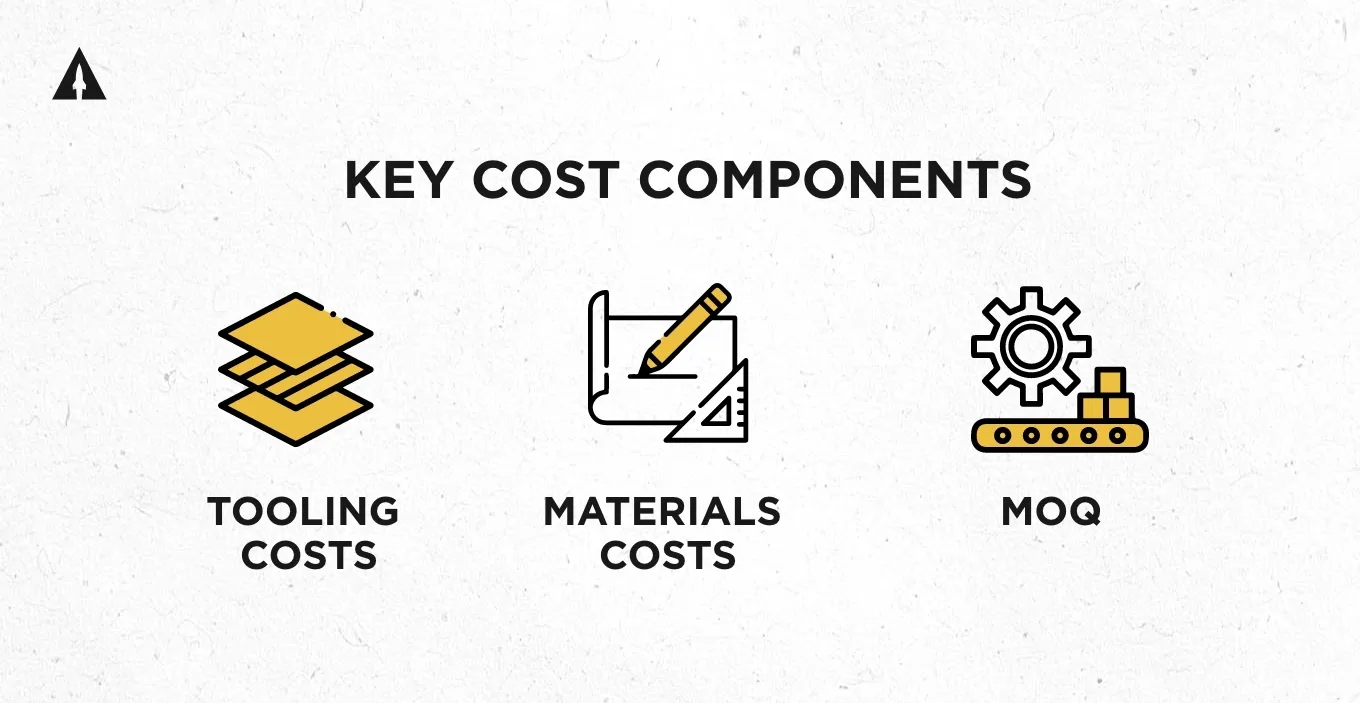
Tooling Costs
These are expenses for designing, developing, and fabricating the tools, molds, dies, and fixtures used in manufacturing. Your tooling cost can range dramatically depending on how common or unique your components are.
Tyler showed me examples of standard components that manufacturers likely have molds for on hand – things like plastic circle tokens or acrylic gems cost less because the molds exist.
Something completely custom? That’s where costs skyrocket. A custom miniature steel mold could cost you over $5,000 just for the base.
Materials Costs This is where a lot of the variance comes in. You’ve got punchboards on the cheap end, followed by premade plastics or wood. More complicated plastics like acrylics hit the mid-tier pricing, and you get into higher-end costs with metals.
Minimum Order Quantity (MOQ) Tyler explained this perfectly: “The term you’ll hear is minimum order quantity or MOQ, and that’s the minimum number of units that a manufacturer will produce for mass production. Mass production machines like offset printers require a lot of setup. Once the machines are running, it’s very fast and very affordable, but it takes just as much time and effort to set up a print run for 500 units as it does for 5,000 or 50,000 units.”
Most manufacturers have an MOQ around 2,000 units to make that setup cost worthwhile.
Calculating Your Per-Unit Cost
Your per-unit cost is calculated by dividing your total production costs (tooling + materials + setup costs) by your order quantity. Tyler gave us a quick trick for a rough estimate:
- Find a game similar to yours
- Look at its MSRP, divide by 5 or 6
- That should roughly be your per-unit cost for manufacturing and shipping.
But remember, this is just an estimate – there’s tons of variance based on materials, weight, and complexity. The best way to get accurate numbers is to speak directly with a manufacturer or use pricing estimators like the one on Panda’s website.
Pro tip from Tyler: Remember to ask your manufacturer about added fees like inventory or penalty fees for products that aren’t moving or get delayed!
Cost Category #4: Marketing
Marketing is absolutely necessary to get eyes – and eventually players – on your game. How are people going to find out about your amazing creation if you don’t tell them about it? For this section, we’re talking about costs like website hosting fees, photography, video production, campaign page design, face-to-face marketing, and influencer partnerships.
Website Hosting Fees
There are tons of options for hosting your landing page – Wix, Shopify, or specialized tools like LaunchKit. If you’re going the total DIY route, your bare minimum cost is hosting fees, which can range from $30-150 per month depending on the plan you choose. There are also crowdfunding-specific funnel builders like LaunchKit by LaunchBoom, which is a pre-launch powerhouse that lets you build your entire funnel, access custom audiences, and dive deep into analytics.
Video, Photo, and Campaign Page Creation
I sat down with crowdfunding video expert Ori Kagan, founder of Kagan Productions, and his insights were so valuable. As Ori put it, “You’re communicating the experience of playing your game without actually playing it.”
He outlined three approaches creators can take:
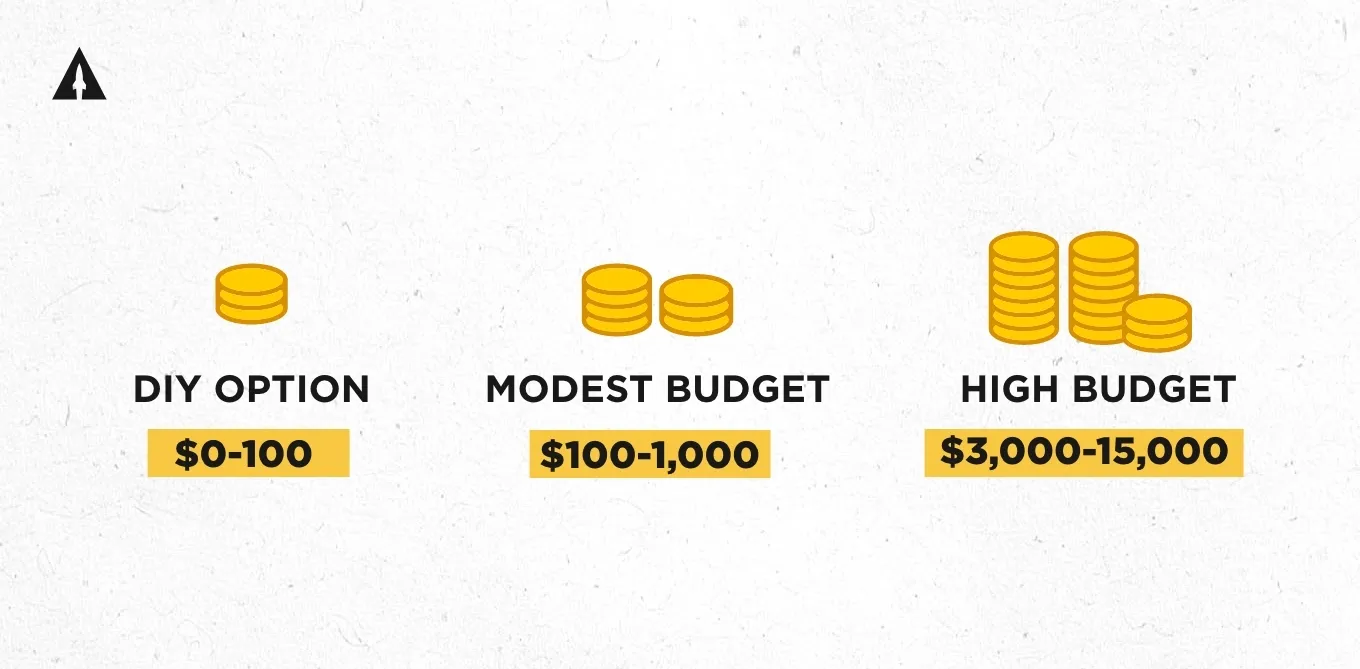
DIY Option ($0-100): This works best for campaigns with a strong personal story. Ori gave the perfect example of Core Quest, a dungeon-crawling game created by a father and daughter during COVID. Their video was just them talking to the camera about their creative experience together, and it was absolutely compelling because of their authentic relationship and story.
Modest Budget ($100-1,000): This is DIY-plus territory. You’re bringing in friends to model playing your game, maybe borrowing a friend’s good shooting location, and hiring freelancers for editing or voice-over work.
Pro tip from Ori: Don’t skimp on voice actors! Good audio can really tie your campaign together.
High Budget ($3,000-15,000): This involves hiring experts who know animation, editing, and production to give your game that immersive feel. Think videos like Sea Beasts that make you feel like you’re actually in the game world.
Photography and Design
Photographers vary based on availability, skill level, experience, and the quantity and type of photos you need. Ori typically sees ranges from $300-3,000 depending on whether you’re hiring from a freelance website or working with a high-end industry professional.
Graphic designers follow a similar range – templates from a freelancer might cost a few hundred dollars, while a campaign page specialist doing custom work could run a few thousand. You can also hire a professional copywriter for your page copy, which typically runs $1,000-1,500 for the full page.
Face-to-Face Marketing
Convention attendance is technically optional – it’s a “nice to have,” not a “must have” – but it can be incredibly valuable for getting eyes and backers on your campaign.
Convention costs include:
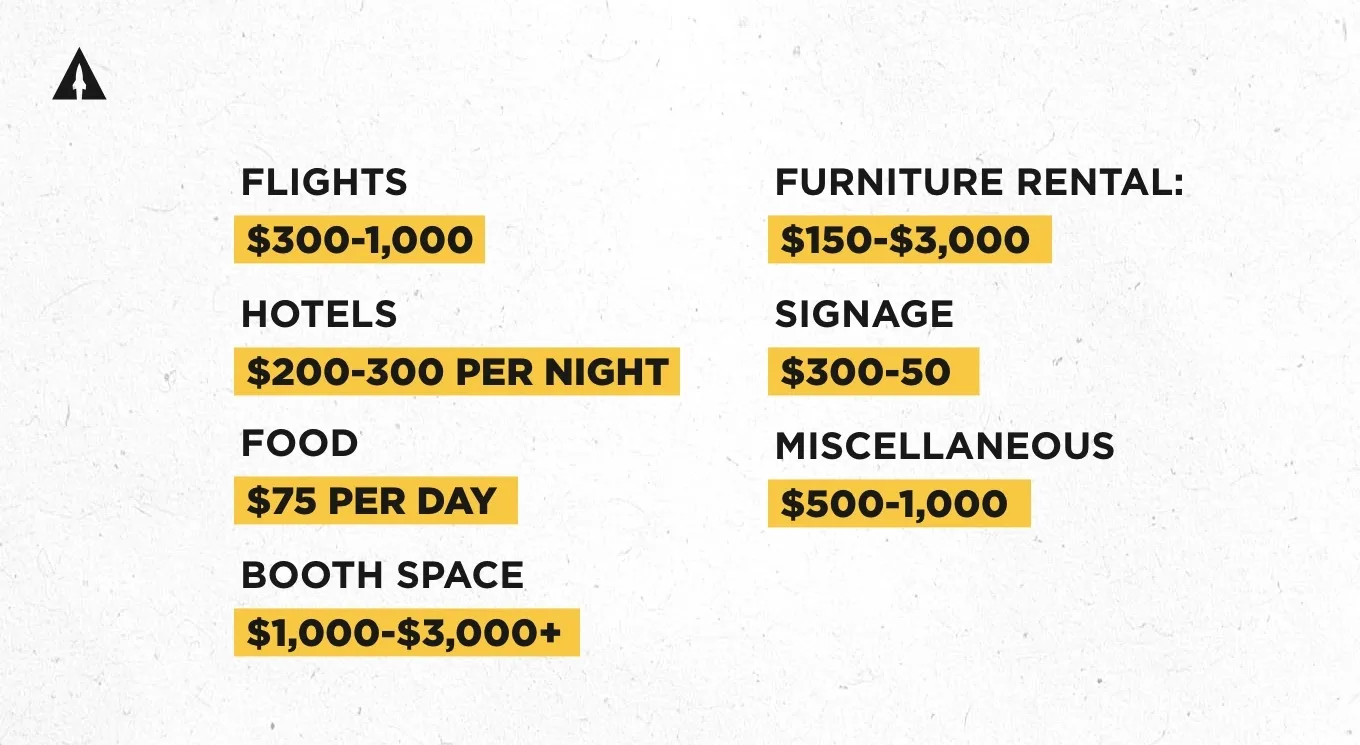
- Flights: $300-1,000 domestically (and here’s a money-saving tip: sometimes upgrading to first class for $150 gets you 150 lbs of checked baggage weight, which might be cheaper than shipping your materials separately)
- Hotels: $200-300 per night for major conventions (book early for better rates!)
- Food: Budget around $75 per day per team member
- Booth space: $1,000 for smaller conventions to $3,000+ for popular ones (10x10 basic space)
- Furniture rental: $150 for basic chairs to $3,000 for full display setups
- Signage: $300-500 per 8x10 banner, $300 for custom tablecloths
- Miscellaneous: Branded t-shirts, displays, printing materials ($500-1,000)
A basic convention presence will run you $4,000-10,000 depending on team size.
Influencer Marketing
Working with influencers is another great way to reach new audiences. I met with Jamie and Adam from Tabletop Vibes, who do in-depth game reviews. Most packages range from $100-1,000, and what you get can vary significantly within that range.
Keep in mind how time-consuming content creation can be. Getting the right angles and lighting takes hours, so hiring someone experienced might save you time and money in the long run.
Marketing category total: Depending on your DIY confidence and skills, you could spend anywhere from $0 to $19,500 for landing pages, campaign assets, and professional support. Add $4,000-10,000 for convention marketing and around $1,000 for influencer partnerships.
Cost Category #5: Advertising and Promotions
For most creators, paid advertisements are going to be critical for campaign success. I’m talking about Meta Ads – the tried and true way to get eyes on your campaign. I spoke with Chen, Program Manager for Games and Comics at Jellop, and Maria Dutton, Games Launch Director at LaunchBoom, about how much creators should spend on paid ads and whether this is something you can DIY.
The ROAS Formula
This category is more of a math problem based on your numbers than a fixed figure. Maria explained, “When it comes to ad spend, most creators are going to be trying to maintain between a 2.5 to 5 times return on ad spend. You want to make sure you’re spending time before your campaign launches doing testing, getting an understanding of what your cost is relative to your associated demand.”
Not every campaign is the same. Some creators do far above a 5x ROAS. Botany, for example, was seeing a 12x ROAS within the first week!
Real Example: Botany’s Success
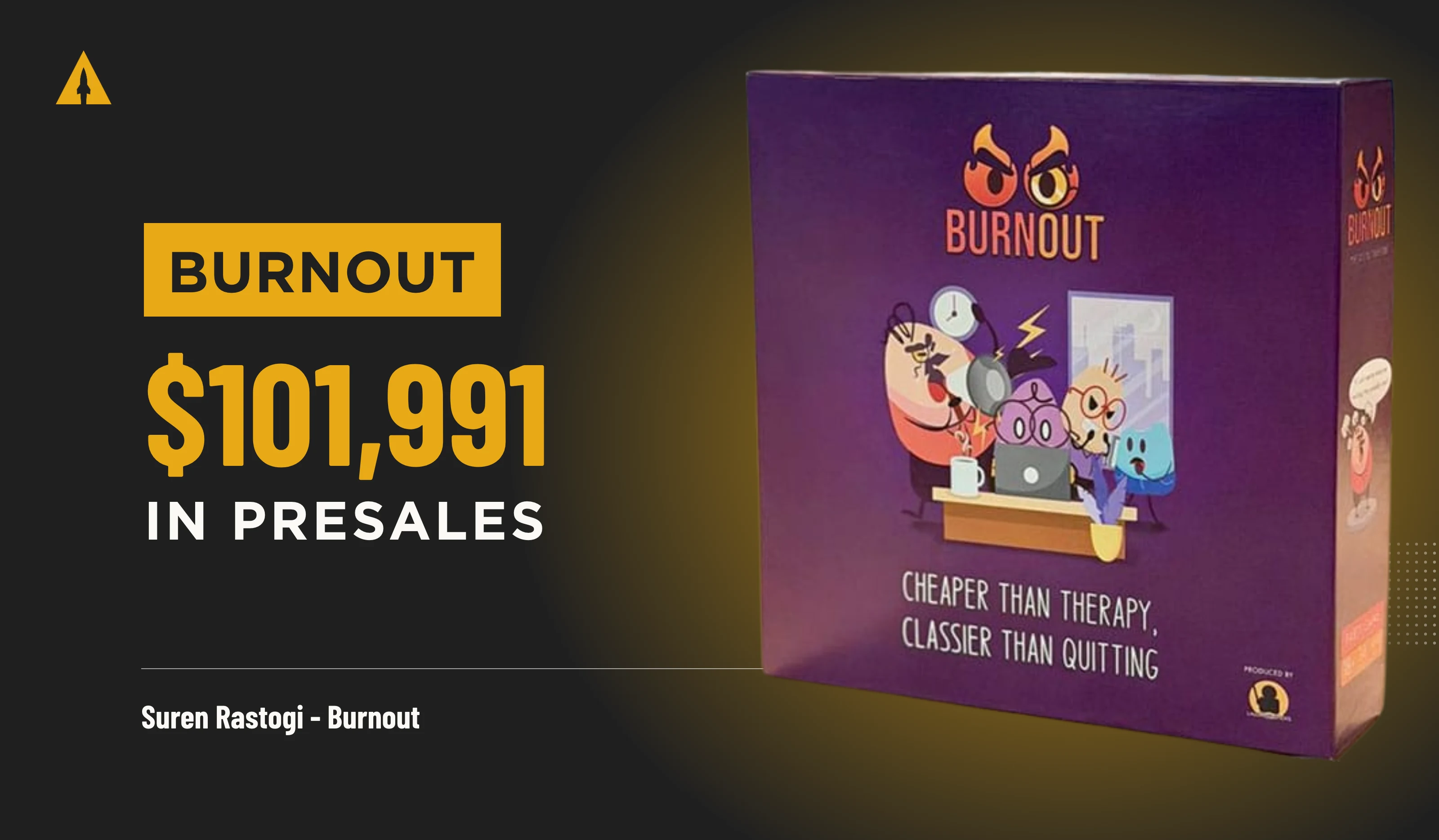
Let me walk you through Botany’s actual numbers because they perfectly illustrate this approach: The creators, Dusty and Amy, started slow and spent $5,000 to collect emails before launch.
4,407 people signed up - great results! So they increased their budget to $13,000, growing their email list to 8,700 people.
Launch day hit, and they made $105,965 (mostly from their email list).
With such incredible returns, they turned ads back on, spending $400 and making $4,200 – a 10.5x return on investment. It was a no-brainer to keep spending.
Their total ad spend? $125,000 during the entire campaign. But they didn’t decide upfront to spend that much – they tested intentionally, watched their numbers, and scaled accordingly.
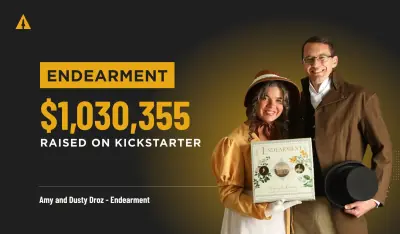
They spent money when they made money, and because of that approach, they raised $1,057,307.
DIY vs. Professional Management
Can you DIY paid ads? Chen from Jellop offered this perspective: “Facebook Ads Manager is fairly Byzantine, and the policies change all the time. You could try it yourself, spending way more time for performance that isn’t quite as good, or you can let us use our expertise and focus on the more fun stuff, like working with influencers and interacting with your fans.”
Professional ad management typically costs around 15% commission on pledges they bring to your campaign.
Budget estimate: A well performing campaign wanting to raise $100,000 on Kickstarter should plan on setting aside around $15,000-$25,000 for paid ads, or around 15-25% of the total raise.
Cost Category #6: Platforms & Payment Processing
There are three main platforms where you can launch your game: Kickstarter, Gamefound, and BackerKit. Each has payment processing fees, and they’re all pretty similar. All three use an “all-or-nothing” crowdfunding model, if you don’t hit your goal, no funds are taken. If you do fund, backers’ credit cards are charged when the campaign ends.
The Fee Breakdown
Each platform charges:
- 5% platform fee on funds raised (this is how they make money)
- 3% + $0.30 per pledge for payment processing (Gamefound is 3% + $0.20 per pledge; BackerKit is 2.9% + $0.30)
- Kickstarter micropledge discount: For pledges under $10, there’s a discounted fee of 5% + $0.08 per pledge
Using our $100,000 raise example launched on Kickstarter:
- Platform fee: $5,000 (5%)
- Payment processing: $3,000 (3%)
- Per-pledge fees: $150 (assuming 500 backers at $0.30 each)
Total platform costs: $8,150
The good news? You pay these fees from what you raise, not upfront.
Cost Category #7: Freight, Taxes and Tariffs
We’ve made it to fulfillment! Like manufacturing, your fees can vary dramatically depending on your game’s size, weight, and components. I sat down with Josh Burdick from Easyship, Brandon Rollins from Fulfillrite, and Justin Bergeon from ARC Logistics to understand all the categories you need to plan for.
Container Costs
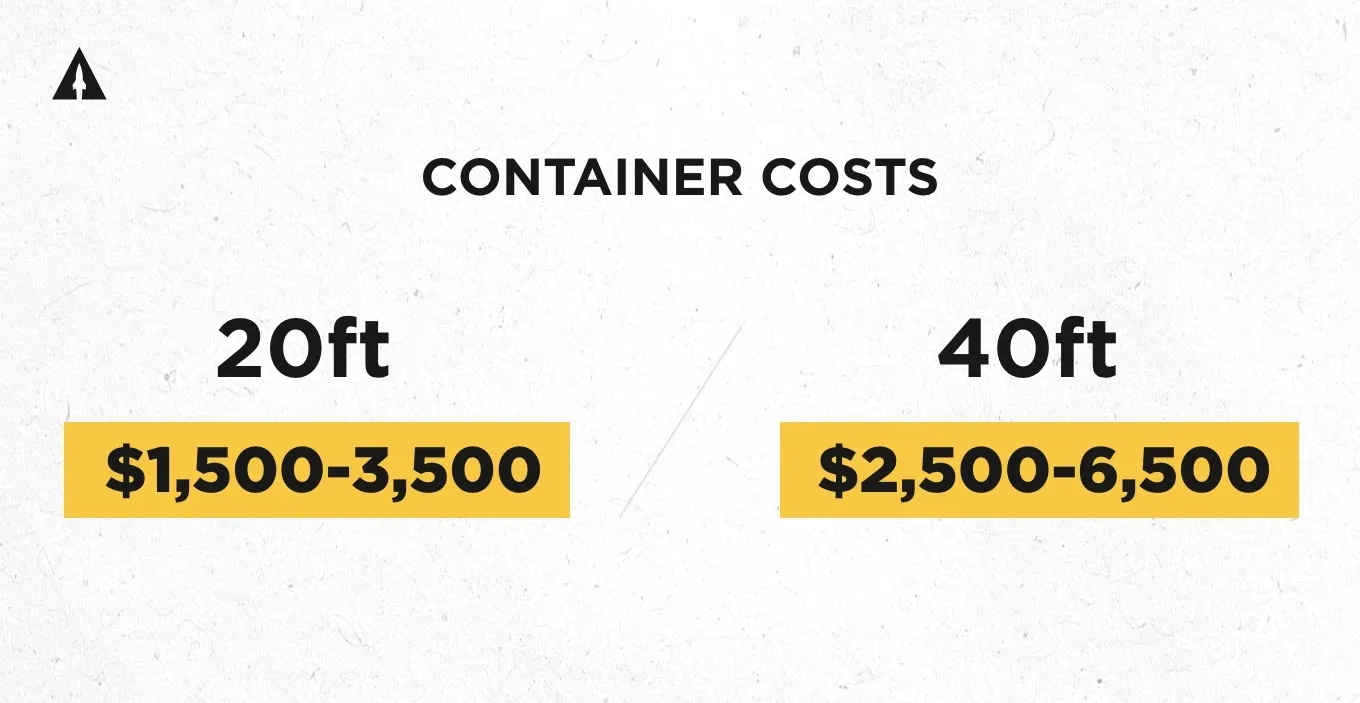
Containers store your games during shipping. Size determines cost:
- 20ft container: $1,500-3,500
- 40ft container: $2,500-6,500
Location matters too. Justin broke it down by destination from China:
- West Coast: $2,000-2,500
- East Coast: $4,000
- Chicago: $5,000-5,500
These are port-to-port charges, and heavier containers hit the high end of these ranges.
VAT (Value Added Tax)
This consumption tax is levied at each stage of production and distribution. VAT rates range from 17% to 27% across the EU (20% in the UK). Josh mentioned that Easyship has a VAT calculator to help estimate your specific costs.
Tariffs
These are unavoidable when manufacturing in China and they’ve been unusually volatile, swinging from 145% to 30% within weeks in 2025. Because rates change often and vary by product category, check the current rate for your specific goods before finalizing your budget rather than planning around a fixed number.
Inventory Storage
This is rent for your game in the warehouse! Unlike apartment rent where you pay for the entire space, you typically only pay for the space your game actually uses. As units sell and move out, your storage costs decrease. A pallet ranges $5-40 per month, and how many units fit depends on your game’s size.
Pick & Pack
The cost for warehouse staff (human or robot) to take your game from storage and pack it for shipping:
- Simple card game: $2-5
- Large board game with multiple components: More, depending on complexity
Brandon typically sees around $2.25 plus $0.25 for every additional item that goes in the box.
Last Mile Delivery
This is getting your game from the warehouse to your backer’s hands. Josh’s advice? “Go for the cheapest and most reliable carriers. It’s not like an Amazon order where you need overnight delivery. I usually recommend USPS Ground Advantage – anywhere from two to seven days, and it’s your cheapest option with great tracking.”
Brandon agreed, adding that UPS Ground is becoming competitive too, so it’s worth comparing all options. Remember, your manufacturing decisions (components, weight, dimensions) will influence all your final shipping calculations.
Cost Category #8: Campaign Management
You’ve made it this far and you’re probably thinking, “That’s a lot to manage!” You’re not alone in that thought, which is why there are different options from DIY to white-glove service for campaign management itself. I called up Maria Dutton to discuss the three main approaches:
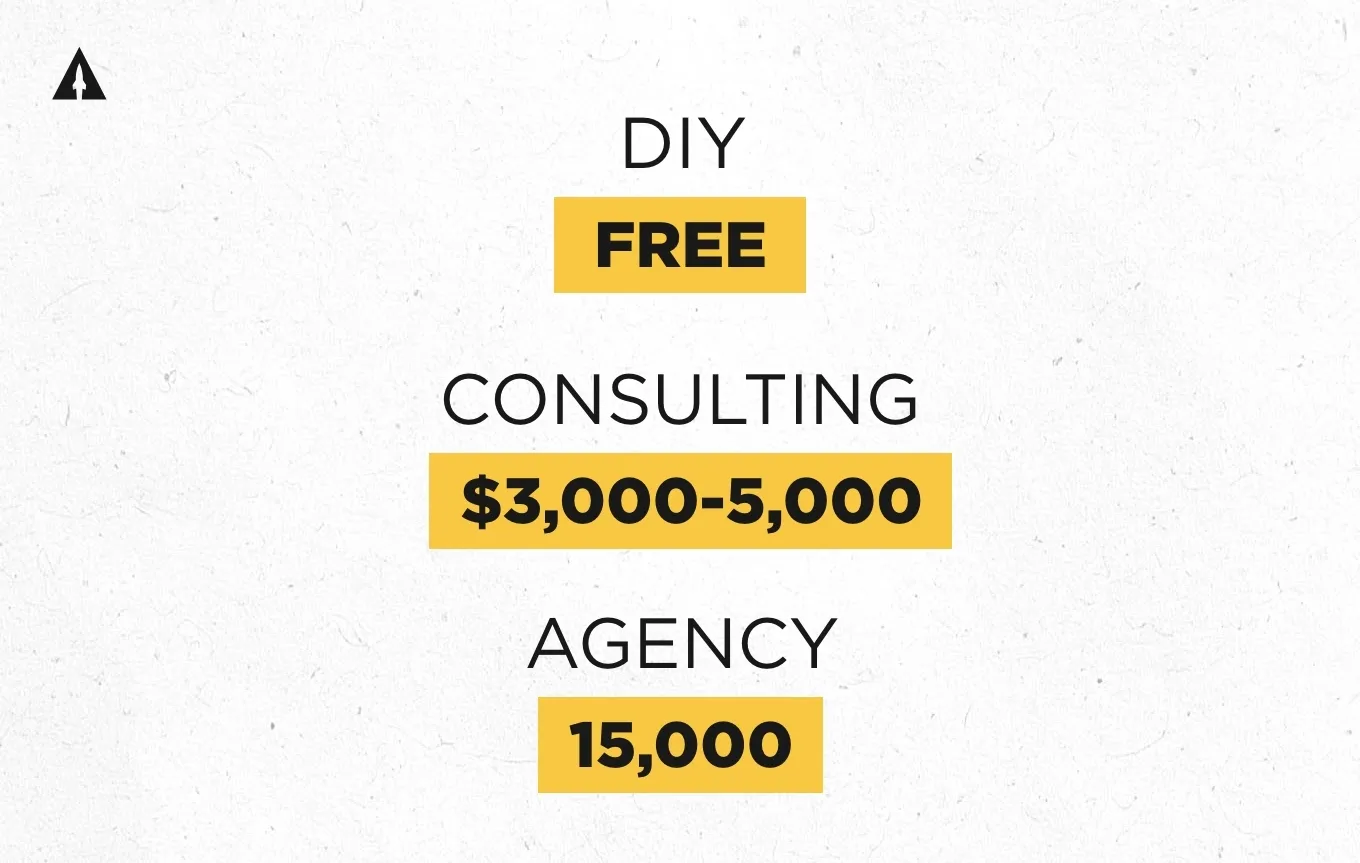
DIY Approach
Managing your campaign yourself is free, but it means you’re handling everything solo. You’re responsible for strategy, execution, troubleshooting, and optimization, all while trying to stay sane during your live campaign.
Consulting Services ($3,000-5,000)
With consulting, you’re still doing the work, but now you’re doing it alongside experienced crowdfunding experts. Consultants guide you through strategy, funnel building, ads, and platform setup.
Full-Service Agency ($15,000)
Agencies help manage all the moving pieces, but that doesn’t eliminate the individual costs of freelancers and specialists. They coordinate everything but typically work on commission or require significant upfront investment.
The Total Cost to Publish a Board Game
That was a lot, but now we can answer our original question: How much does it cost to publish a board game? Here’s the thing – we end up with a spectrum, and that’s actually good news because it means you have options.
If you white-glove everything and outsource across all categories, you could easily spend $98,625 before manufacturing and shipping costs.
But remember, most categories are à la carte. Maybe you’re the artist, so you save thousands there. Maybe you’re a stellar iPhone photographer who can DIY your campaign page. Or maybe you work with expert consultants instead of hiring a full-service agency.
The Minimum vs. Maximum Breakdown
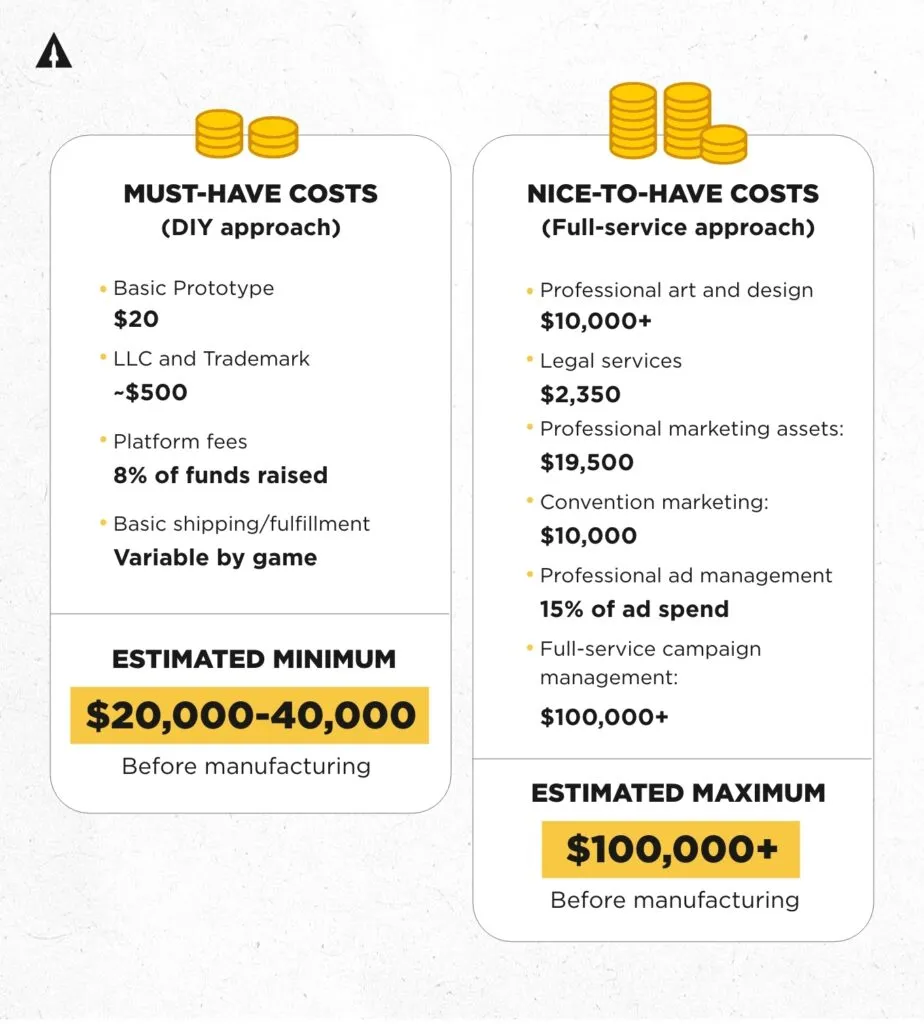
Must-Have Costs (DIY approach):
- Basic prototype materials: $20
- LLC and Trademark filing (DIY): $500
- Platform fees: 8% of funds raised
- Paid ads: 15-25% of your funding goal
- Basic shipping/fulfillment: Variable by game
Estimated minimum: $20,000-40,000 before manufacturing
Nice-to-Have Costs (Full-service approach):
- Professional art and design: $10,000+
- Legal services: $2,350
- Professional marketing assets: $19,500
- Convention marketing: $10,000+
- Professional ad management: ~15% commission on pledges it brings in
- Full-service campaign management: $15,000+
Estimated maximum: $100,000+ before manufacturing
The total cost to launch a board game exists on this spectrum because every creator’s situation is different. Your skills, budget, timeline, and risk tolerance all factor into where you’ll land.
What’s exciting is that you get to choose your own adventure. Start with what you can afford and what you can do yourself, then invest in professional help where it makes the biggest impact for your specific project.
The most important thing? Start somewhere. Every successful game started with someone just like you, looking at these numbers and thinking, “I can make this work.” And you know what? You absolutely can.
Ready to turn your game idea into reality? We’d love to help you navigate this journey and make smart decisions about where to invest your time and money for maximum impact. Click here to chat with one of our team members.
How Much Does it Cost to Publish a Board Game? Frequently Asked Questions
How much does it cost to make a board game?
The total cost to make a board game varies dramatically based on complexity and how much you DIY versus outsource. For a basic card game with minimal marketing, you might spend $10,000-20,000, below the $20,000-40,000 minimum above because a simple card game needs far less manufacturing and marketing spend. More complex board games with professional marketing and full-service support can easily cost $50,000-100,000 or more. The key is understanding that most costs exist on a spectrum – you can start lean and scale up as your campaign gains traction.
How much does board game manufacturing cost?
Board game manufacturing expenses depend heavily on your components, materials, and order quantity. A rough estimate is to find a similar game’s MSRP and divide by 5-6 to get your per-unit manufacturing cost. Simple card games might cost $3-8 per unit to manufacture, while complex games with custom miniatures could be $15-30+ per unit. Remember to factor in tooling costs for custom components, which can range from hundreds to thousands of dollars.
How much should I spend on Kickstarter ads?
Most successful campaigns maintain a 2.5-5x return on ad spend (ROAS), meaning for every dollar spent on Kickstarter ads, you should aim to generate $2.50-5.00 in pledges. For a $100,000 campaign goal, budget around $15,000-25,000 for advertising, but start with testing smaller amounts first. The key is testing before launch to understand your actual conversion rates, then scaling spending based on performance rather than committing to a fixed budget upfront.
How much does a board game prototype cost?
A board game prototype cost breakdown has two phases: early playtesting prototypes can cost $0-20 using household materials and craft supplies, while presentation-quality prototypes for marketing cost $150-200 from manufacturers. Card games run $12-18 per prototype unit, basic board games with standard components cost $30-60 per unit, and games with custom miniatures push over $100 per unit. Start cheap for testing, then invest in quality prototypes for marketing purposes.
How much does board game shipping cost?
Board game shipping expenses vary significantly based on game weight, size, destination, and current tariff rates. Expect to pay $5-40 monthly for warehouse storage per pallet, $2-5 per game for pick and pack services, plus actual shipping costs that depend on carrier and speed.
International shipping from China includes container costs ($1,500-6,500), VAT (17-27% in the EU, 20% in the UK), and tariffs, which vary significantly by product category and change frequently — always confirm the current rate for your specific goods before budgeting.
Always get quotes from fulfillment companies for accurate estimates specific to your game.
How much does it cost to launch a board game?
The cost to launch a board game through crowdfunding ranges from $20,000-100,000+ depending on your approach. Minimum viable launches focusing on DIY elements might cost $20,000-40,000 before manufacturing, while professionally managed campaigns with full marketing support easily reach $75,000-100,000 before manufacturing. The key is understanding which elements you can handle yourself versus where professional help provides the best return on investment for your specific situation and goals.
