


I walked into GenCon a few years back and watched a creator sit at their booth, staring at the crowds passing by. Their game had solid mechanics—they’d playtested for months. But their booth looked like a prototype graveyard, with mismatched art and placeholder graphics scattered across demo copies.
Meanwhile, the booth next to theirs had a line 50 people deep. Same show. Same aisle. The difference? Stunning visuals that stopped people mid-stride.
Players don’t fall in love with rulebooks. They fall in love with worlds. With colors, characters, and stories that spark their imagination before they’ve even touched a single component. Board game art isn’t just decoration, it’s essential to gameplay clarity, emotional engagement, brand identity, and marketing appeal. The difference between “interesting idea” and “instant back” often comes down to presentation.
Great visuals differentiate your game from the hundreds of others competing for attention, whether that’s on a Kickstarter page, a convention floor, or a retail shelf.
This guide breaks down how to bring your world to life: from hiring the right artists and designers, to developing consistent visuals, to using your art as a powerful marketing tool that builds hype before launch.
Prefer to watch this in video form? I got you:
Key Takeaways
- Board game art encompasses all visual elements: illustrations, graphic design, iconography, and physical components
- Effective game art balances three pillars: illustration for worldbuilding, graphic design for clarity, and component design for table presence
- Find talented collaborators through platforms like ArtStation, Behance, Doodle Meeple, and board game communities
- Start art development after mechanics are locked, but budget time early in your process
- Strong visuals serve double duty: improving gameplay immersion and generating marketing excitement
- Quality art typically accounts for 15–25% of overall game development costs
What Is Board Game Art?
Board game art is the collection of all visual elements in a tabletop game. This includes illustrations that bring your theme to life, graphic design that makes information readable, iconography that speeds up gameplay, and the physical design of every component players touch.
What I didn’t realize during my first game development project was how much visuals contribute beyond aesthetics. They’re doing serious work: building the world players imagine themselves in, making rules instantly understandable without constant rulebook checking, and creating an emotional connection that transforms a stack of cardboard into an experience people want to share.
When done right, your visuals communicate what kind of experience players should expect before they’ve read a single rule. A game with whimsical watercolor forests tells a different story than one with gritty cyberpunk cityscapes—and attracts different audiences.
3 Key Pillars of Effective Board Game Art
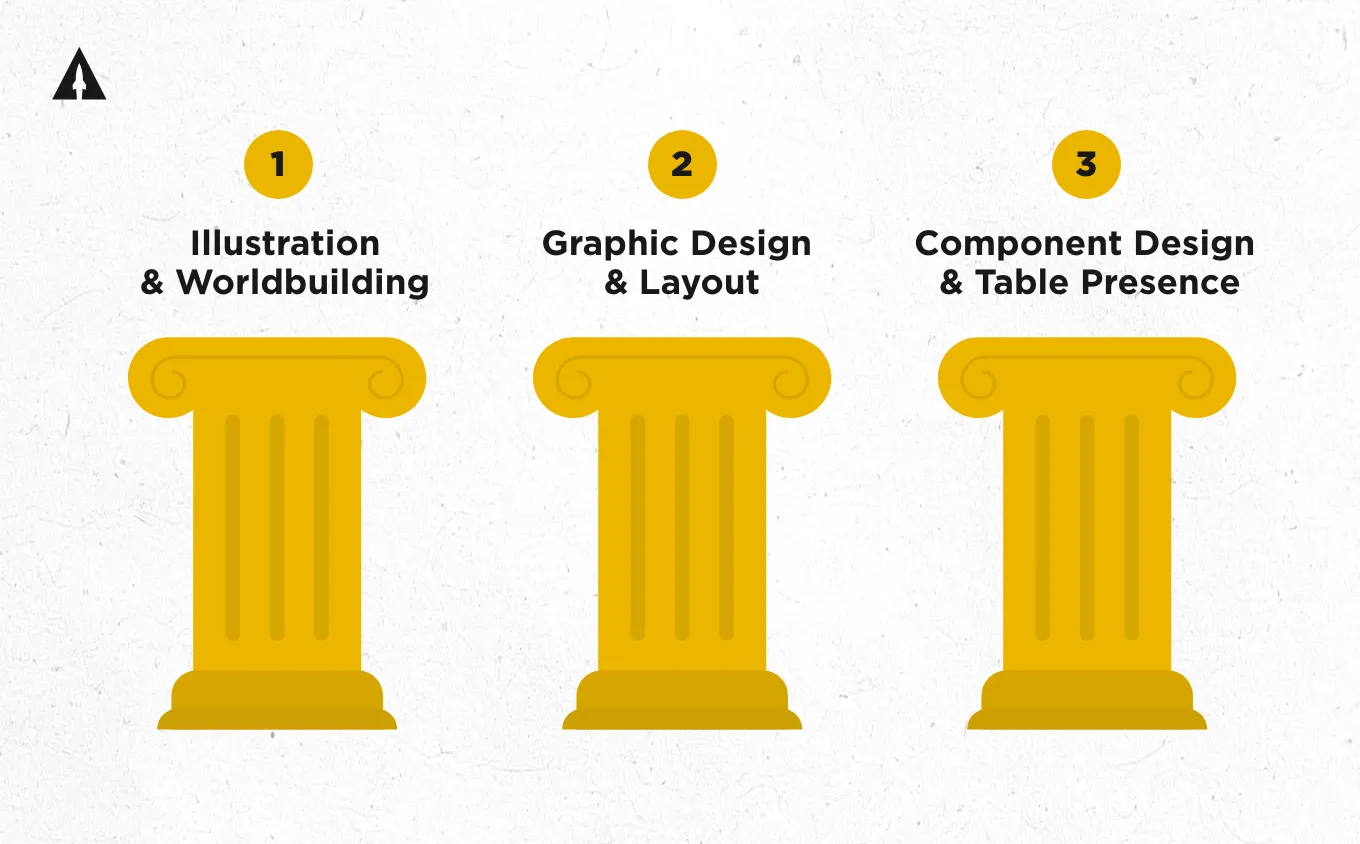
Once your mechanics are refined through testing, it’s time to shift focus from how the game plays to how it looks, feels, and reads. The difference between a functional prototype and a game people are excited to back often comes down to three foundational elements that define your game’s visual identity.
1. Illustration & Worldbuilding
Artwork gives your game personality and emotional appeal. Whether it’s charming dragons, brutal sci-fi landscapes, or cozy woodland creatures, the visual tone you choose helps your audience understand what your game is about before they ever read the rules.
My first mistake? Hiring an illustrator who did beautiful work—for book covers. They didn’t understand how to balance detail with function for small card sizes. The art looked muddy when printed at actual scale.
Hire artists with experience in board games whenever possible. They understand how to create images that work at both 2x3 inch card size and blown up for marketing materials. They know which details to emphasize and which to simplify.
Look for consistency across all your game’s illustrations. Mixing styles—say, realistic portraits on character cards but cartoony symbols on resource tokens—breaks immersion. Players should feel like everything exists in the same universe.
A few practical tips for working with illustrators:
- Develop a clear art bible early that defines your visual style, color palette, and tone
- Request sample pieces before committing to a full asset list
- Be mindful of cultural sensitivity and representation—avoid art that alienates potential players
- Prioritize visual clarity over complexity, especially for gameplay-critical cards
The best illustration work establishes your game’s world so effectively that players start imagining stories before their first turn.
2. Graphic Design & Layout
Good graphic design isn’t noticed—it just works. It helps players process information quickly and navigate rules without confusion.
I’ve playtested games where beautiful illustrations were ruined by illegible text, icons that looked identical at a glance, or layouts so cluttered that players gave up trying to parse their cards. The game might have been brilliant, but the graphic design made it feel broken. Board game art that succeeds functionally supports gameplay through intuitive iconography, layouts, and visual hierarchy.
Every design choice should answer: “Does this help players understand what to do?” Practical graphic design tips:
- Test your icons with players who haven’t seen them before—if they can’t guess what a symbol means, redesign it
- Use color coding effectively to group related information or differentiate card types
- Create clear typographic hierarchy so players scan the most important information first
- Design for accessibility: ensure sufficient color contrast, avoid relying solely on color to convey information, and use readable font sizes
- Leave breathing room—white space isn’t wasted space, it’s clarity
A board game artist who specializes in graphic design understands that their job is making the game easier to play, not just prettier to look at.
3. Component Design & Table Presence
This covers your game board, cards, player mats, tokens, miniatures, and packaging. Physical components affect both playability and shelf appeal in ways that surprise first-time creators.
Think practically about every piece. Does a token need to be cardboard, plastic, or wood? How will everything fit in the box with room for sleeved cards? Is setup intuitive or does it require a manual every time?
I learned this one the hard way when our first prototype had beautiful custom meeples that were so detailed they’d tip over during normal play. Gorgeous? Yes. Functional? Not even close.
Consider the “table presence”—how your game looks when fully set up. Backers often make funding decisions based on that visual impact. A game that looks impressive spread across a table catches attention in photos, at conventions, and in gameplay videos.
Design for durability, especially for components players handle frequently. Cards that show wear after a few plays, tokens that are hard to grab, or boards that don’t lie flat. These practical failures undermine even the most beautiful art.
Component design checklist:
- Choose materials appropriate for how components will be used
- Test ergonomics—can players easily pick up, shuffle, and manipulate pieces?
- Optimize for storage and setup efficiency
- Ensure consistent quality across all physical elements
- Consider how components photograph for marketing purposes
Where to Find the Right Board Game Artist and Designers

You don’t need to already know people in the industry to work with great creatives. There are vibrant communities and platforms where talented professionals showcase their portfolios and take commissions.
For Artists and Illustrators:
- ArtStation: Great for high-end fantasy and sci-fi artists who showcase print-ready portfolios
- DeviantArt: Still a huge directory of skilled illustrators across every style imaginable
- Instagram: Use hashtags like #boardgameart or #tabletopillustrator to discover artists actively working in the space
- Board game Facebook groups: Communities like “Board Game Design Lab Community” often have artist recommendation threads
- Reddit: Post calls for portfolio submissions in r/boardgames or r/freelance
For Graphic Designers:
- Behance: Filter for print designers and UX/UI experts with board game experience
- The Game Crafter’s Designer Directory: Even if you’re not manufacturing with them, they list experienced freelancers
- LinkedIn: Search for “board game graphic designer” to find professionals with relevant experience
- Design-focused Discord communities: Spaces like Doodle Meeple connect creators with designers
For Component and Packaging Experts:
- Ask your manufacturer or production partner for referrals. They often work closely with freelance packaging designers
- Browse Kickstarter campaign credits for games you admire and see who did their layout, iconography, or packaging
- Check convention booth setups and ask creators directly who handled their production design
Commission Platforms (for any role):
- Upwork: Good for finding long-term collaborators or niche specialists
- Fiverr: Hit-or-miss, but some illustrators and layout pros specialize in games
Before hiring anyone, ask to see print-ready samples, not just digital art. A piece that looks stunning on a screen doesn’t always translate well to small card sizes or physical components. Request examples of work that’s actually been manufactured if possible.
If you’re interested in figuring out how to budget for this step, and the rest of your campaign, check out our article on How Much it Costs to Publish a Board Game.
How to Work With a Board Game Artist
The timing and process of collaboration can make or break your visual development. Start early, but not too early, you don’t want to invest in finalized art until your mechanics are locked in.
My biggest mistake was commissioning a full set of character illustrations before finalizing how many characters the game actually needed. When playtesting revealed we needed to cut two and add three different ones, I’d already spent budget on art I couldn’t use.
When to Begin Art Development: Wait until your core mechanics are solid and unlikely to change dramatically. You’ve playtested enough to know which components are final. But don’t wait so long that you’re rushing artists right before your campaign launch—quality work takes time.
How to Write a High-Quality Creative Brief: Your brief should include:
- Theme and tone: Describe the world, mood, and feeling you want to evoke
- Visual references: Share 5-10 examples of art styles you love (from other games, films, illustrations)
- Specific asset list: Exactly what you need (30 character portraits, 50 item illustrations, 4 location backgrounds, etc.)
- Technical specifications: Dimensions, resolution, file formats, color requirements
- Timeline: When you need drafts, revisions, and final files
- Budget: Be upfront about what you can pay
The clearer your brief, the fewer revision rounds you’ll need and the happier both you and your artist will be.
Clear Contracts Are Essential: Always outline in writing:
- Payment terms (deposit, milestones, final payment)
- Delivery schedules with specific dates
- Number of revision rounds included
- Rights ownership and usage terms
- What happens if either party needs to end the arrangement early
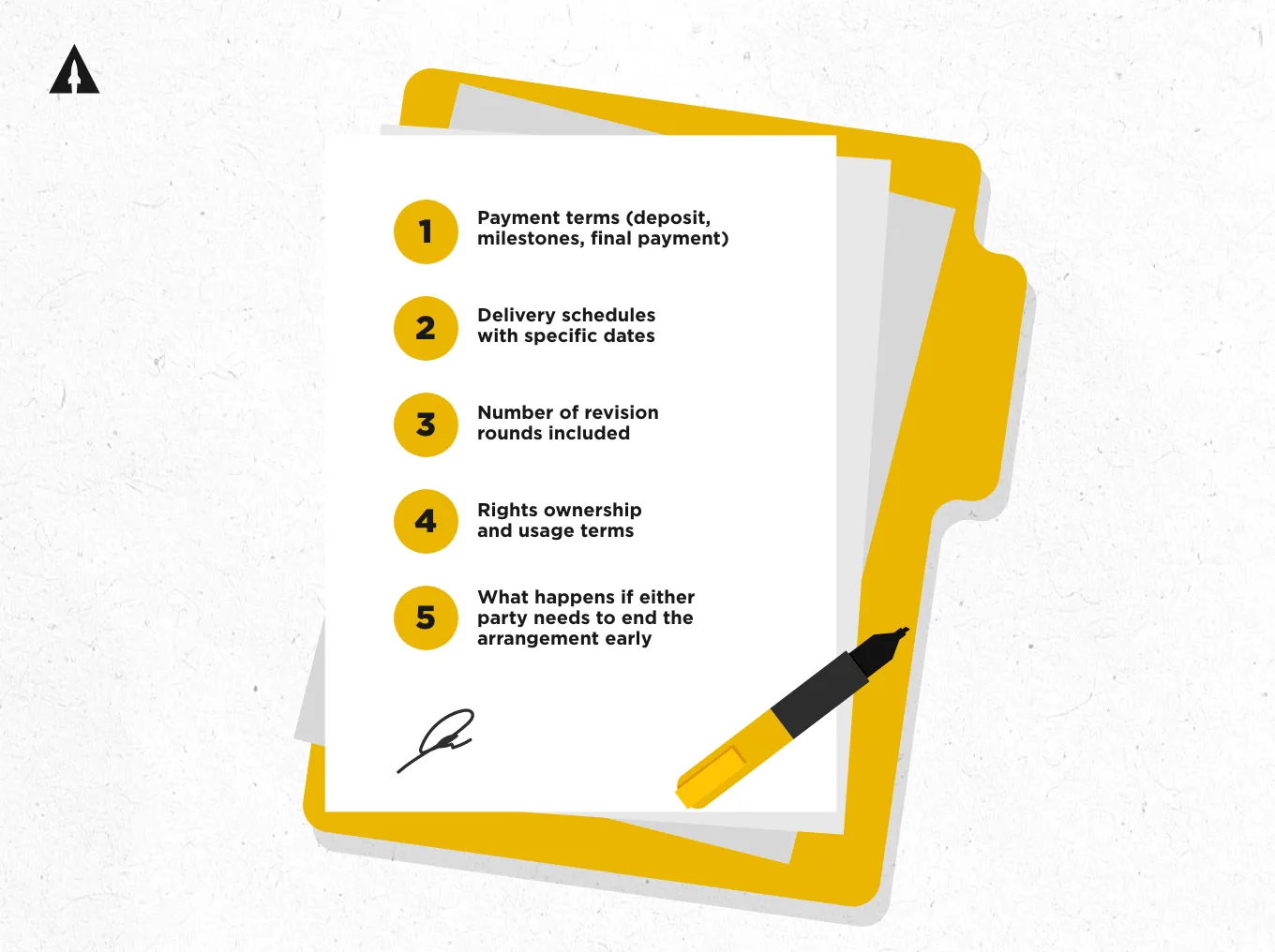
Professional artists expect and appreciate clear contracts. If someone balks at putting terms in writing, that’s a red flag.
Give Public Credit and Appreciation: Many backers support campaigns in part because of standout illustrations. Acknowledge that talent publicly on your Kickstarter page, social media, and in the game’s credits. Good artists build their careers on portfolio pieces and word-of-mouth—help them succeed and they’ll help you.
How to Use Your Game’s Art for Marketing Impact
High-quality visuals serve double duty. Beyond improving gameplay and immersion, they generate excitement on social media, campaign pages, and ads. If your illustrations are strong enough to turn heads before people understand your game, you’re on the right track.
Since that first convention where I watched creators with beautiful games attract crowds effortlessly, my team and I have learned to treat art as a strategic marketing asset from day one.
Kickstarter Pages: Your campaign page is where board game art does its heaviest lifting. Use high-resolution images of components, lifestyle shots of gameplay, and detail views that show off your art quality. The first impression happens in seconds—make it count.
Feature your best illustrations prominently in the campaign header. Break up text with visual examples. Show the game’s table presence with professional photography.
Ads and Trailers: Video ads with beautiful game art stop the scroll on social media. Even a simple animated zoom through your best illustrations with music can outperform gameplay footage for cold audiences who don’t yet understand your mechanics.
Static ads should lead with your most striking visual—a character portrait, a dramatic scene, or a gorgeous component shot.
Instagram Teasers and Behind-the-Scenes Content: Share work-in-progress art to build anticipation. Post artist sketches, color studies, and before-and-after comparisons. People love seeing the creative process.
Create carousel posts that showcase different aspects of your visual design. Feature individual cards or components with context about what they do in-game.
Convention Booths and Demos: Your booth is a physical advertisement. Large prints of your best art draw people from across the aisle. A fully set-up game with strong table presence stops foot traffic. We’ve seen creators with modest budgets outperform bigger publishers simply because their visual presentation was more striking and cohesive.
Compelling visuals turn passive browsing into active interest and funding. Every piece of art you commission should be working double duty—enhancing gameplay and marketing your game simultaneously.
You might also find yourself needing renders for this part, check out our article on Creating Renders for Your Board Game for more information on that step.
3 Examples of Board Game Art That Elevated the Game
Some games succeed largely because their visual strategy was so effective it became inseparable from their identity. These examples show how different approaches to board game art can define a game’s success.
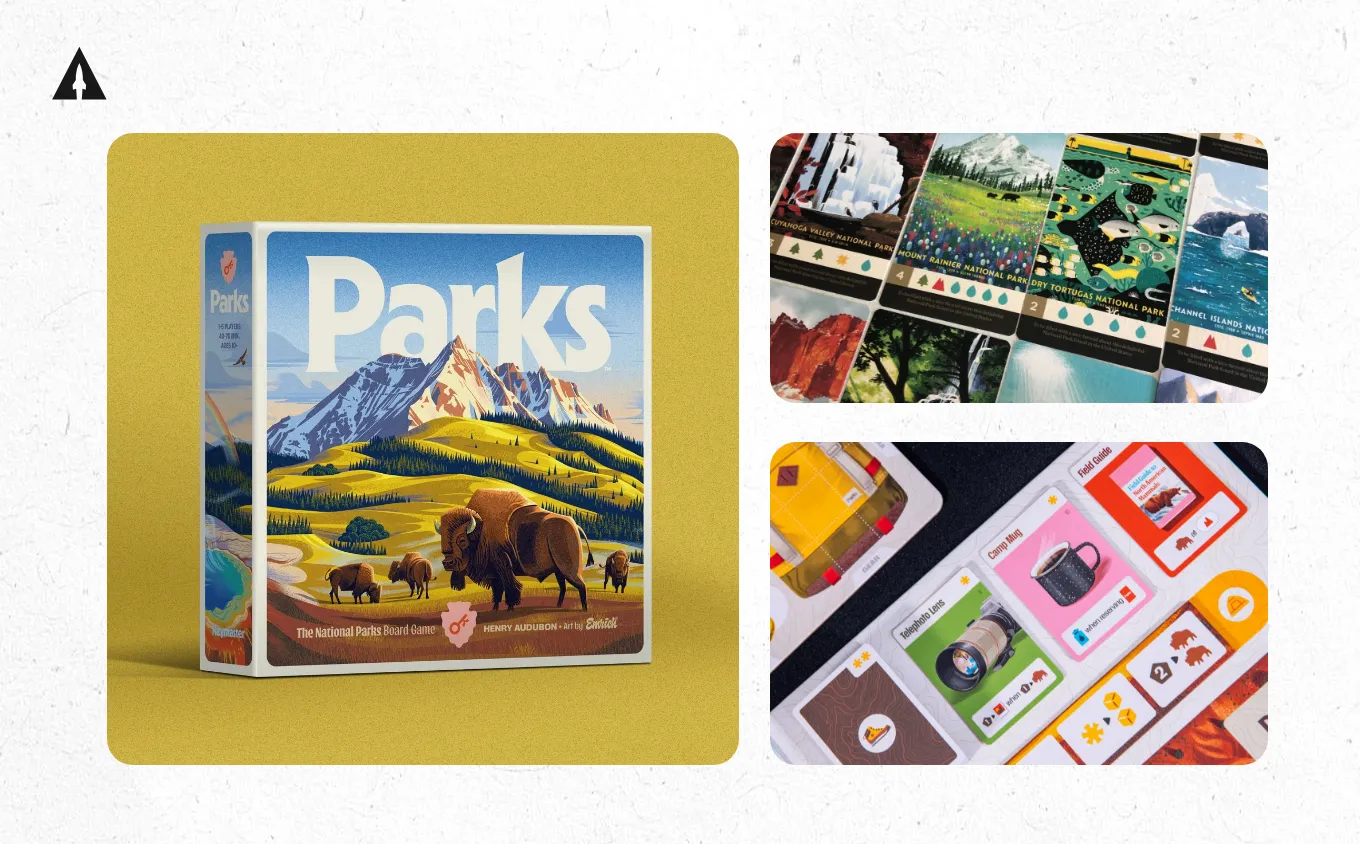
PARKS: Nature Meets Stunning Art Direction
PARKS, the first edition, succeeded in large part due to its stunning visuals. The game featured breathtaking nature illustrations inspired by the Fifty-Nine Parks Print Series, paired with minimalist graphic design that let the artwork breathe. The visual strategy was brilliant: appeal to both casual players who loved beautiful components and hobbyist gamers who appreciated elegant design.
The game’s beauty helped it stand out immediately on Kickstarter and later on retail shelves. Every component reinforced the nature theme without overwhelming players with information. The color palette was cohesive across cards, boards, and packaging. Table presence was spectacular—a fully set-up game looked like an art gallery.
Earthborne Rangers: A Cohesive Fantasy World Across All Components
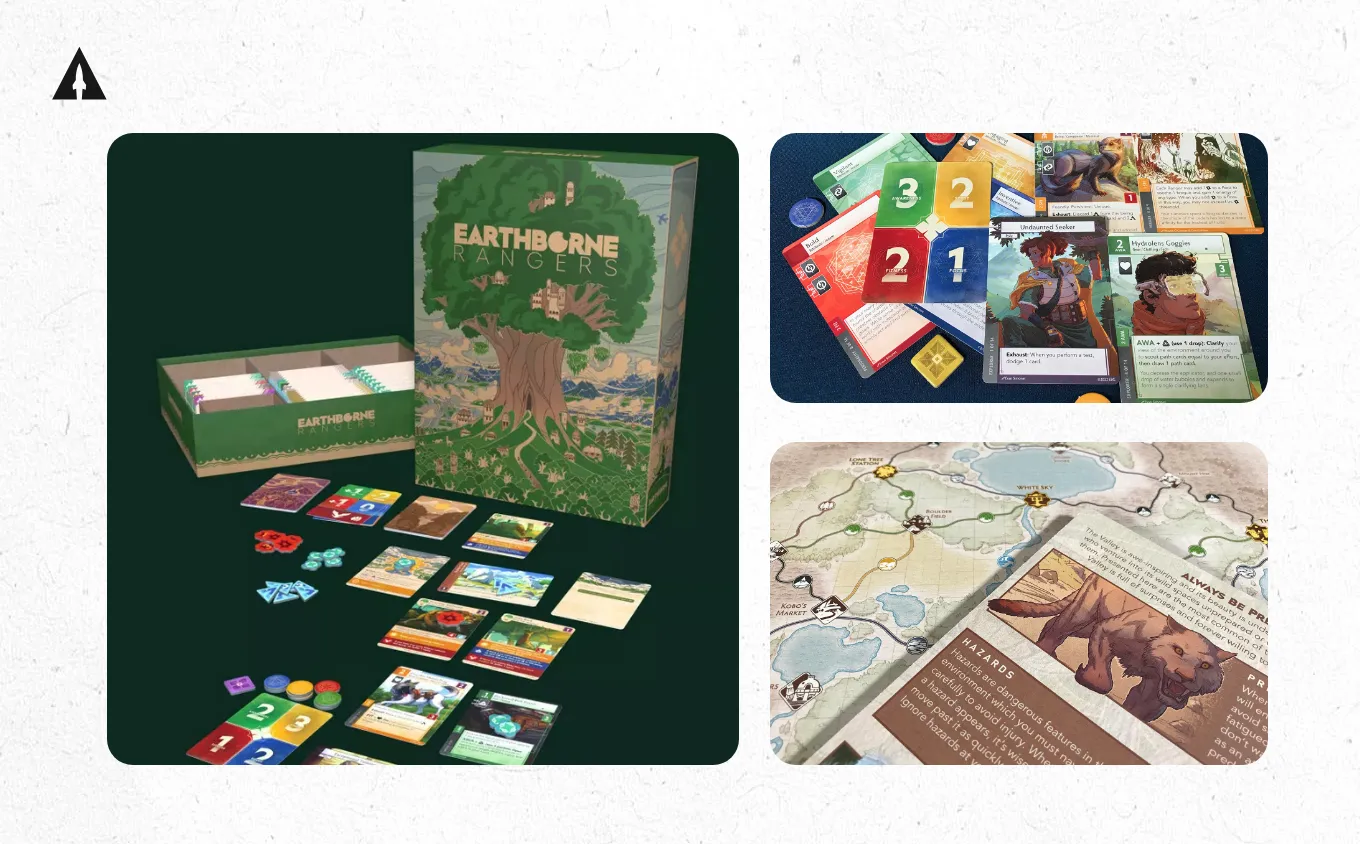
Earthborne Rangers worked with a team of artists to create a cohesive world across cards, boards, and manuals—ensuring everything felt part of the same universe. This wasn’t just about hiring good artists; it was about unified art direction that maintained consistency across hundreds of assets. The effort behind creating a believable yet organized visual universe paid off in player immersion.
When every card, every token, every piece of the game reinforces the same world, players stop seeing components and start seeing the story. This level of cohesion requires careful planning: shared color palettes, consistent lighting and perspective across illustrations, and graphic design that supports rather than competes with the artwork.
Wingspan: Blending Realism with Functionality
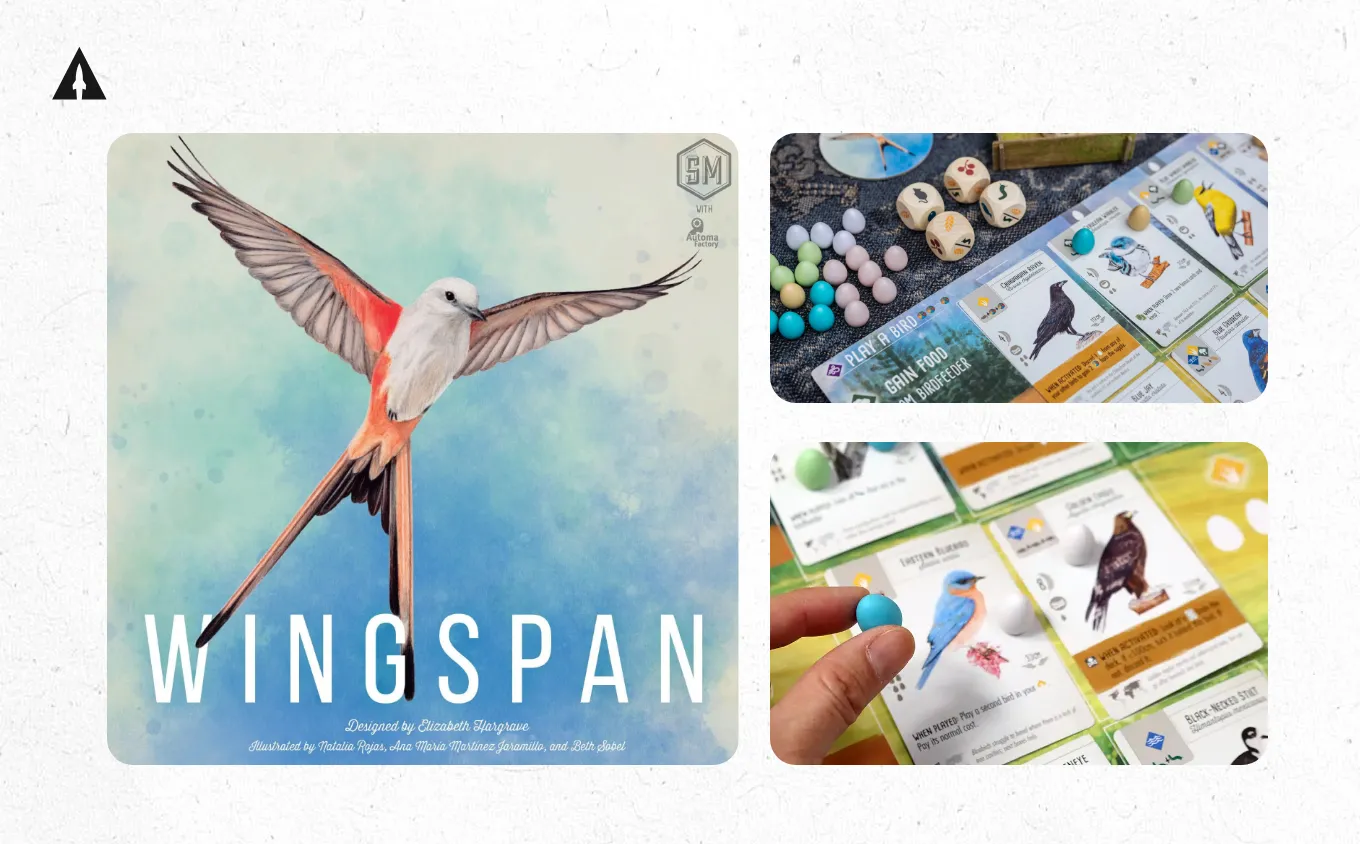
Wingspan perfectly merged natural science illustrations with intuitive layouts, making the game both educational and beautiful. The bird illustrations were accurate enough to appeal to nature enthusiasts while the card design remained clean and readable during gameplay.
The graphic design work was exceptional—icons were immediately understandable, information hierarchy was clear, and the layout never sacrificed function for aesthetics. Players could appreciate the art while still processing game information quickly. This balance is what every creator should aim for: visuals that enhance both the thematic experience and the practical usability of components.
Final Thoughts
Art and design are more than decoration—they’re communication. Every icon, color choice, and illustration tells players what kind of experience to expect. When done right, your visuals don’t just make your game look good; they make it understandable, immersive, and desirable. Board game art shapes first impressions, guides players through complex decisions, and fuels your marketing before you’ve written a single ad.
What I’ve learned through years of launching games is that treating visuals as a strategic investment rather than an afterthought separates successful campaigns from forgotten ones. The difference between curiosity and excitement, between interest and backing, often comes down to whether your game looks like something people want to own and share.
Invest in artists who understand your vision, build consistency across every component, and use your visuals as a storytelling tool that works before the first turn is even taken.
Ready to bring your game’s world to life? Start by defining your visual identity—the tone, style, and feeling you want players to experience. Then find the right collaborators who can translate that vision into components people can’t wait to get on their table. Your game’s story deserves to be seen as beautifully as it plays.
Board Game Art: Frequently Asked Questions
What Makes Board Game Art Successful?
Successful game art aligns with your theme, supports gameplay clarity, and maintains visual consistency across all assets—from packaging to card layouts. The best board game art does three things simultaneously: it establishes the world and mood you want players to experience, it makes information processing quick and intuitive, and it creates a cohesive visual identity that’s immediately recognizable.
Think about it functionally: if players constantly misread icons, can’t distinguish card types at a glance, or feel disconnected from your theme, even gorgeous illustrations have failed their purpose.
How Do I Find and Hire a Board Game Artist?
Start by defining your project scope—exactly what assets you need, in what style, and by when. Then find talent through platforms like ArtStation, Behance, or Doodle Meeple. Review portfolios carefully, looking specifically for work that’s been printed and manufactured, not just digital mockups.
Reach out to 3-5 artists whose style matches your vision and request quotes. Set clear expectations through detailed briefs and contracts that cover payment terms, delivery schedules, revision rounds, and rights ownership. Professional artists appreciate clarity and will deliver better work when they understand exactly what you need.
What’s the Difference Between Illustration and Graphic Design in Board Games?
Illustration builds the game’s world and emotional tone—it’s the character portraits, scene artwork, and thematic elements that establish what your game feels like. Graphic design ensures information is communicated effectively through layout, icons, typography, and readability. It’s the structure that makes cards scannable, rules understandable, and gameplay smooth.
You need both. I’ve seen games with beautiful illustrations ruined by poor graphic design that made them confusing to play. And I’ve seen games with excellent layouts that felt lifeless because the illustration work was generic or mismatched.
How Much Should I Budget for Game Art?
Budget for three parts: illustration, graphic design, and component packaging. Quality art often accounts for 15–25% of overall game development costs for indie creators. Rough ranges vary widely based on experience and scope, but expect:
- Character illustrations: $150-500 per piece
- Graphic design for a full card game: $2,000-8,000
- Box and packaging design: $500-2,000
Don’t cheap out on visuals if you’re planning a Kickstarter campaign—your art is doing the selling. But also don’t overspend before you’ve validated that people want your game. Start with enough quality art to test market interest, then invest more as you approach launch.
When Should I Start Creating Game Art?
Finalize your mechanics and core systems before commissioning final visuals. You don’t want to pay for art of components that might change or get cut during playtesting. That said, budget time for visual development early in your process. Quality art takes weeks or months, not days. Rush jobs look like rush jobs.
A good timeline: lock mechanics, commission art with 3-4 months before your planned campaign launch, build in time for revisions, and use that art to build pre-launch buzz.
Starting too late is the most common mistake I see creators make—they end up with placeholder art during their campaign or rushed work that doesn’t represent their game well.
