


Coolest Cooler raised $13 million on Kickstarter and went bankrupt anyway. FORT raised $3.1 million and shut down in 2023 with many backers still waiting on their rewards. Neither campaign failed because backers didn’t show up. Both drowned in manufacturing problems they never saw coming.
That’s the risk nobody talks about enough in crowdfunding. You can nail your campaign video, your pricing, your ad funnel, and still lose the whole thing to a bad supplier relationship.
Here at LaunchBoom, we’ve watched this play out from both sides over 13 years and more than $200 million raised across our clients’ campaigns.
Recently, Mark sat down with Ken Buras, a product development and manufacturing expert with 46 years in the industry. Ken runs two companies, IN2 Innovation and IN2 International, that handle sourcing and manufacturing for brands ranging from Topgolf to first-time creators.
The process they laid out boils down to seven steps to finding a manufacturer who won’t blow up your timeline, your budget, or your product. This is how you create, design and manufacture your product from scratch, the right way. No mistakes.
If you’d rather watch than read, Ken broke down his tips in detail in the video version of this study:
Key Takeaways
- Know your product cold before you talk to anyone: You’re the expert. The factory is the executor.
- Research the region before you research the factory: Specialization beats cheap pricing every time.
- Calculate total cost, not unit cost: Tooling, shipping, duties, and your own time all belong in the math.
- Vet communication before you vet capability: How they answer email tells you how production will go.
- Get on a plane before you send a deposit: A few thousand dollars now beats losing hundreds of thousands later.
- Trade a bigger MOQ for a lower unit cost, not the other way around.
- Build in the real timeline, six months is a realistic floor, not a worst case.
Step 1: Become Your Product’s Expert
Most founders get this backward from day one. They sketch an idea, walk into a factory, and ask, “how do I make this?” The moment you do that, you’ve handed control of your product to someone who cares about it less than you do.
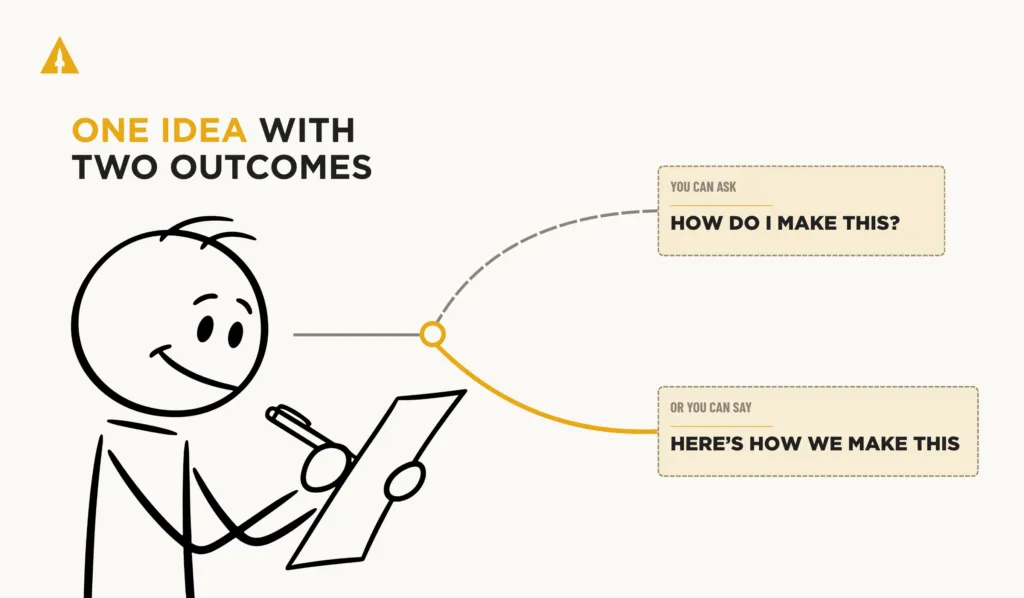
Before you contact anyone, you need to know how to think like a Kickstarter expert. That means three things: market understanding (what problem you’re solving, who your customers and competitors are), product definition (what your product is, and just as important, what it isn’t), and documentation, at minimum a Product Requirement Doc laying out what the thing is, what it does, and how it should work.
You don’t need every detail nailed down first. Ken described an engineer on his team who used to label materials “SKP” on early drawings, short for “some kind of plastic,” because he knew the category before he knew the exact spec. That’s the bar.
Two habits help here: you can run your product idea past an AI tool and ask it to poke holes in your thinking, then go fill them. And resist the urge to make the manufacturer your product’s expert instead of you.
“Somebody will come to us and say, ‘I need to know what the trends are in the sock market. How do I make socks?’ I’m like, that’s not my thing. You should be telling me what problem you’re trying to solve in the sock market.”
The manufacturer executes. You’re the one who’s supposed to already know.
Step 2: Find Where to Look
Once you know your product, figure out where in the world it should get made. Regions specialize. The workforce, the sub-suppliers, the whole supply chain clusters around certain product categories, and going where that expertise already lives gets you better quality for less money.
Ken pointed to two examples. The US is strong for CNC work, metalwork, and injection molding, weaker for soft goods like cut-and-sew. And there’s a town near Macau with roughly 50 factories that all make blades, cutlery, and scissors. You go there not because it’s cheap, but because that’s where the specialization sits.
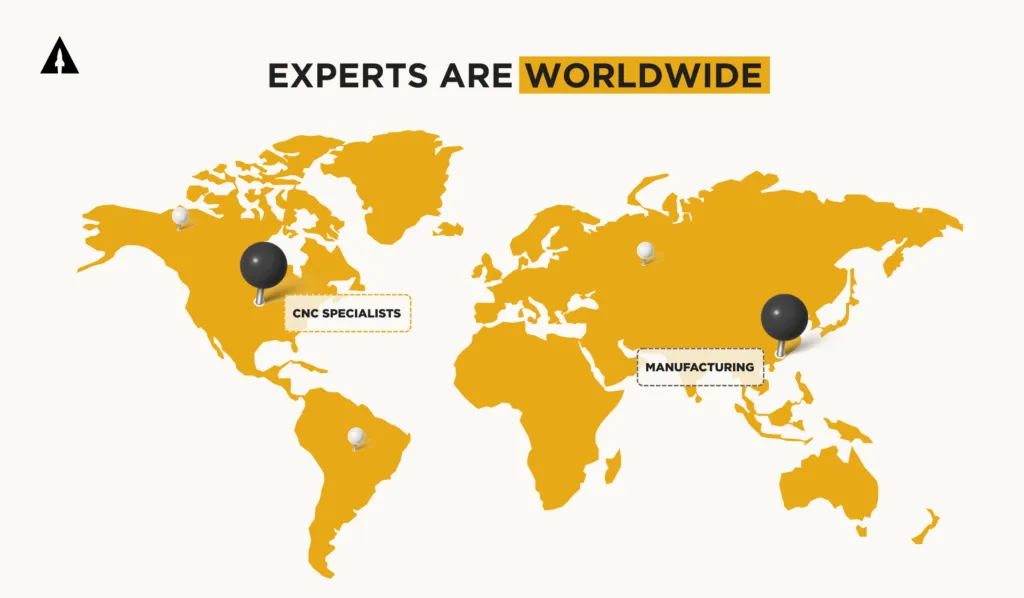
Three tools help you find your region: ImportYeti, which pulls actual import records so you can look up a successful competitor and see exactly who manufactures for them; Alibaba, used as a research tool to spot where listings cluster geographically; and an AI tool, asked plainly which countries specialize in your product type.
Once you have a region, the search for actual factories runs through Alibaba, Made in China, directories like ThomasNet and Maker’s Row, NAICS codes for US manufacturers, trade shows, referrals from other creators, and contract manufacturers like IN2 who already have decades of vetted relationships.
Whichever channel you use, watch for one distinction: a manufacturer versus a trading company. A trading company is a middleman who takes your specs, finds a factory, and marks up the price.
Ken shared a story from about 20 years ago, sourcing a kitchen gadget through a trading company a client had recommended. “Within about four months of the product coming out, I was at a trade show and I was like, ‘oh, that’s our product but in different packaging.’ The trading company was not as above board as we had hoped.”
Pick three to five candidates. Quality over quantity.
Step 3: Think in Total Cost
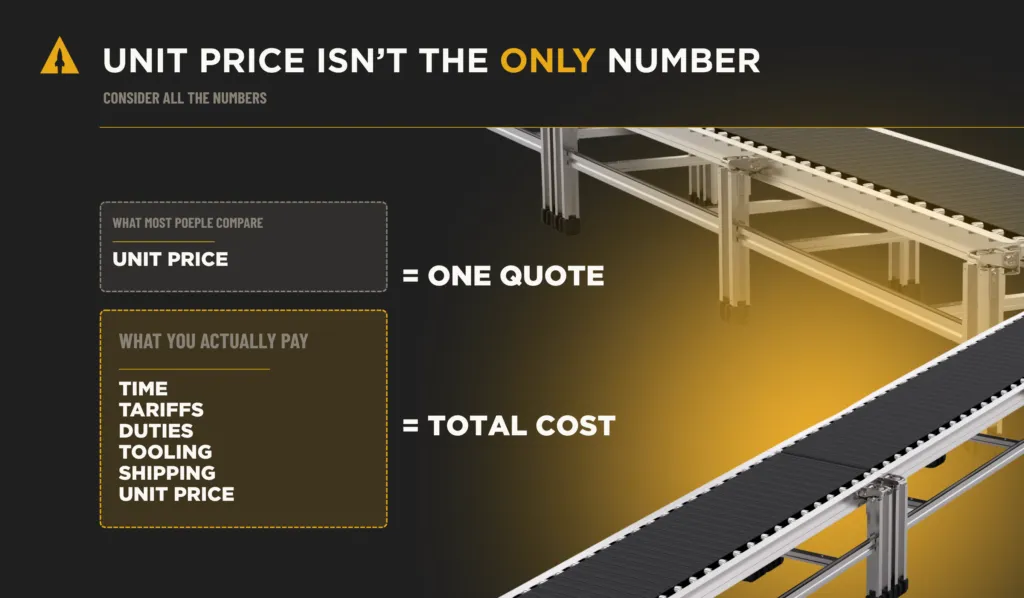
Most “US versus overseas” comparisons look only at unit price. That’s the wrong number. The right one is total cost: unit price plus tooling, shipping, duties, tariffs, and the time you personally spend managing the supply chain.
Two traps show up here often. The first is the US minimum-spend trap. Buras mentioned a friend’s injection molding company in Texas that won’t take on a new client below $250,000 in annual spend, a threshold well out of reach for most first-time creators.
The second is the supply chain trap. A US manufacturer that specializes in your product category still might not source every component for you, which means you end up managing several supplier relationships yourself. In China, a single factory will often coordinate seven different sub-suppliers on your behalf. “If I go to a factory in China and they’ve got to use seven different suppliers to build a product, I don’t have to deal with those seven other suppliers. I deal with that one factory.”
For most first-time founders, Asia ends up being the stronger path on both cost and quality. If “Made in USA” is core to your brand positioning, the higher total cost can still be worth it, just make sure your pricing reflects it.
Step 4: Vet Like a Partner
A manufacturer is a business partner, not a vendor you forget about after the first order. Vetting happens in two phases: from a distance first, then in person before any money changes hands.
At a distance, run each candidate through a short checklist: Are they responsive within a day or two? Do they answer in detail rather than vague yes-or-no replies? Can they actually customize, or are they pushing you toward what they already make? Are their lead times realistic? Will a smaller factory prioritize you the way a massive one won’t? And will they sign an NDA before you share specs?
Buras flagged a subtlety specific to communicating with factories in China. “There are a lot of subtleties in communication with factories in China specifically. They’ll say yes to something when that’s not really what they meant. They’re just acknowledging that you’ve asked the question.”
So instead of asking “can you do X,” ask “how have you done X before” or “show me an example.” A yes that dodges the follow-up isn’t really a yes.
Walk away immediately if a factory pushes you off-platform right away, if their product photos turn up on other sites under a reverse image search, if they demand 100% payment upfront, or if they’re cagey about their own process.
Step 5: Verify Before You Pay
Vetting from afar tells you how someone communicates. It doesn’t tell you whether you should hand them hundreds of thousands of dollars. For that, you need to go in person. “If they’ve got the resources to do so, 100%. You’re going to be committing a lot of money to this company. It’s a huge risk.”
Ken says he can usually tell within the first 5 to 10 minutes whether a factory is worth working with, based on four signals: 10 or more years in business, a clean facility, a real sample room with actual finished products, and clear signs they prepared for the visit.
He told a story about sourcing blenders, visiting three factories in one week. The first was sharp: nice facility, four people ready to meet him. The second fell apart before it started, the contact wasn’t even back from lunch, and the sample room was a letdown. He left. “You should be here when I’m here. You should be here before I’m here.”
Before any production money moves, get a sample, and don’t approve production until you’re genuinely happy with it.
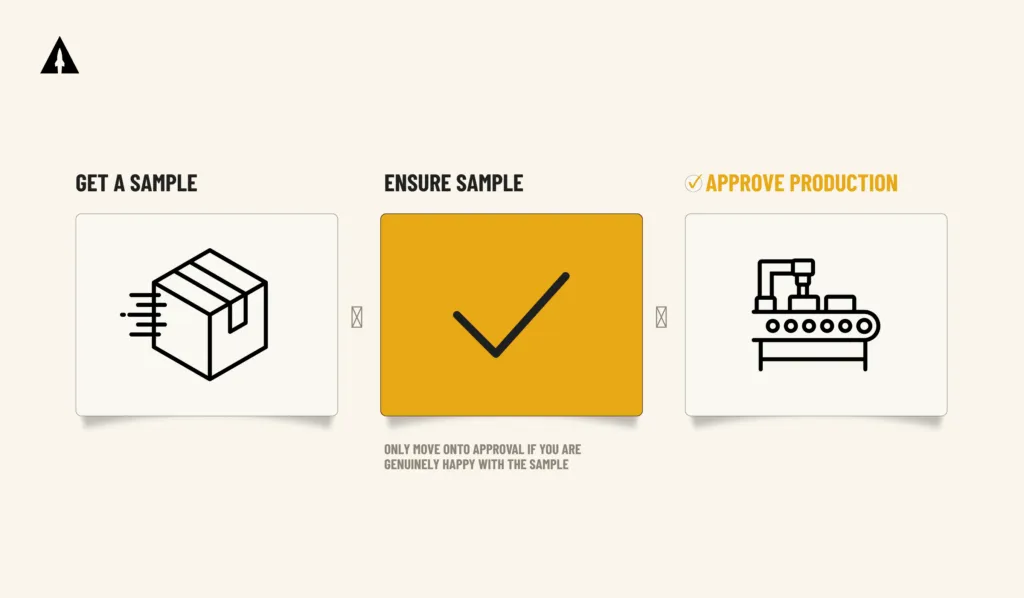
If budget allows, get samples from two or three factories so you can tell whether a quality issue is coming from the product’s complexity or from one specific factory.
Step 6: Know Your Leverage
First-time founders often walk in trying to negotiate everything down: lower MOQ, no deposit, better pricing. Then every factory says no. “You’ve got limited leverage with your first order. Just like that factory is new to you, you’re new to them.”
Net-30, 60, or 90 payment terms aren’t available to new customers. You’ll pay upfront until you’ve built a payment history.
But there’s one real lever: minimum order quantity. Not negotiating it down, negotiating your unit cost down by going up on it. Fixed setup costs like tooling get spread across your order, so a bigger commitment usually means a lower per-unit price, and factories are often glad to make that trade since bigger orders benefit them too.
Standard payment terms to expect: for tooling, roughly 50% deposit, 25% at “first shots” (the first test run in the mold), and 25% on completion. For production, 30 to 40% deposit with the balance due before shipping.
And one rule that doesn’t bend: never pay 100% upfront.
Step 7: Bake in QC and Timeline
A great manufacturer at a great price still won’t save you if there’s no quality control process, and a great product still won’t save you if your timeline is wrong.
On QC, Ken made a point that reframes the whole conversation: a factory can’t build quality control around a product it doesn’t understand, which loops straight back to step one.
Ask candidates how they inspect incoming components from sub-suppliers, whether they’ll build a written process document (his example: “there’s supposed to be three screws, check to make sure there’s three screws”), whether they do pre-shipment statistical sampling, and what their defect rate looks like in writing.
Timelines run longer than most first-time founders expect. For a small consumer electronics product: 6 to 8 weeks for tooling (budget 10 to 12 for full prep), 2 weeks for pilot production, 3 to 4 weeks for higher-volume production, 4 to 6 weeks for ocean shipping, and if you need certifications like UL or FCC, another 6 to 8 weeks, which can’t start until tooling is finished since certifications require production materials, not prototypes.
All in: roughly six months from signed contract to product in your warehouse.
That’s the gap that sank Coolest Cooler and FORT. Combined, those two campaigns raised over $16 million and still ran out of runway, because manufacturing took longer and cost more than they’d promised backers.
Bake the real timeline into your campaign from the start. Underpromise, then overdeliver.
If you’re mid-search for a manufacturer right now, start with step one. Write down, in plain language, what your product is and what it isn’t. Everything after that gets easier.
Want your campaign to ship on time instead of joining the list of Kickstarters buried by manufacturing surprises? Book a call with our team to talk through your project and explore how we can help you launch.
Choosing the Right Manufacturer For Your Product: Frequently Asked Questions
What should I know before choosing a crowdfunding manufacturer?
Before contacting manufacturers, become the expert on your own product. Clearly define the problem you’re solving, your target customer, the product requirements, and what the product should and should not do. A Product Requirements Document can help organize those details before you begin sourcing.
How do I find the right region to manufacture my product?
Start by researching regions that specialize in your product category rather than choosing a factory based solely on the lowest quoted price. Industry clusters often have experienced workforces, established sub-suppliers, and stronger supply chains. Import records, manufacturing directories, trade shows, referrals, and sourcing platforms can all help identify promising regions and manufacturers.
How many manufacturers should I compare?
Start with roughly three to five qualified candidates. A smaller shortlist makes it easier to compare communication, capabilities, pricing, samples, lead times, and production processes without sacrificing the quality of your research.
How can I tell if I’m dealing with a manufacturer or a trading company?
Ask who actually produces the product and where production takes place. Trading companies act as intermediaries between founders and factories, which can add another layer of cost and communication. Whenever possible, verify the facility and understand exactly which company will be responsible for manufacturing your product.
Should I manufacture in the US or overseas?
There isn’t one answer for every product. Compare total cost rather than unit price, including tooling, shipping, duties, tariffs, quality control, and the time required to manage suppliers. Overseas manufacturing can offer strong specialization and consolidated supply chains for many consumer products, while US manufacturing may be worth the additional cost when domestic production is important to your brand.
What should I look for when vetting a manufacturer?
Pay attention to communication as well as technical capability. Look for detailed and timely responses, realistic lead times, relevant customization experience, willingness to sign an NDA, and a clear production process. Ask manufacturers to show examples of how they’ve handled similar requirements rather than relying on a simple yes or no answer.
Should I visit a manufacturer before placing an order?
If the budget allows, an in-person visit is one of the best ways to reduce manufacturing risk before committing significant funds. Look for a clean facility, an established operating history, a real sample room, finished products, and evidence that the factory is prepared to work with you. Get and approve a production sample before moving into full production.
How should I negotiate with a manufacturer?
First-time founders typically have limited negotiating leverage because they don’t yet have a production history with the factory. Instead of focusing on forcing down the MOQ, consider accepting a larger order in exchange for a lower unit cost. Larger orders can spread fixed setup costs across more units and give the manufacturer a reason to offer better pricing.
What payment terms should I expect from a manufacturer?
Payment terms vary by manufacturer and project, but new customers commonly pay deposits before production. Tooling may be split into milestone payments, while production often involves a deposit with the balance due before shipping. Avoid paying 100% upfront, and make sure payment milestones are clearly documented before production begins.
How long does product manufacturing take?
Build more time into your plan than you think you’ll need. For some small consumer electronics products, tooling, pilot production, full production, ocean shipping, and required certifications can add up to roughly six months from contract to receiving inventory. Your actual timeline will depend on the product, tooling requirements, order volume, shipping method, and certifications involved.
How can I make sure my manufacturer maintains product quality?
Discuss quality control before production starts. Ask how the manufacturer inspects incoming components, whether they use written inspection procedures, how they handle pre-shipment sampling, and how they measure defect rates. Approve a production sample before committing to full production and establish clear quality requirements in writing.
What is the biggest manufacturing mistake crowdfunding founders make?
Underestimating the true cost and timeline. A campaign can raise substantial funding and still run into serious problems if manufacturing takes longer or costs more than expected. Research the supply chain early, vet manufacturers carefully, approve samples, budget for the full landed cost, and build realistic production and shipping timelines into your campaign promises.
