

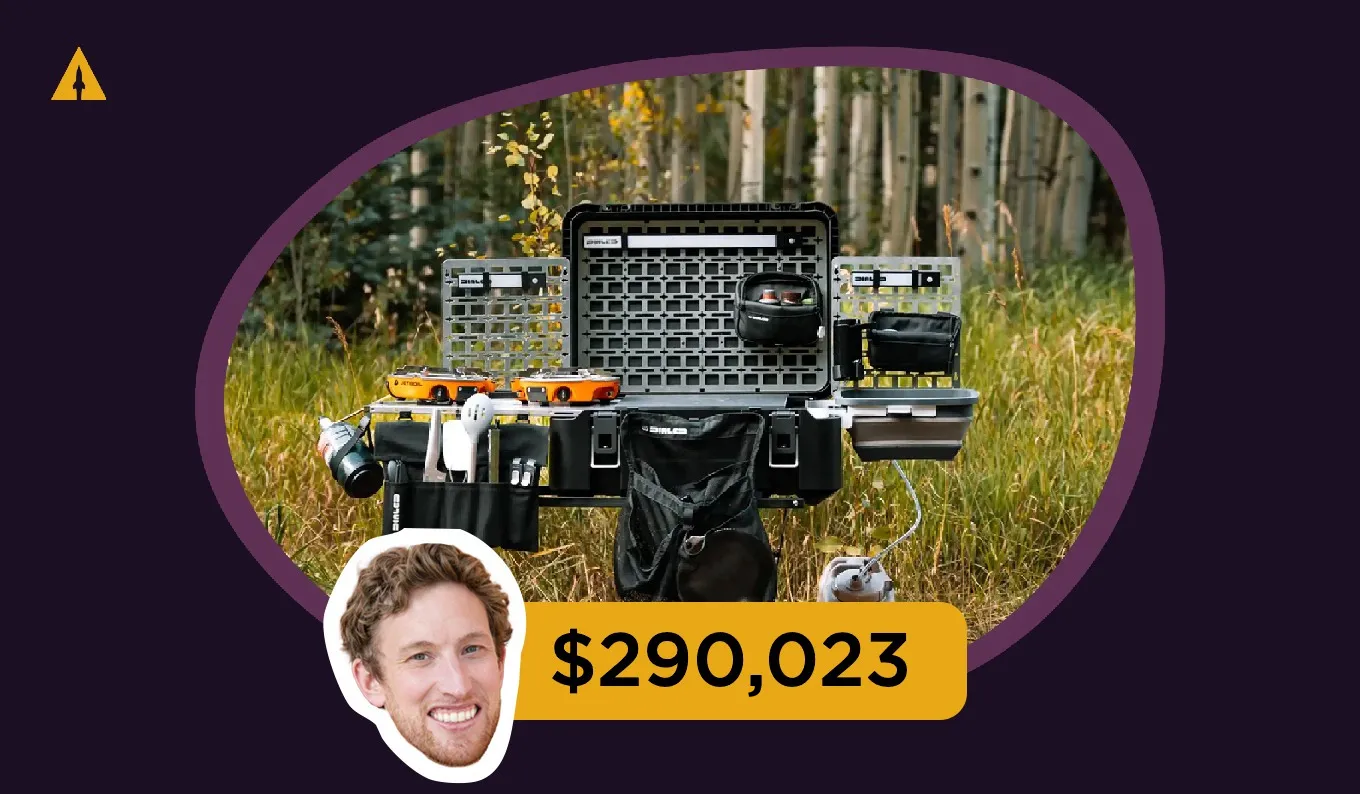
Dana Mosman loves camping with his son. But every time he wanted to spend the weekend camping, the same frustrating ritual played out.
Load the truck with gear. Realize he forgot the can opener. Dig through three different boxes to find the spatula. Watch everything slide around in the back of his truck during the drive.
His camper friends all shared the same issue: nice gear, terrible organization. Everything scattered across cardboard boxes and random plastic containers.
That’s when Dana thought: “What if I could get out the door in five minutes?”
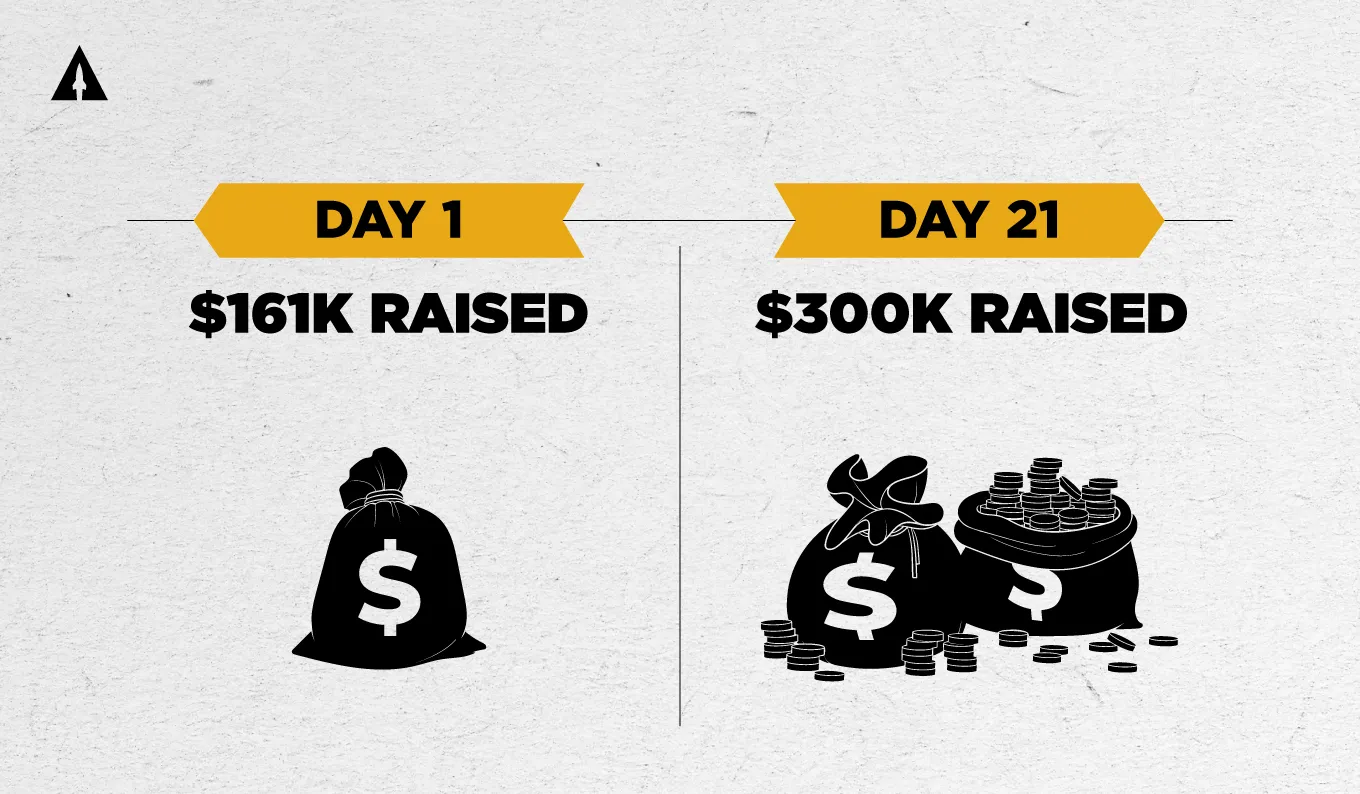
The idea grew into the Dialed Camp Kitchen. A modular system that puts your entire camp kitchen in one box. No more forgotten utensils, no more digging through bags. Just grab the case and go. The market agreed. Dana’s Kickstarter campaign raised over $161,000 on day one and finished at nearly $300,000 in just 21 days.
Here’s exactly how it happened. You can also watch the video version of this case study here:
Key Takeaways
- Solve your own problem first: How being inspired to innovate to solve a real, frustrating experience and not just a hypothetical issue results in a product that fills a real gap in the market.
- One guiding principle drives everything: The “ready in 5 minutes” goal keeps the product simple, focused, and actually useful instead of overbuilt.
- Validate with money, not opinions: How testing demand with ads and a landing page to see if people would actually pay removes the guesswork from marketing.
- Pre-launch is where success happens: The big Kickstarter numbers came from building demand, messaging, and an audience before going live.
- Simple messaging + relatability to a real pain: Creating effective ads that clearly show the problem and solution – no overcomplicated marketing needed when the concept is strong.
Your Camp Kitchen in One Box
Dana wasn’t new to building products. After college, he and his dad started a company manufacturing cannabis harvesting equipment. Think John Deere, but for cannabis farms. That company was acquired four years ago.
What Dana didn’t have was traditional engineering training. He thinks of himself as a “self-taught industrial designer”. Someone who looks at a problem, studies the use case, and fits all the pieces together.
The camp kitchen problem was personal. As someone who loves skiing, biking, and hiking in Colorado, Dana wanted camping to be easier. Especially with a young son.
“The idea is just to reduce the friction to getting out there,” Dana explains. “It’s great when you’re there and you’re always like, I’m so glad we’re out here. But when you leave work and you’re putting stuff in the car, that’s the point where you either make it or you don’t.”
Dana started observing his friends during camping trips. Everyone had quality gear. Nobody had a good organization system. He tried every solution on the market and nothing worked quite right. So, he started figuring out How to Create, Design, and Manufacture a Product from Scratch.
The Special Forces Question
Dana had a guiding principle for the design process. He’d read somewhere that special forces teams have to be ready to deploy in minutes. They grab their bag and go. No scrambling. No forgotten items. Just prepared.
“Can I get the truck ready in five minutes?” Dana asked himself. “Can I actually load up and go and be on the road in five minutes?”
That question shaped every design decision. The Dialed Camp Kitchen needed to be a complete system. Everything in one case. Light enough to carry. Rugged enough for serious use. Modular enough to adapt to different setups.
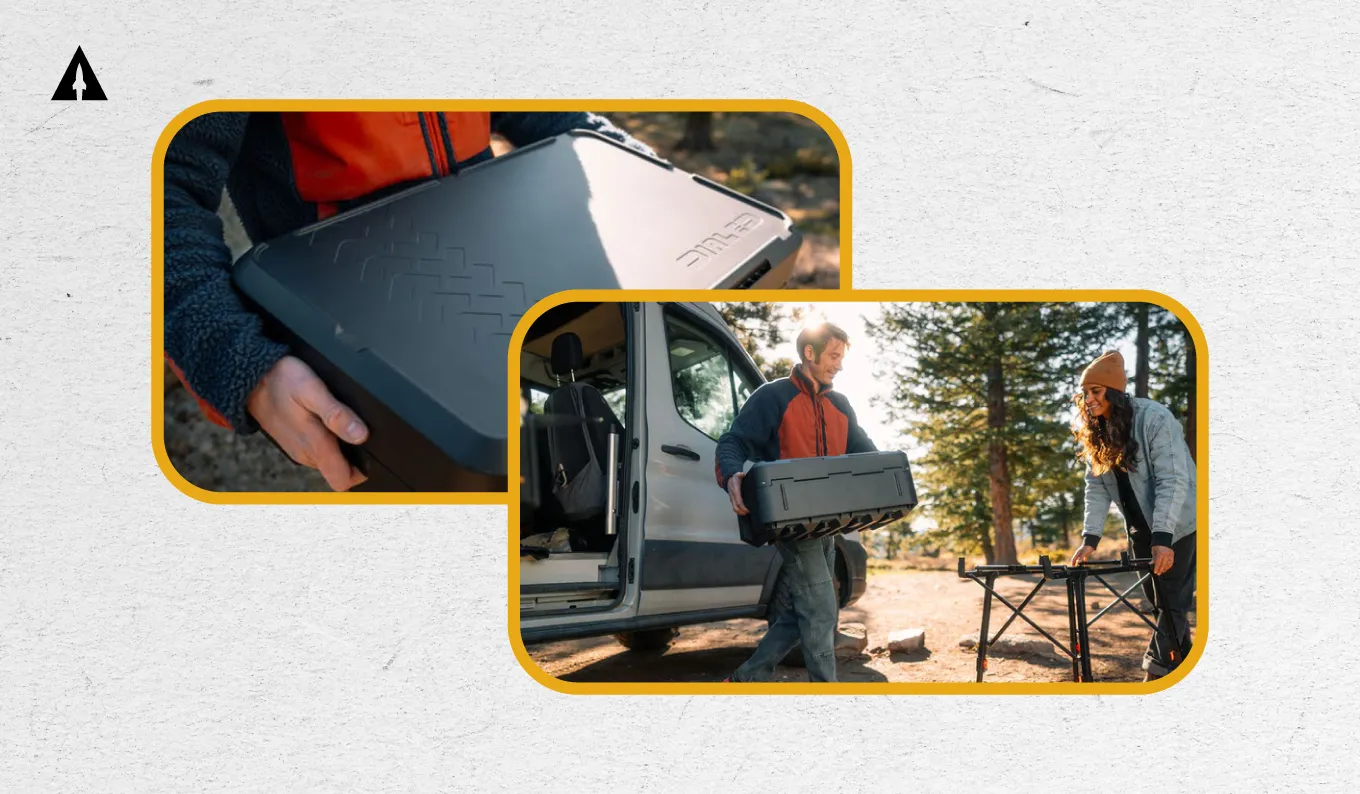
Dana looked at the problem from a systems perspective. The case, the stand, the organization, the packdown. It all had to work together.
One early decision surprised him. He almost included pots, pans, and utensils in the system. Then he realized people already own camp cookware. And the sizes are remarkably consistent across brands.
“A mug is a mug and a plate is a plate and a frying pan has a 12 and a 10 inch diameter,” Dana says. “We were able to fit it all together.”
The final design: a case that organizes your existing gear and transforms into a functional camp kitchen. Pack it once. Grab it and go.
Validating Before Building
Dana wasn’t sure about Kickstarter at first. He’d heard the Solo Stove founders talk about avoiding Kickstarter because they didn’t want competitors seeing their volume. That stuck with him.
But Dana also knew that all good ideas eventually attract competition. More importantly, he wanted real validation.
“I don’t think there’s too many ways where you can validate an idea and actually have people put money down,” Dana explains. “You can talk about your product all day. But until you ask someone for money, it’s pretty tricky to get feedback.”
He references a book called The Mom Test. The premise is simple. Don’t ask your mom if your product is good. She loves you anyway. She’ll tell you it’s great. You need people to put money down. That’s how you get real validation.
Dana had some early signals the product would work. He knew the pain point intimately. He’d lived it. He’d watched his friends struggle with the same problem.
Even his early, rough prototypes got strong reactions. People saw it and immediately said, “Yeah, I want that.”
But looking back, Dana wishes he’d validated even earlier. “I would 100% validate the idea a lot earlier,” he says. “I got somewhat lucky in that the adoption was as good as it is and the pain point was as good as it is. I would just go back and validate it a lot quicker and a lot more cheaply before I got as far down the road in design and engineering as I did.”
His recommendation now? Test with Meta ads and a simple landing page. See what it costs to get an email signup. See if people actually convert. You can do that in a day with photo-realistic renderings. No need to build the full product first.
“It’s way better to learn that with your mock-up and $1,000 in Meta ads than three years of development,” Dana says.
The Pre-Launch System
Dana worked with LaunchBoom to build his pre-launch campaign. Before working with the team, he didn’t fully understand how to launch a successful Kickstarter campaign. Most people don’t.
“People think that you put your product on Kickstarter and people find it and they think it’s a good idea and then they back it,” Dana explains. “Kickstarter is really a business. It requires marketing just like everything else.”
The stats back this up. Most successfully funded Kickstarter projects raise less than $10,000 (about two-thirds, as of January 2026). Most fail because creators think the platform will do the marketing for them but it doesn’t work that way.
The LaunchBoom process started with validation. Set up a functional pre-launch landing page. Create UGC-style videos showing the product and the pain point. Drive traffic with Meta ads. Collect emails from interested people.
This phase does more than build a list. It helps you refine your messaging. “You’re kind of refining your copy and your visuals,” Dana says. “You find your most effective ad set and messaging. Some people come into it and they don’t really know their messaging. That process helps you with that.”
Dana tested different angles. He found two ads that performed exceptionally well. The first was simple. A photo of the product fully set up with the tagline: “Your camp kitchen in one box.”
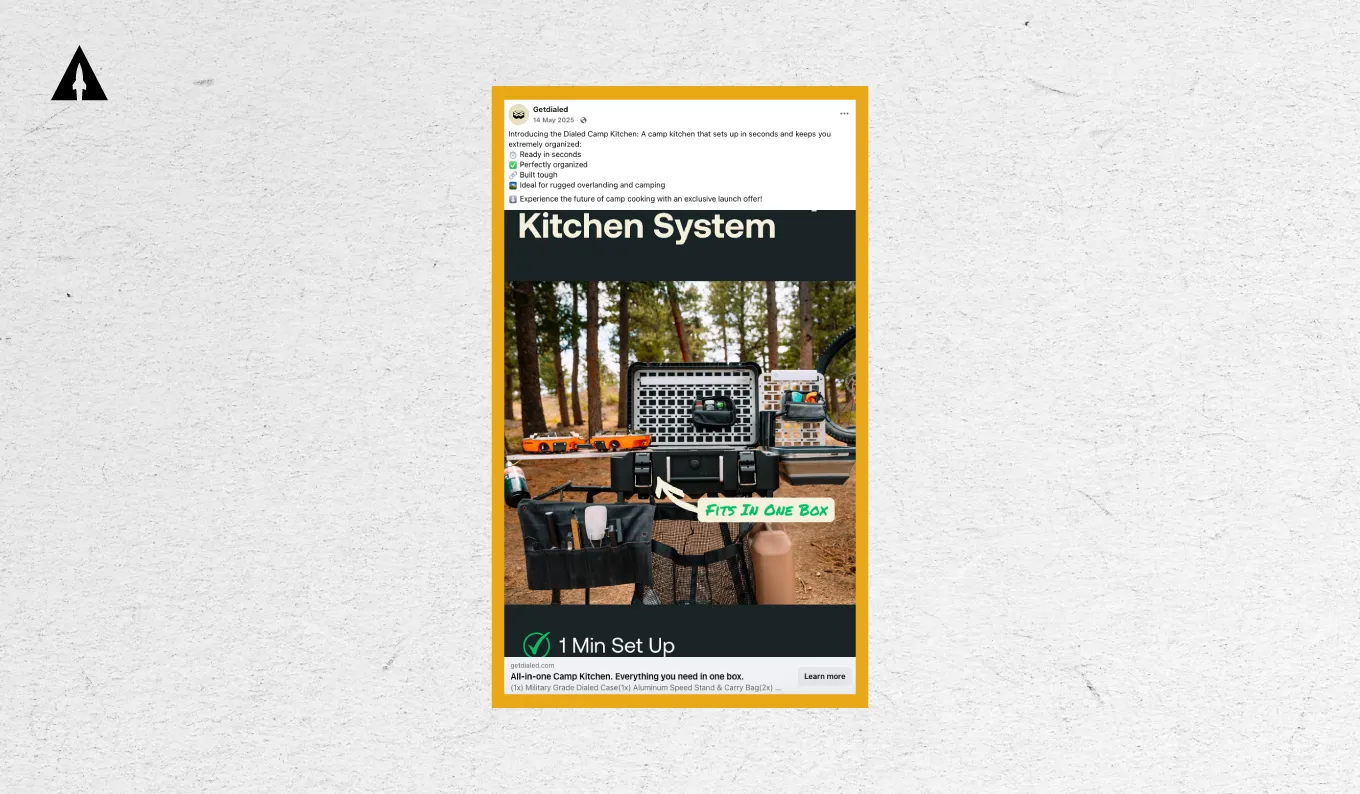
That’s it. The visual did the work.
The second ad identified the pain point directly. Dana shot it in his truck. He showed all the random stuff people load for camping trips. Then he showed a beat-up Tupperware container with dishes, utensils, and even a dog toy mixed in.
The comments exploded. “Oh my god, this is my kitchen. This is me. This sucks.”
Once Dana had his messaging dialed in, the team ramped up ad spend. They drove pre-orders to the landing page. Those pre-orders became day-one backers when the Kickstarter launched. That’s how you hit $161,000 on day one of your campaign.
Launch Day and Beyond
The campaign launched strong and kept momentum. Kickstarter featured Dialed as a “Project We Love,” which boosted visibility on the platform.
During the campaign, Dana kept driving traffic through Meta ads. He also got picked up by a few publications that wrote articles about the product. Those drove solid conversions.
He used Kickbooster, which creates an affiliate program for your Kickstarter. “I did have some influencers working on that,” Dana adds. “What did work was a couple of publications found us and drove some good conversions.”
Looking back, Dana thinks he missed opportunities with YouTube influencers. “YouTube is almost like SEO,” he explains. “If you can get into someone’s YouTube, it has long-term value for you as a brand. The same with articles. Those will be there for a long time.”
Instagram worked well for Dialed. But Instagram content disappears fast. YouTube videos and articles have staying power. Still, Dana believes Instagram and Facebook are table stakes for product companies. You need to be there to be seen as a reputable brand.
Lessons From Launch
Dana learned several things from his first crowdfunding campaign.
First, validate early and cheaply. Don’t spend years developing a product before testing if anyone actually wants it. “Make an ad and understand what your cost per click is and what your cost to convert, even if it’s just really basic,” Dana says. “You can make a landing page in two minutes and find that out with Meta. You could do that all in one day.”
Second, focus on pain points in your marketing. Dana’s best-performing ad wasn’t fancy. It just showed the messy reality of camping without organization.
Third, listen to the feedback you get during validation. Dana learned about new use cases from comments on his ads. “Someone was like, ‘Hey, will this work for rafting?’ And I was like, yeah, absolutely. It works for rafting, but that wasn’t on my radar initially. It turns out rafting is actually a really great use case for it.”
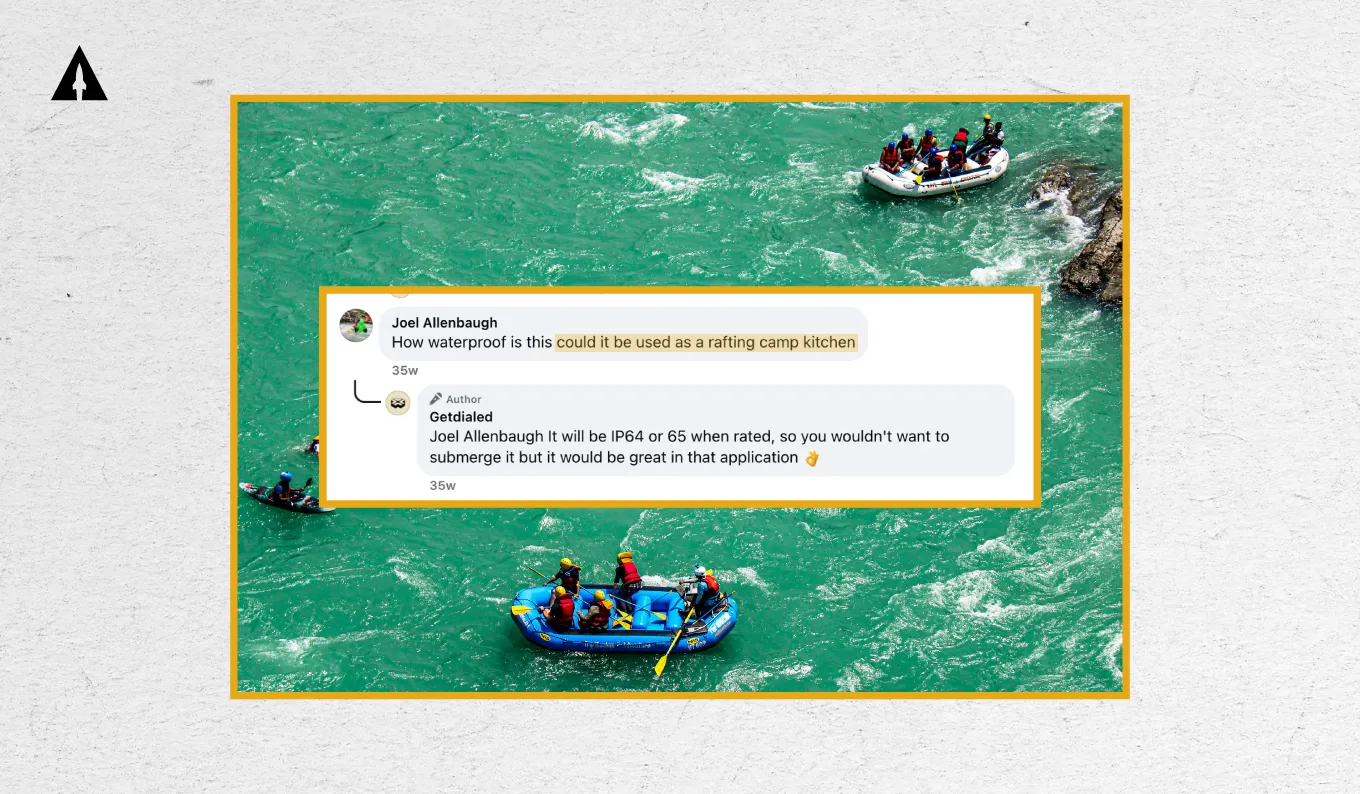
He expanded his Meta audience to target rafting. That brought in more backers.
Fourth, product-market fit matters more than anything. Dana’s success with Kickbooster and publications came from having a product people genuinely wanted.
“I think it has to do with your product, product-market fit,” he says. “If your product doesn’t resonate, you’re going to struggle no matter what tactics you use.”
What’s Next for Dialed
Right now, Dana’s focus is simple: fulfill the orders. “We want to make sure that we’re exceeding the expectations, the trust that everybody’s put in us, to really make sure that the product is better than they anticipate,” he says.
No jumping ahead to the next big thing. Just delivering an exceptional product to the people who backed the campaign.
Dialed plans to launch an e-commerce store. Dana plans to do Overland Expos and similar events to get the product in people’s hands.
The immediate roadmap focuses on expanding the kitchen system. Making it a complete, robust solution for camp kitchen organization.
But the case itself has functionality that isn’t obvious yet. Dana designed it with future products in mind. “The case actually has some cool functionality that isn’t quite obvious in the kitchen aspect of it, but it does have some cool functionality that we’ll make use of down the road,” Dana hints.
The vision is a complete system for vehicle-based camping. Everything designed around that five-minute deployment goal. Get out the door fast. Spend more time outside.
Ready to Launch Your Product?
Dana’s story shows what’s possible when you solve a real problem and validate your idea before going all-in on development. A simple pain point. A clear solution. Smart pre-launch marketing. That combination drove nearly $300,000 in sales in three weeks.
If you have a product idea and want to test if people will actually buy it, we can help. LaunchBoom has helped over 1,000 creators validate their ideas and launch successful crowdfunding campaigns. We’ll show you exactly how to test your concept, build your audience, and launch strong.
Book a call with our team to talk through your project and explore how we can help you launch.
