


Jan Marsol and Josep Hernandez spent years dealing with a problem most cyclists have learned to live with: the mess of lubricating a bike chain, especially in the middle of a long bike ride.
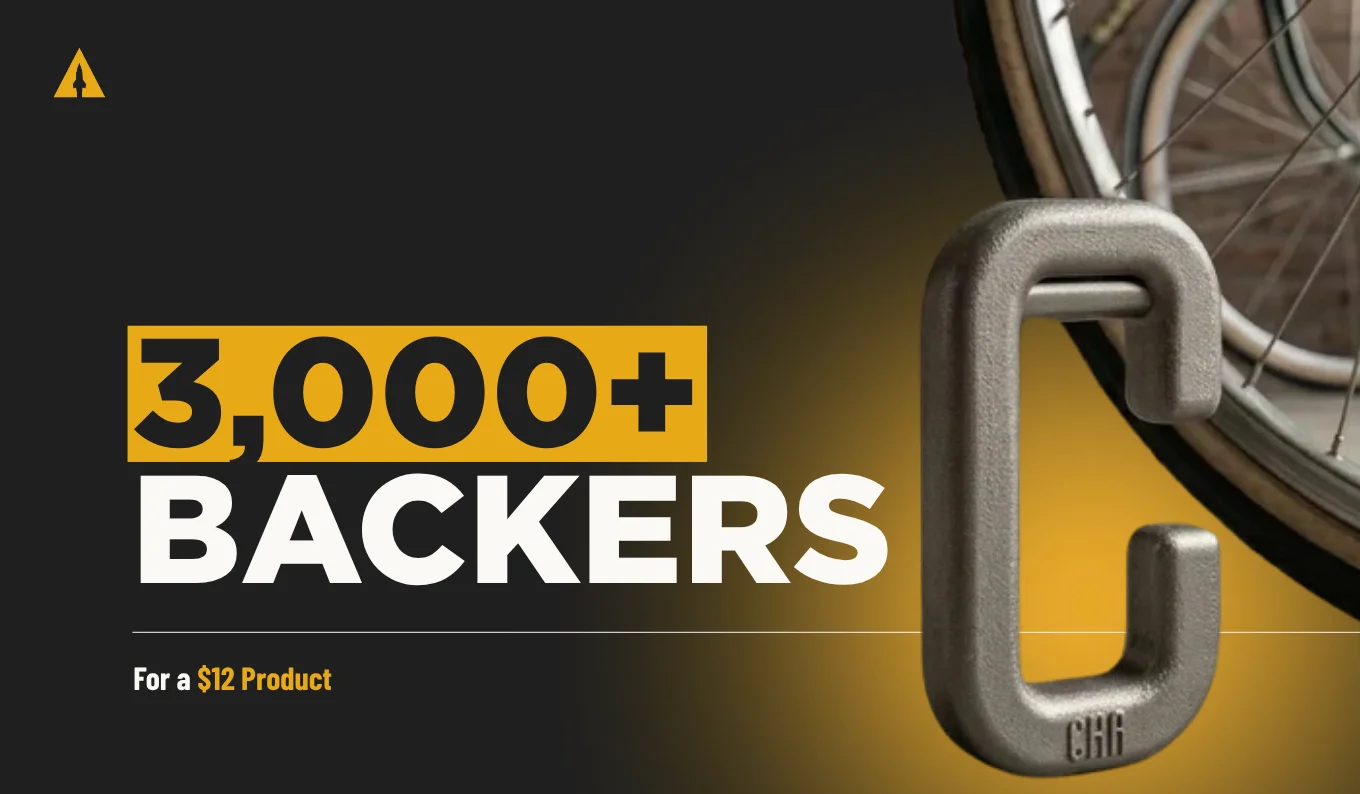
What started as Josep’s personal frustration with oil stains on his clothes turned into the CHA, a patented solid graphite lube and applicator that raised €113,228, just about $130K, from over 3,000 backers on Kickstarter, funding at more than 3,700% of its original goal.
Mark Pecota, LaunchBoom’s CEO, sat down with Jan and Josep to talk through the full journey: close to a decade of on-and-off development, the decision to finally commercialize the product, and the “slow cooking” approach that shaped their pre-launch and campaign strategy.
To hear it all in Jan and Josep’s own words, tune in to our Masters of Crowdfunding podcast episode with the team behind the CHA.
Key Takeaways
- CHA’s founders spent close to a decade developing the product as a side project before committing to it full time about two years before launch.
- They filed a patent before going to market, which gave backers confidence the product was backed by real technical work, not just a nice design.
- Rather than launching on a fixed date, the team gave their pre-launch testing as much time as it needed to find the right audience and messaging.
- Their campaign video became the foundation for nearly all of their ad creative, with shorter clips extracted and adapted from it for social.
- Founder-led, authentic content outperformed anything that felt automated or overly polished.
- Even during the live campaign, the team kept building and rebuilding internal tools to track ad spend and return, since a lower price point meant thin margins if spending went unchecked.
A Decade-Long Frustration With Messy Chain Lube
Josep had spent years mountain biking and competing before becoming a casual rider and daily commuter. Through all of it, one part of owning a bike kept bothering him: lubricating the chain. Traditional oil-based lube stained his clothes and left a mess he never got used to, even long after he’d stopped racing and started using his bike simply to get around.
That frustration eventually led him to experimenting with graphite, a lubricant already used across aerospace, railway, and other industrial applications. Graphite solved the mess problem, but nobody had figured out how to apply it cleanly to a bike chain. Josep set out to solve that himself, digging into formulas and researching how the material behaved in other industries before adapting it to cycling.
The main goal was to simplify something that’s quite messy. During all the investigation, we also found lots of studies and scientific proof of use in high-tech industry. We always thought, how has this not been done yet?
Jan, who came from a background in 3D visual effects and animation, joined in early on. The two ran a visual effects studio together before CHA existed as a real product, and that studio effectively became the incubator for the earliest prototypes.
Because they already had 3D modeling tools and design skills on hand, Jan and Josep could sketch, model, and refine ideas themselves rather than outsourcing the concept work to someone else.
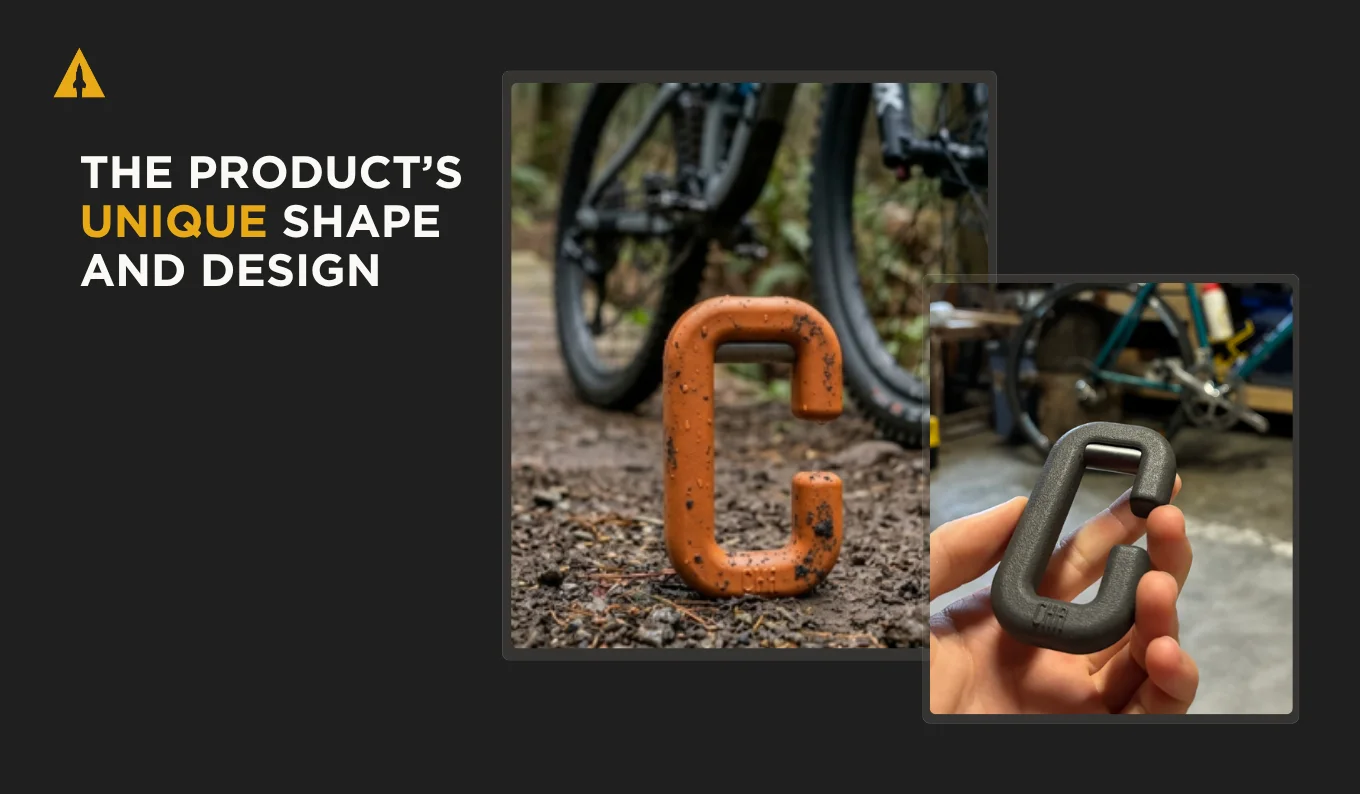
Early prototypes went through a C shape, a G shape, and several other variations before landing on the final hook design that lets the applicator sit inside the chain itself, reaching the internal rollers and pins rather than just coating the outside surface the way most lubricants do.
From Passion Project to Real Business
For most of its life, CHA was something Jan and Josep worked on around their day jobs. Josep put it plainly when asked how long the product had been in development: close to ten or eleven years. It stopped and started as client work and other projects took priority, and the team would return to it whenever they had bandwidth, gradually refining the formula and applicator each time.
That shift from side project to real business happened about two years before launch. The founders got extremely exacting about the applicator’s shape, treating the design itself as the main open question left to solve. Josep described wanting the product to be practical first, but also confident that good design doesn’t happen by accident.
We had to be one hundred percent sure that it’s the most practical, the nicest, the best product we can offer. We believe well-designed things are done for a reason, and we wanted to be very strong on that design, not only visually, but practically.
Once the design felt right, the team started working with patent and product registration experts, since CHA was introducing something genuinely new to the market.
Getting the patent mattered to them for more than legal protection. It gave them proof, beyond marketing claims, that the invention held up, How to Patent a Product in 7 Simple Steps: protection matters less as paperwork and more as evidence the invention is real.
Manufacturing decisions followed the same standard. The team partnered with a certified Formlabs SLS 3D printing facility in Barcelona to produce the applicator in Nylon PA12 Tough, keeping production local and durable rather than chasing the cheapest option overseas.
Finding that partner took the kind of scrutiny described in How to Find the Right Manufacturer Before It Sinks Your Campaign, where a manufacturer unwilling to hit the right specs can quietly derail a product long before it reaches Kickstarter.
Giving the Pre-Launch Time to “Cook Slowly”
Once CHA was ready to commercialize, Jan and Josep brought the product to LaunchBoom. Kickstarter’s format gave them a natural frame to explain something entirely new, and Jan noted that the platform’s own conventions, backer expectations, reward structures, campaign pacing, gave them useful boundaries to work within rather than a blank page.
One of the first concerns was how do we explain this product and make it understandable, and how do people see it’s going to change their lives, because it’s completely new.
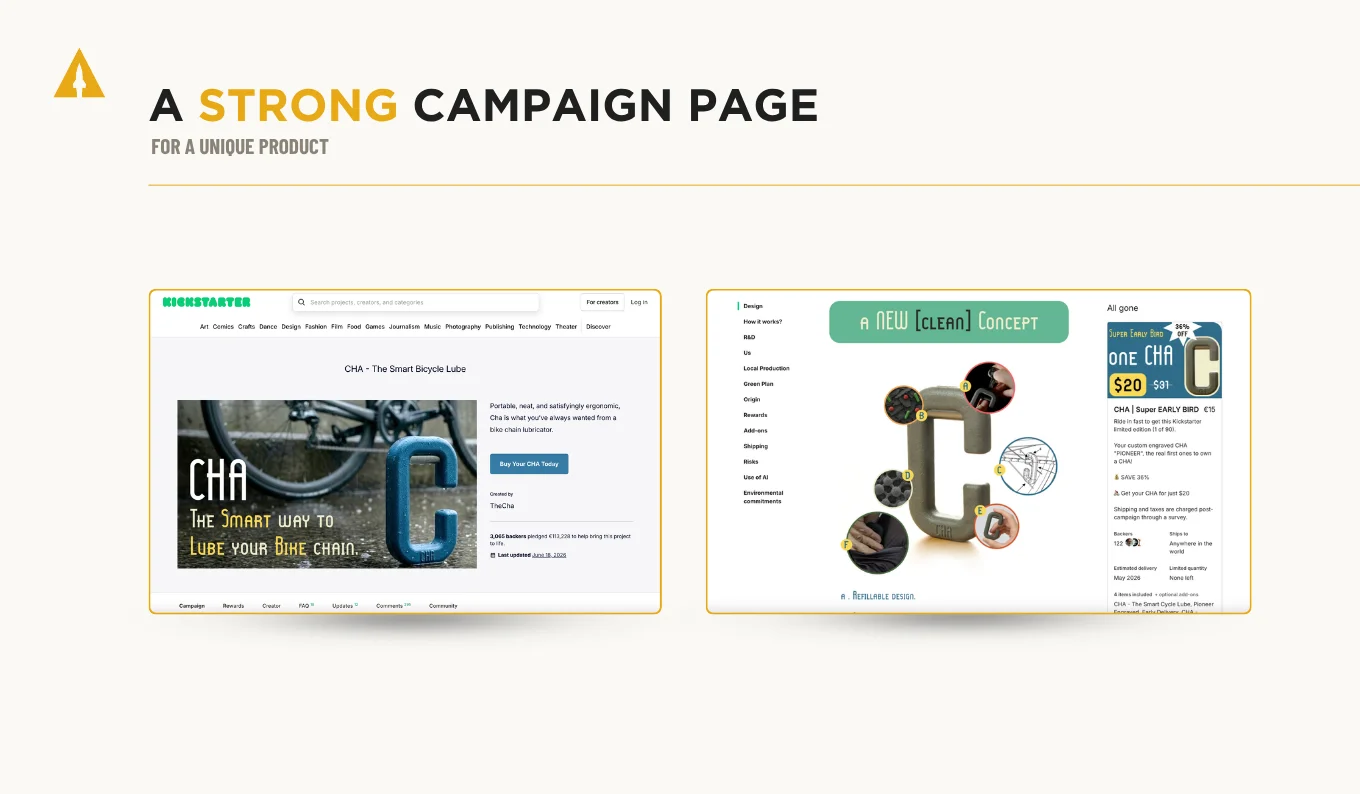
Figuring out who would actually buy CHA took longer than expected. Josep described the early pre-launch testing as a genuine challenge.
It was a bit difficult at the beginning. But as we were not in a hurry to launch the product on a specific date, we gave the time to cook that slowly. We gave the time to wait until some right signals arose.
Jan added that the team hadn’t locked in a firm launch date going into the process, which turned out to matter. The extra testing time opened up possibilities they would have missed had they rushed to a deadline, the exact pattern we have seen play out across campaigns in How Long Should a Prelaunch Take to Get the Best Results for a Crowdfunding Campaign?, where waiting for the right signals tends to outperform hitting an arbitrary date.
Solving a Universal Cycling Problem
The message CHA eventually landed on connected two things: a problem nearly every cyclist recognizes, and a solution backed by real data. Jan explained that the team leaned on more than the product’s design to make that case.
The good thing about this product is that it solves a problem that’s kind of universal when we speak about cyclists. The main point was connecting with that issue that many cyclists have and presenting the new solution, not just backed up by how cool the object is, which it is, but also by the data behind it. It’s natural, it’s not chemically contaminant like most lubricants are, it’s reusable, and it performs incredibly well in very variant conditions.
That combination of a widely shared frustration and hard technical backing became the thread running through nearly all of CHA’s marketing, from the campaign page copy down to the individual ad variations tested during pre-launch.
Building Ads Around One Real Story
The campaign video became the backbone of CHA’s advertising. Jan described the process of condensing the product’s story into roughly two minutes, extracting the strongest points, and testing which parts of that story resonated with different audiences. Once certain angles performed well, the team built more content around them rather than starting from scratch each time, effectively treating the main video as a source video that shorter social cuts could be pulled from.
What didn’t work, according to Josep, was anything that felt manufactured.
LaunchBoom helped the team create far more ad variations than they would have produced on their own. Left to their own devices, Jan admitted, they likely would have tested two or three versions at most. Instead, they worked through many more layouts, phrases, and formats until the right combination surfaced.
Josep credited the collaboration with opening their eyes to angles they hadn’t considered, while Jan added that LaunchBoom’s outside perspective filled in gaps that would have been nearly impossible to find working alone on a first launch.
Keeping Control of the Budget at Scale
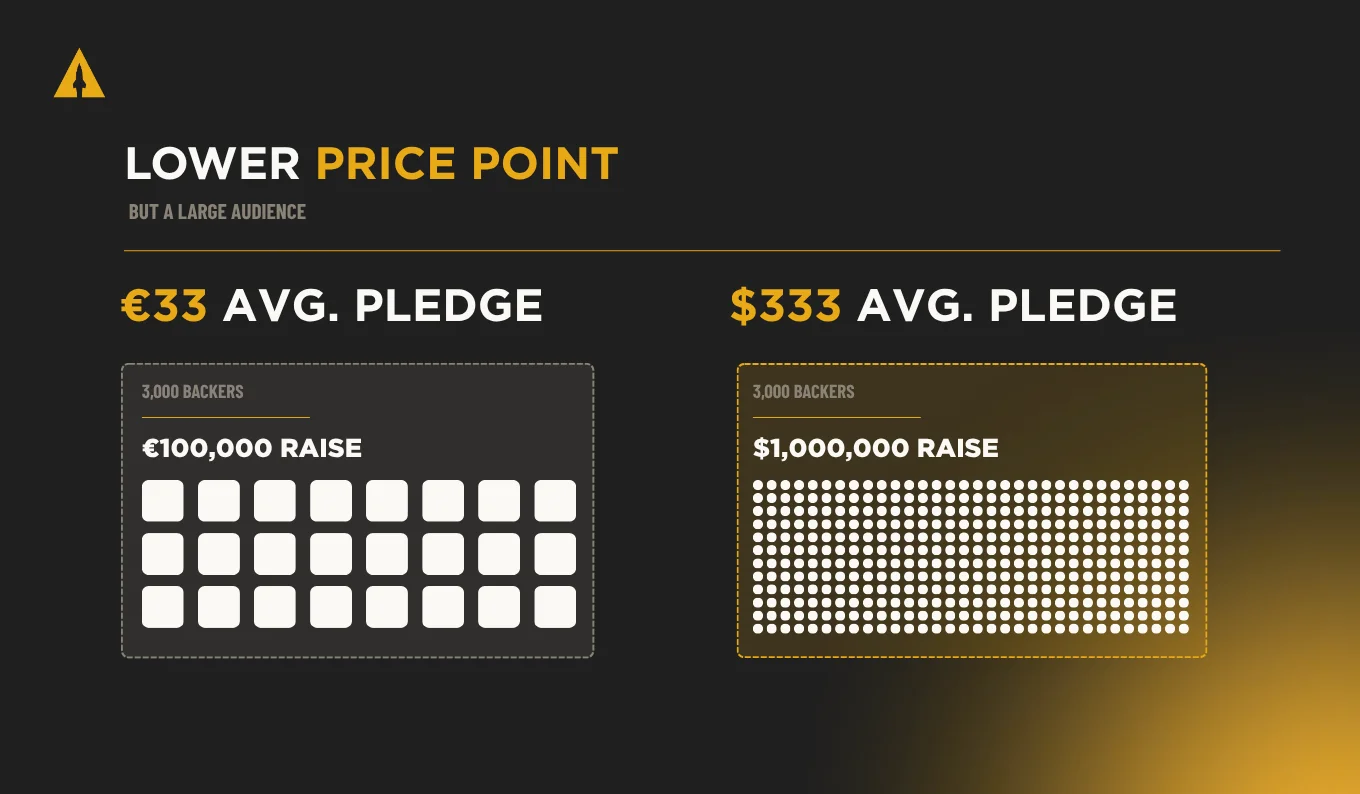
CHA’s price point was low relative to typical Kickstarter products, which meant hitting €100,000 required roughly 3,000 backers rather than a smaller group of high-value pledges. Josep recalled LaunchBoom flagging this early on: the product itself was priced low enough that the team would need real volume to hit meaningful numbers, since many campaigns reach a million euros with the same backer count CHA needed just to clear six figures.
That volume brought its own pressure once the campaign went live. Dozens of third-party services reach out to Kickstarter creators mid-campaign offering to drive traffic, and Josep said the team tested a number of them. Some, like Backer Spaces, performed well. Others didn’t. Sorting the useful partners from the rest became its own ongoing task on top of running the core campaign.
With a software background on the team, Jan and Josep built internal tools to track ad spend and return in real time, rebuilding the system as the campaign scaled and the numbers involved grew larger. Josep was direct about why that mattered:
You have to control everything that’s happening in your campaign, and this is a very stressful moment because people are asking questions and everything can affect your campaign up and down immediately. A bad response or a bad comment can bring you down. Even if you make one hundred thousand euros, it’s easy to not make any money if you’re not controlling your numbers.
That discipline let the team adjust ad spend day to day, slowing down underperforming channels and pushing more budget toward what was converting, rather than letting the campaign run on autopilot once it was live.
The Results
CHA ultimately raised €113,228 from 3,065 backers, funding at more than 3,700% of its original goal. Roughly a third of backers came from the US, with the campaign also performing strongly in the UK, Germany, France, and the Netherlands, a spread the team hadn’t fully expected going in.
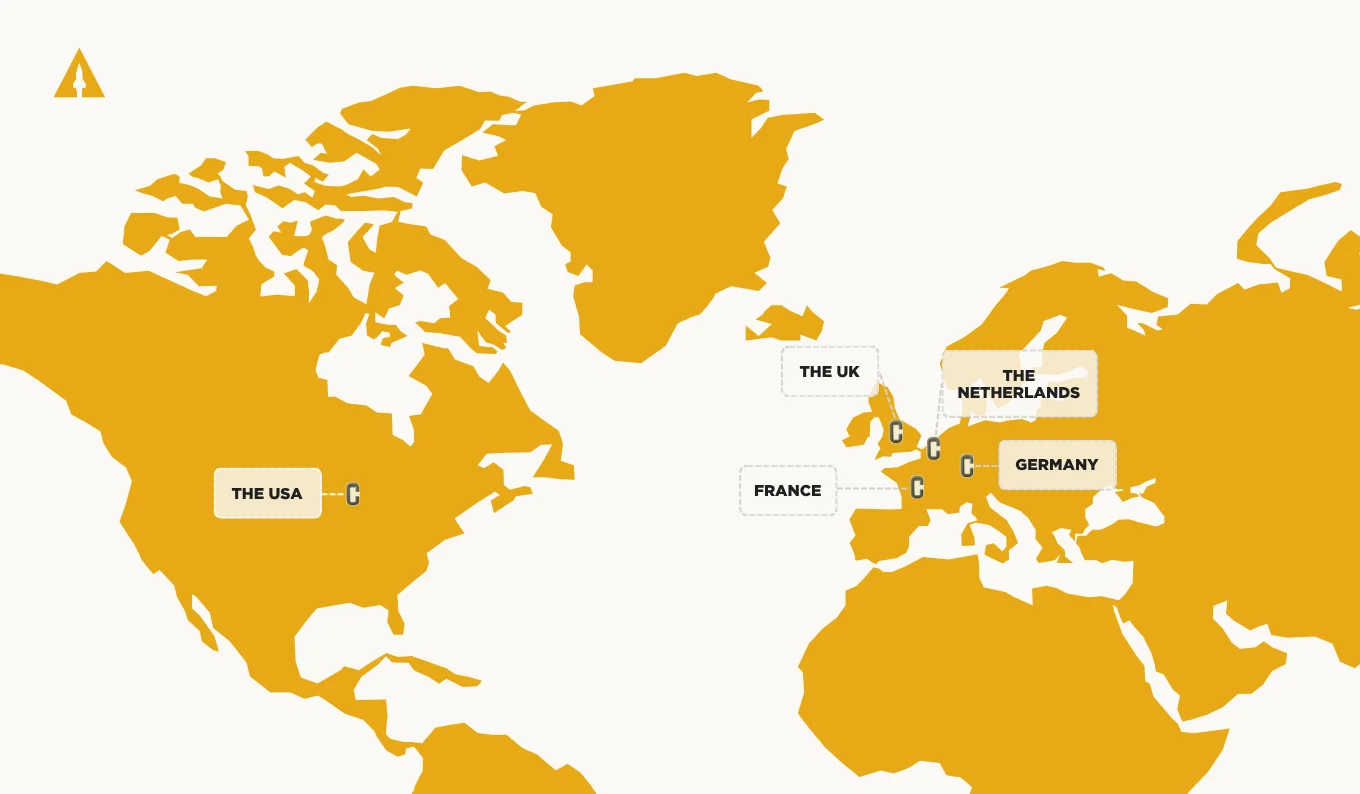
It worked very well in Europe also, very well in the UK, very well in Germany and Netherlands, but especially Germany, France, and UK had great success, which was kind of a surprise. When we planned all the campaign with LaunchBoom’s help, they always pointed to focus on the US, but in the end we’re very happy because it was a great success in the US but also in Europe.
By the time fulfillment wrapped, Jan and Josep described the experience as exhausting but rewarding, especially once customer feedback started coming in from people whose daily rides had genuinely changed.
Advice for First-Time Creators
Asked what they’d tell someone just starting this process, Jan pointed to clarity and consistency in the product’s story.
Get the story across as honest and as simple as you can, and to keep that in mind with every step that you’re making. Whichever step you’re taking, try to go back to that and follow that path.
Josep added a second piece of advice focused on decision-making under pressure, especially once a campaign is live and the daily temptation to second-guess earlier choices sets in.
It’s very important to have a good team with a common opinion, with a strong idea, with a strong decision, and try not to move too much from that decision.
Since the campaign starts, follow that decision, because you’re going to want to change everything every day.
One piece of advice would be to “believe in your decision and go ahead, because if the decision is wrong, you’re going to be wrong anyway, but if it’s good, then it will work.”
If you’re working through the early stages of bringing a new invention to market, get in touch with our team for help building your pre-launch and campaign strategy.
Frequently Asked Questions
How long should I develop a product before launching a Kickstarter campaign?
There’s no fixed timeline, but CHA’s founders spent close to two years focused specifically on finalizing the design and formula before launching, after years of earlier, slower development. What matters more than the total time is confidence in the product before it goes public. Rushing a design that still has open questions tends to show up in reviews and refund requests after the campaign ends.
Is getting a patent worth it before crowdfunding a new invention?
For genuinely new inventions, yes. A patent gives backers concrete proof that the product is more than a clever render, which matters when you’re asking people to pre-order something that doesn’t exist in the market yet. It also protects the underlying invention from being copied once the campaign draws attention.
How long should a pre-launch phase last?
It depends on how quickly you find an audience that responds to your messaging. CHA’s team didn’t set a hard launch date, which let them keep testing until the right signals showed up. A pre-launch that ends too early on an undefined audience usually shows up as weak reservation numbers once the campaign goes live.
Should crowdfunding ad creative use AI-generated content?
Backers tend to respond better to content that feels real. CHA’s founders found that professionally produced or overly polished content performed worse than authentic, founder-led material. AI-generated support assets aren’t inherently bad, but the core story needs to come from a real person the backer can trust.
How many backers do I need to hit my funding goal?
That depends entirely on your price point. A lower-priced product needs significantly more backers to reach the same dollar goal as a higher-priced one, which changes how much marketing volume and ad spend you’ll need. Map out your price point against your goal early, since it directly shapes your ad budget and audience size requirements.
