


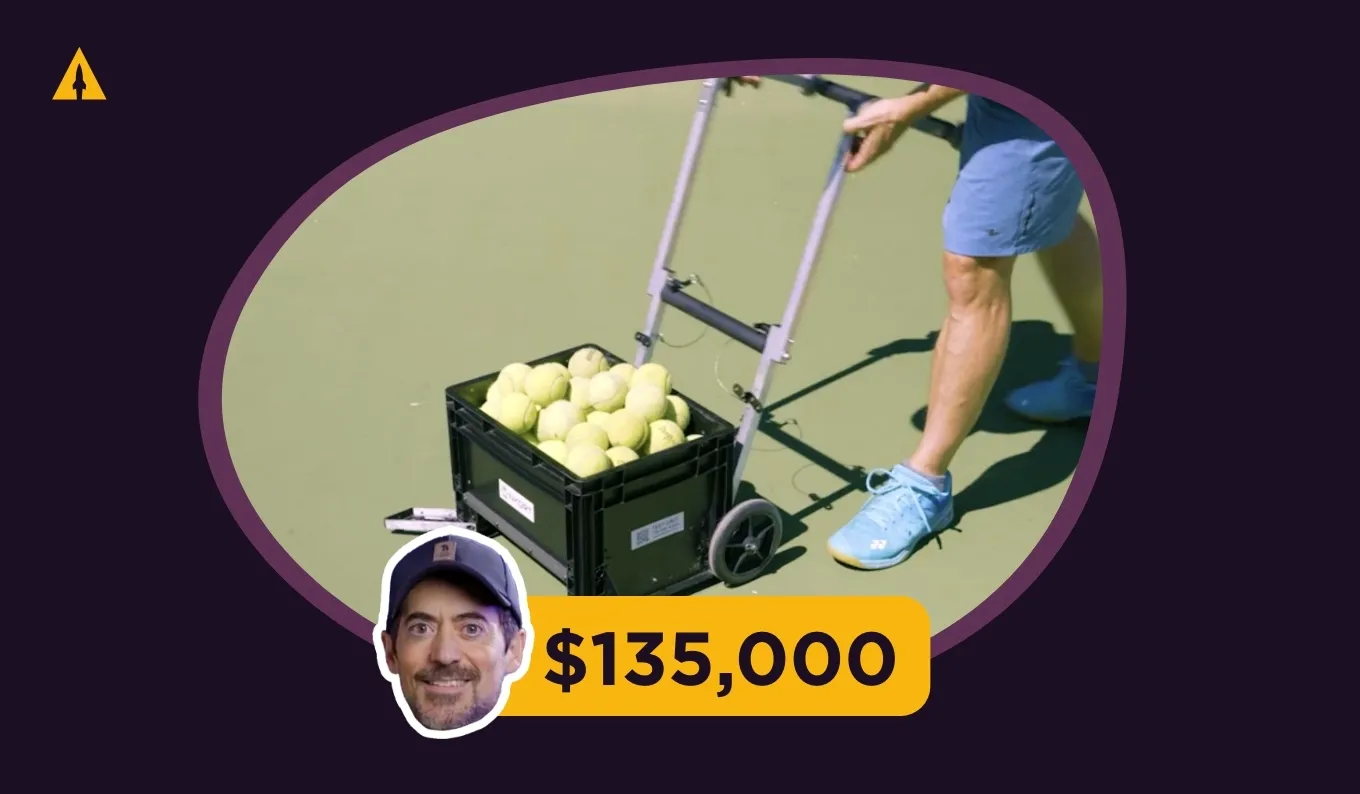
Miguel had a problem. He’d just launched his first Kickstarter campaign for FLIPP, a tennis ball picker that solved a problem every tennis player knows too well: spending half your practice time bent over collecting balls. The campaign was crushing it. Funded in 10 minutes. Hit $100,000 in three hours. On track to close at $135,000.
Then, four days before the campaign ended, Miguel got his final manufacturing quotes. That’s when he realized: he’d underpriced his product so dramatically that fulfilling every order would put him $120,000 in debt.
Most creators would panic. Some would quietly cancel and hope nobody noticed. Others would push through and pray they could figure it out later.
Miguel did something different. He told his backers the truth and gave them a choice. What happened next surprised everyone, including Miguel.
But before we get to that moment, let’s back up. Because Miguel’s journey to Kickstarter started with a very different kind of problem.
You can also watch this interview on episode 48 of Masters of Crowdfunding:
From Soccer Fields to Tennis Courts
Miguel wasn’t always a tennis player. For most of his life, he played soccer. It’s what he grew up with in Spain. It’s what kept him fit and connected to friends.
Then the pandemic hit. Teams dissolved. Group sports became impossible. “I need to keep fit,” Miguel thought. “Let me pick a new sport.”
He chose tennis because you could still play it during lockdowns. You’re far apart from each other. It seemed safe and simple.
“I realized very soon how difficult this sport is,” Miguel explains. “You think just put the ball over the net and that’s it. But to actually accomplish that on a consistent basis is very, very difficult.”
So Miguel did what any determined person would do. He hired an instructor. He bought a ball machine. He committed to getting better fast.
That’s when he discovered the real problem with tennis practice. “A lot of the time that I was supposed to get better at this sport, I was actually collecting balls,” Miguel says.
It’s a problem that’s existed since the beginning of tennis and pickleball. You bring a bucket of balls to practice. You hit them all over the court. Then you spend 10 minutes bent over, picking them up one by one.
Sure, solutions existed. Pickup tubes. Pickup rollers. Wire baskets. Miguel tried them all, but none of them worked the way he wanted. “I thought they were not efficient enough,” he says.
Now, here’s where Miguel’s background becomes important. Because Miguel wasn’t just a tennis player frustrated with slow ball collection. He was a mechanical designer who’d spent two decades building physical products. “My original background, I went to school for mechanical design,” Miguel explains. “I build physical stuff and products and toys for my entire life as a side thing, never as a business.”
He’d launched a couple of products before. Small things. Nothing that really took off. But this tennis ball problem? This felt different.
Seven Prototypes and Three Years Later
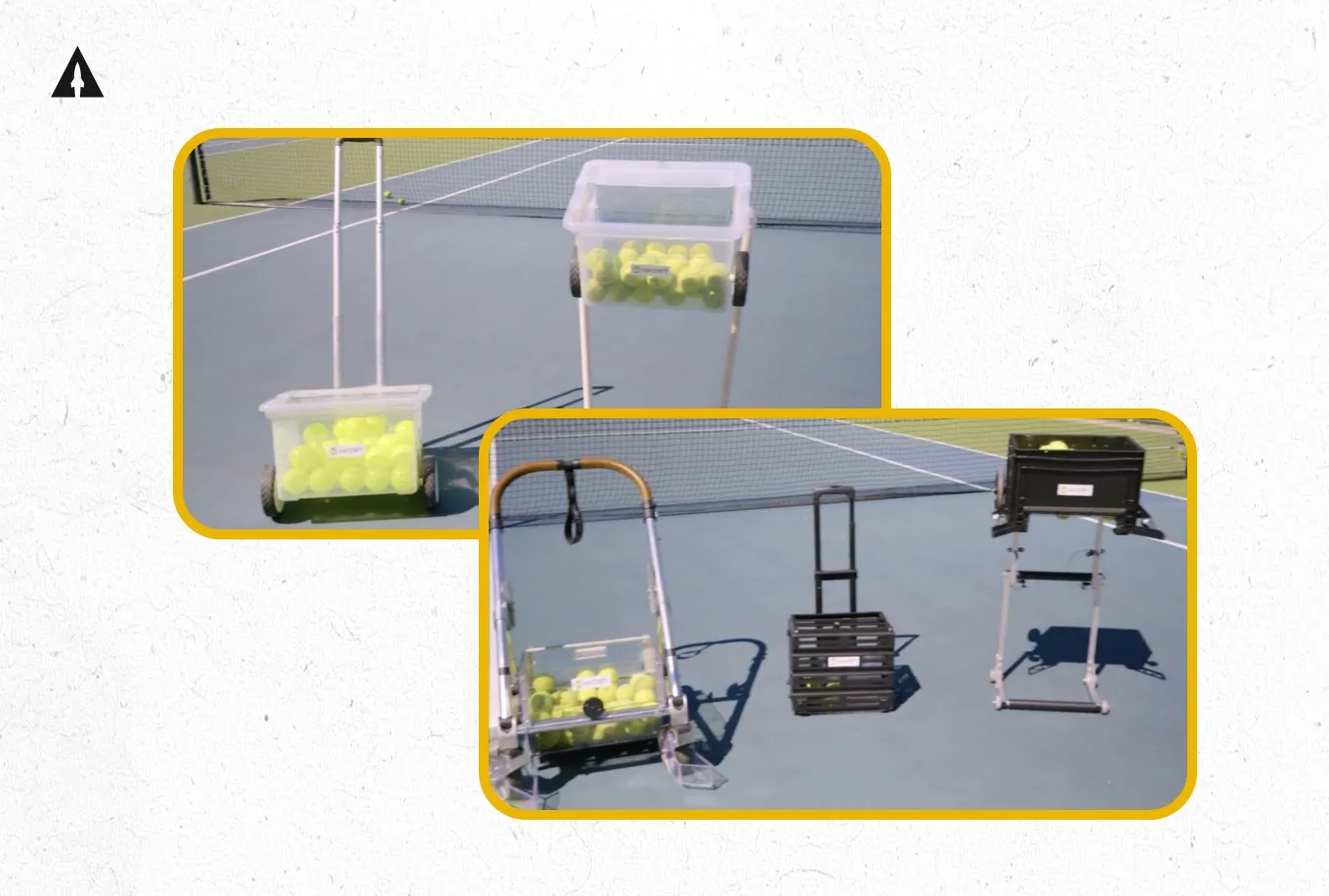
Miguel started designing. Over the next three years, he built seven different prototypes. Each one solved a problem the previous version had. Each one got closer to something that actually worked.
Finally, he had a version that worked the way he wanted. He called it FLIPP.
But Miguel didn’t just test it himself. He took it to tennis clubs. He gave it to coaches. He watched other people use it. “Everybody said, this actually works really well,” Miguel remembers.
That’s when the question hit him: Could this be a real business?
Miguel knew about Kickstarter. He’d been following the platform for years. “I always thought if I ever have an idea good enough that needs funding, I would consider launching on Kickstarter,” he says.
But every time he’d researched it before, the process felt overwhelming. It takes months of preparation. It requires full-time focus. Miguel was working as a web developer and app developer for businesses. He didn’t have that kind of time.
This time felt different, though. Because before Miguel even decided to launch on Kickstarter, something unexpected happened with his prototypes.
Half a Million Views in Five Days
Miguel had another skill most product creators don’t: he understood video marketing. “I owned a video marketing agency for over 10 years,” Miguel explains. “So I understand what it takes to make a video that people watch and it’s entertaining.”
His job was helping companies create explainer videos in under 90 seconds. Condensing complex ideas into something fun to watch that made people take action.
Miguel decided to use those skills to test if anyone actually wanted his tennis ball picker. He made a video. Not a polished commercial. Just a simple demonstration showing the problem and the solution in less than 20 seconds. Every second counted.
“I spent 10 hours watching how young people create viral videos on TikTok,” Miguel says. “The first second has to be impactful.”
In his video, he dumped a bunch of tennis balls in front of the camera. Immediate visual impact. Then he showed the old, slow tools. The problem in five seconds. Then his solution.
He posted it on TikTok. The video got over 500,000 views in five days. Organically. No paid promotion.
https://www.tiktok.com/@playnkort/video/7508797597830925573
“I could see people sharing it, commenting, saying, where do I buy this? Where do I buy this?” Miguel remembers. “That to me is a critical indication of market opportunity.”
He posted the same video on Instagram. Same result. Over 1 million views, all organic.
“To validate an idea, if you can make a very compelling video that gets a lot of organic traction, that in itself should tell you that you are going in the right direction,” Miguel says.
The videos cost him almost nothing. Just his iPhone, which he’d upgraded to the latest version for the better camera quality.
Now Miguel had validation. Real interest from real people. Not just friends being polite. Strangers demanding to know where they could buy it.
That’s when he started seriously researching how to launch on Kickstarter, including the best Kickstarter courses and best crowdfunding marketing agencies.
Finding the Playbook
Miguel did what a lot of people do these days. He asked AI. “I start searching online and asking ChatGPT, what is the best way to launch on Kickstarter with minimum budget to get over $100,000 US, and I only have three months,” Miguel explains. That’s how he found LaunchBoom.
“I listened to maybe 40 of these same podcast episodes, which were extremely useful,” Miguel says. “It’s the stories of people like me that launched and they found success.”
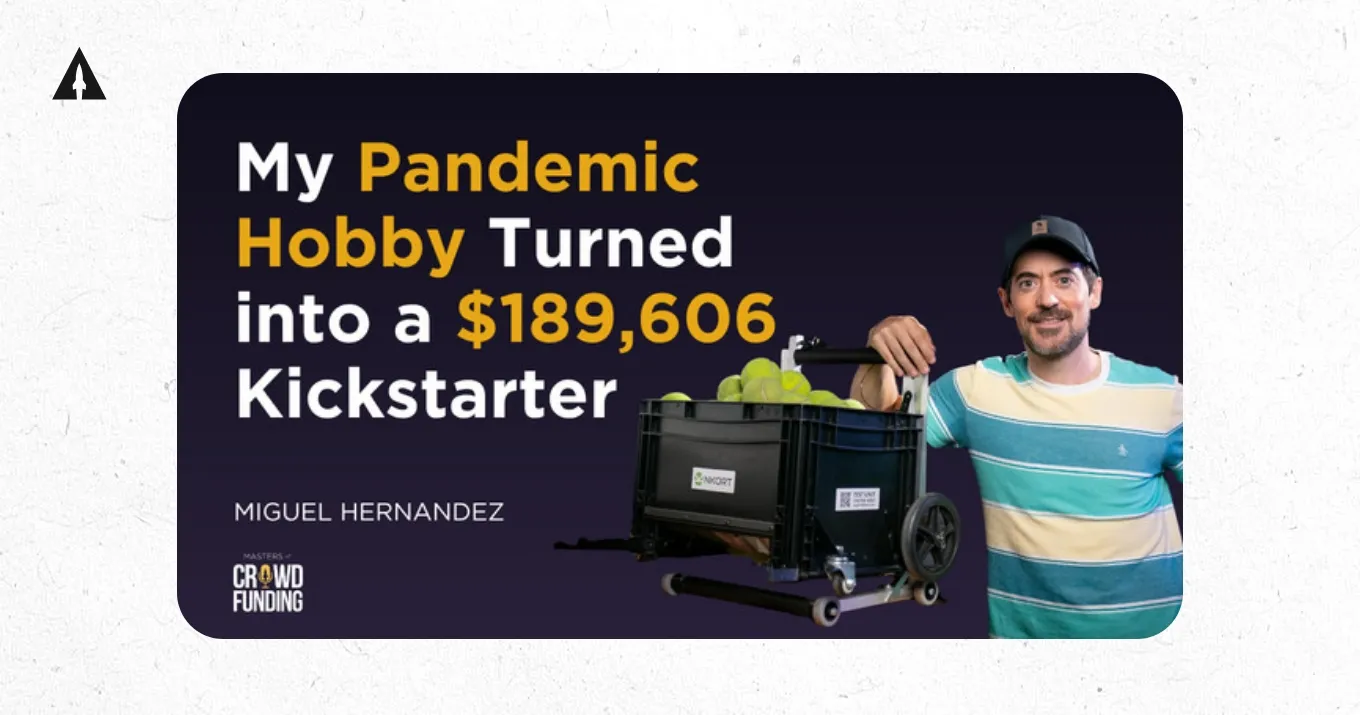
Before, the Kickstarter process felt overwhelming. But listening to other creators’ stories changed that. “Once I understood the playbook, I thought, okay, all I have to do is follow this playbook step by step and try to be as efficient as possible with my marketing dollars and launch,” Miguel says. So what was the playbook?
Building an Email List the Right Way
“You want to build the largest possible email list pre-launch,” Miguel explains. You can do that organically, driving people from social media to a landing page where you collect email addresses. Or you can do it the more reliable way: spending money on Facebook and Instagram ads. Miguel tried TikTok ads too. They didn’t work as well.
The strategy is simple. Run ads that drive people to a landing page. The landing page explains the problem and the solution. Then it offers them something: “Join now and you’ll be the first to know when we launch.”
But here’s the clever part. You offer everyone the option to upgrade to VIP status for one dollar. People who upgrade get access to the best possible price at launch.
“Basically what you’re doing is building that big email list,” Miguel explains. “And then you find who is most interested. The way you do that is by asking them for money. Anybody that’s willing to open their wallet, that means they’re really interested.”
Once you get enough people on that list, you can predict how much money you’ll raise when you launch. “You’re de-risking the success of your launch by doing a lot of work in advance,” Miguel says.
But it’s not just about building a list. It’s about building an efficient funnel.
The Numbers That Matter
Miguel had a cheat sheet. Specific conversion rate targets for every step of the funnel. These numbers came from LaunchBoom’s playbook, refined over 1,000+ campaigns:
- CPM (cost per thousand impressions): $15-$20
- Click-through rate: 3%
- Landing page conversion rate: 20%
- Lead to reservation (email to VIP): 3-5%
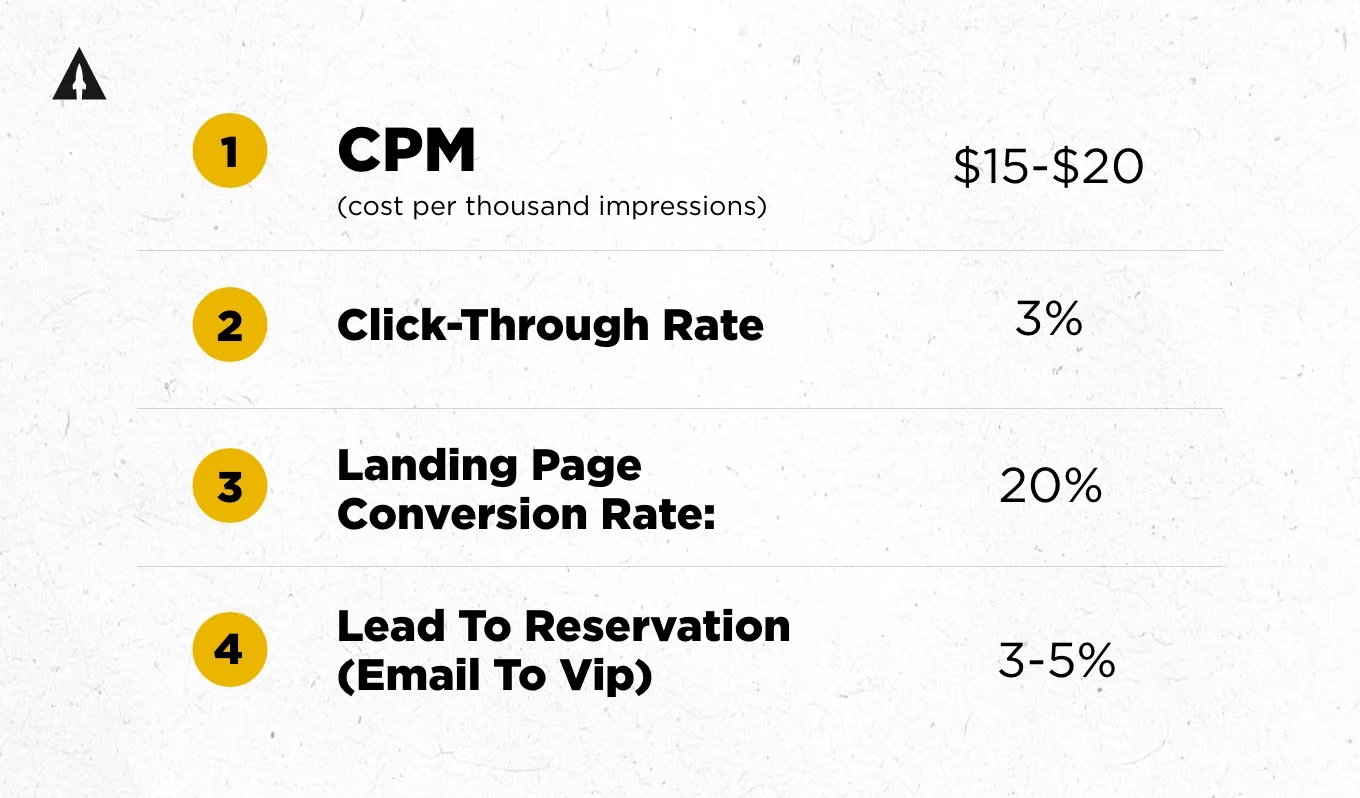
“If you’re below that or very low below that, that means something is not working,” Miguel explains.
The beauty of this system? You know exactly where to fix things. If your videos aren’t converting well, maybe nobody cares about your product. Or maybe your videos don’t explain it well enough. If your landing page isn’t converting, maybe your call to action isn’t clear. “Every step of the funnel can be optimized,” Miguel says. “And what I like about the LaunchBoom strategy is that very early on, you’re going to see whether the funnel is working or not.”
Miguel’s plan was to spend $500 to $1,000 on ads. If the numbers were terrible, he’d reconsider launching. If one thing wasn’t working, he’d fix it.
But that’s not what happened. “Everything was working,” Miguel says. “Spencer from your team told me, Miguel, your numbers are in the top 5%.” That gave Miguel confidence to keep going.
Funded in 10 Minutes
By launch day, over 2,300 people had upgraded to VIP by putting down $1. Miguel pressed the launch button. Backers started pledging immediately. 843 VIPs became backers. That’s a 35% conversion rate.
The campaign hit its public funding goal in less than 10 minutes. And hit Miguel’s personal goal of $100,000 in three hours.
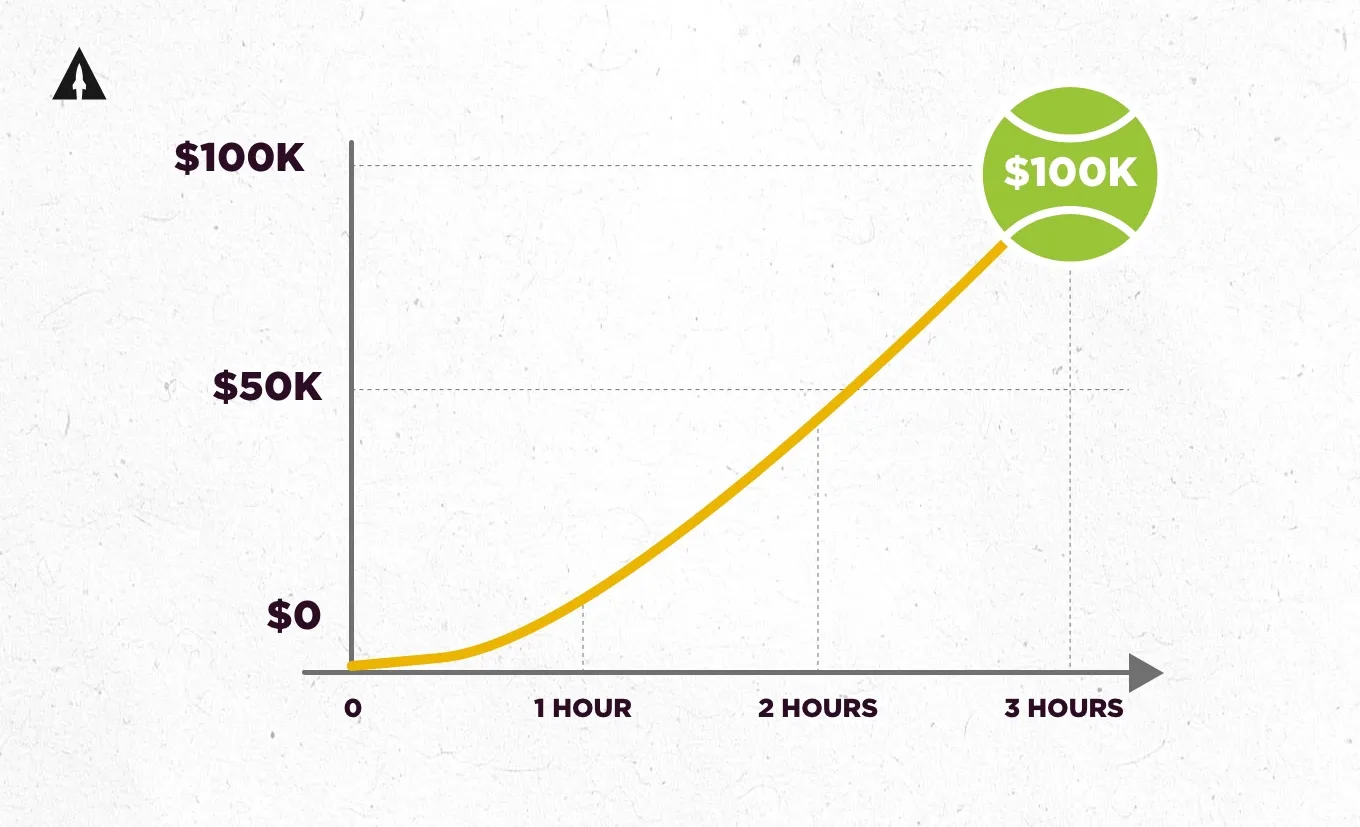
“It doesn’t matter if it’s less than 24 hours and you’re making $100,000 launching your first product ever on Kickstarter,” Miguel says. “I would consider that a success.”
The conversions matched the predictions almost exactly. All that pre-launch work paid off. Miguel had crushed his first Kickstarter campaign. Then, four days before the campaign ended, something happened.
The $120,000 Problem
Miguel finally got his complete manufacturing quotes. He’d been waiting for them throughout the campaign. He had his prototype, but manufacturers wouldn’t give accurate quotes without CAD drawings and a finalized bill of materials.
So while the campaign was running, Miguel worked with an industrial designer. They created the technical drawings. They finalized every component. They sent everything to manufacturers.
When the quotes came back, Miguel created a spreadsheet. Manufacturing costs. Tooling costs for injection molds. Marketing costs. Shipping. Fulfillment. Platform fees. Every single expense. He added it all up and divided it by the number of units he needed to deliver.
The number was way higher than he expected. “I underpriced dramatically wrong,” Miguel admits. “I raised $130,000. It’s going to cost me $250,000 to actually deliver these 1,500 units.”
Every time somebody pledged $100, Miguel was losing $50. “A slight mistake in math,” he says with dark humor.
Here’s what happened. Miguel looked at similar products on the market and thought, “Something like this should cost no more than 150 bucks.” He was wrong. “You look at the product, you’re like, it’s not that complex. It’s a plastic box with four wheels and an aluminum handle. How expensive could that be?” Miguel explains.
But manufacturing costs had gone up. Raw materials were more expensive. Injection molding was pricey. And taking a prototype to something actually manufacturable? That’s almost harder than building the prototype in the first place.
Miguel had four days to make a decision.
The Email That Changed Everything
Miguel had three options. Cancel now and launch next year with better pricing. Keep going and risk bankruptcy. Or try something nobody does on Kickstarter.
“I think transparency is key because people are trusting you that you’re going to bring this product to life,” Miguel says. “It’s all about trust.”
So before making any decision, Miguel sent an update. Not to all his backers. First, just to the 843 VIPs. “I can either cancel now or try to keep going and let’s see what happens,” he told them.
Most people said to cancel and launch next year. Some people were upset.
Then Miguel proposed a third option. What if we still launch and meet the deadlines, but I need to ask you for $100 extra? “You’re asking me for money now?” Miguel imagined people thinking. “I thought most people were just going to be throwing tomatoes at me virtually.”
But that’s not what happened. Over 90% of the VIPs said yes. They’d upgrade. They’d pay the extra $100 to make it happen. “I got such overwhelming support to make it happen,” Miguel says. “That was a big surprise to me.”
Miguel kept the campaign running. He sent the update to all backers before the campaign ended, giving anyone who disagreed the chance to cancel. 5% canceled. 95% stayed. “I’m still getting maybe one cancellation every two other days,” Miguel says. “So I think we’re going to keep the vast majority of the funding.”
What Miguel Would Tell His Past Self
If Miguel could go back to the beginning of his campaign, what would he change? “Get the unit economics nailed down as soon as possible,” he says without hesitation. “Like literally have that number as close as possible to reality before you even think about launching.”
It’s harder depending on your product’s complexity. But it’s critical. “I made an assumption that was wrong because I looked at the market and I’m like, something like this should cost no more than 150 bucks,” Miguel explains.
Don’t base your pricing on assumptions. Get real quotes. Work with an industrial designer early. Understand every cost: manufacturing, tooling, raw materials, industrial design, shipping, fulfillment, marketing.
“Taking a prototype to something manufacturable is not an easy step,” Miguel says. “It’s actually almost even harder than building the prototype and coming up with the idea.” There are weeks, months, and tens of thousands of dollars you might not account for. Those costs need to be in your unit economics from the beginning.
“Eventually you can pay for it through sales at a higher price over time,” Miguel admits. “But it’s better not to run into that risk by getting the unit economics right from the beginning.”
Where FLIPP Goes From Here
Miguel’s campaign closed at CA$189,606 (about US$135K). He’s now in the post-campaign phase, sending out backer surveys to see how many people actually upgrade for the extra $100. “We’ll see how many people actually upgrade,” Miguel says. “That’ll be an interesting thing, but I’ll be transparent. I’ll say, we didn’t raise enough money or we raised enough money.”
Either way, Miguel is moving forward. He’s committed to delivering the product. His backers are committed to supporting him. “We’re still a go at this point,” he says.
The campaign wasn’t perfect. The pricing miscalculation was a massive challenge. But Miguel’s transparency and his backers’ support turned a potential disaster into a story about community and trust. And that might be more valuable than getting the numbers right the first time.
Ready to Launch Your Product on Kickstarter?
Miguel’s story shows that launching on Kickstarter isn’t just about having a great product. It’s about validation, building an audience, creating efficient marketing funnels, and being transparent with your community. It’s also about having a proven product launch strategy to follow.
That’s exactly what we do at LaunchBoom. We’ve helped over 1,000 creators launch successful Kickstarter and Indiegogo campaigns using the same strategies Miguel used to raise CA$189,606 (about US$135,000) for FLIPP. We’ll help you build your email list, optimize your conversion rates, create high-performing ads, and de-risk your launch before you ever press that button.
Want to see if your product is a good fit for crowdfunding? Let’s talk. We’ll walk you through the process and show you exactly what it takes to run a successful campaign.
Because the best way to launch isn’t to figure it all out yourself. It’s to follow a playbook that’s already been proven to work.
