



Fulfillment can absolutely make or break your Kickstarter campaign. Nail it, and you’ll build a loyal customer base that follows you for years. Mess it up, and you’ll watch your reputation crumble in real-time across social media, Reddit threads, and angry backer comments.
I’ve seen both outcomes, and the difference usually comes down to one thing: whether creators treated fulfillment as seriously as product development, or as an afterthought they’d “figure out later.”
Most first-time creators pour everything into designing the perfect product and running an amazing campaign. Then they win, the confetti settles, and reality hits…you’ve got to actually deliver these things. To thousands of people. Around the world. With customs forms and freight forwarding and pledge managers and a million details you never thought about.
This guide answers the most critical questions about Kickstarter fulfillment, so you can be the creator who delivers on time, on budget, and builds a community that can’t wait for your next launch.
When Do I Need to Set Up Kickstarter Fulfillment?
Start researching fulfillment options 3-6 months before your campaign launches, and finalize your partner during or immediately after your campaign ends.
I know what you’re thinking, three to six months before launch feels insanely early. But trust me on this one. The creators who wait until after their campaign ends to start researching? They’re the ones scrambling, making expensive mistakes, and realizing their budget was off by $30,000.
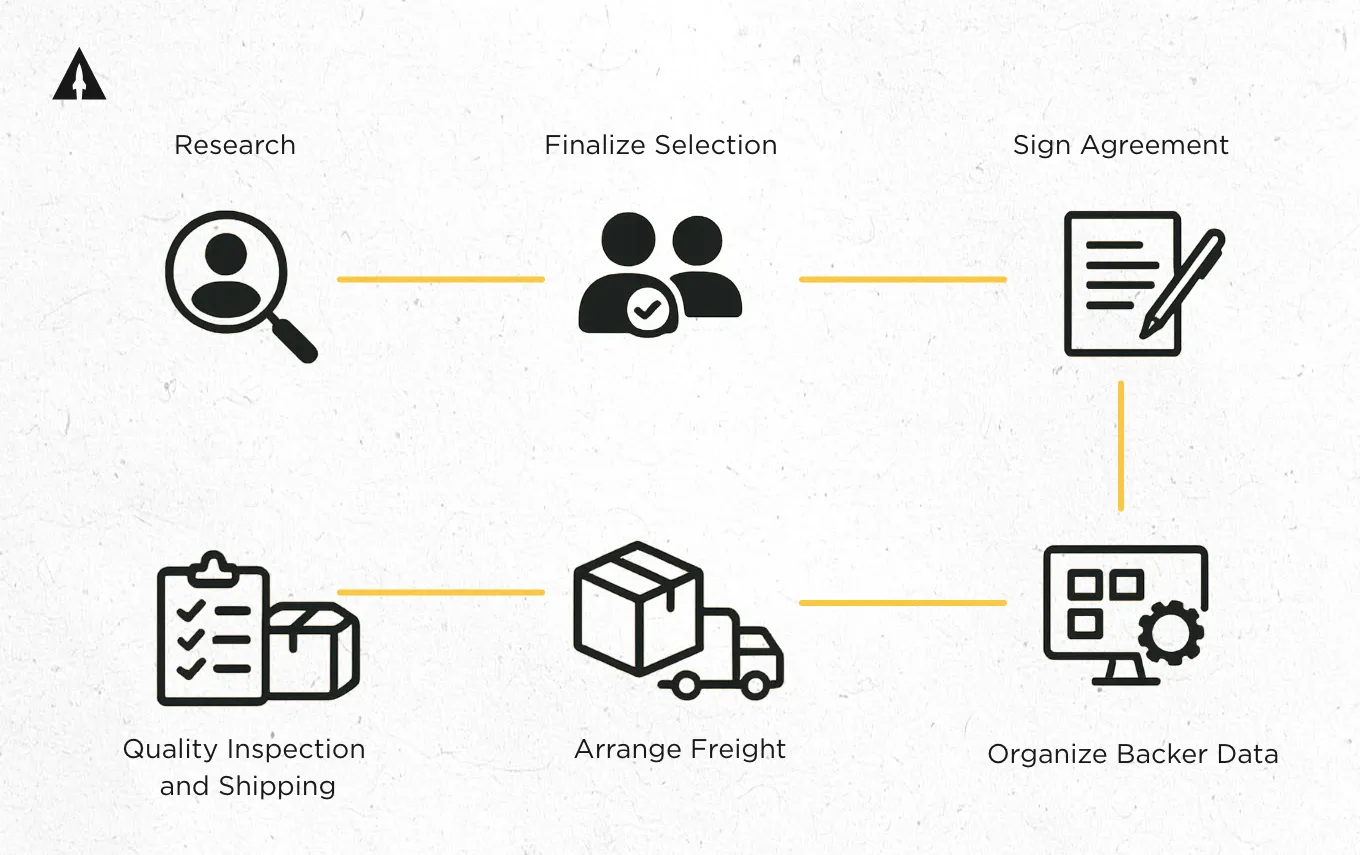
The Ideal Timeline:
3-6 months before launch: Research potential partners and get detailed quotes. You need these numbers to price your rewards accurately. Nothing’s worse than a successful campaign that loses money because you underestimated shipping by 40%.
During your campaign: Finalize your selection. Once you see momentum building and know roughly how many backers you’ll have, lock in your Kickstarter fulfillment service.
Within 1-2 weeks after campaign ends: Sign your agreement and provide product specifications. Your fulfillment partner needs dimensions, weights, and packaging details to prepare.
30-60 days after campaign: Export and clean your backer data, set up systems with your fulfillment center. This is when you’ll integrate your pledge manager with their warehouse management system.
60-90 days after campaign: Coordinate your production timeline and arrange freight from your manufacturer to the fulfillment center(s).
When products arrive: Your partner conducts quality inspection, finalizes kitting (combining multiple items into reward packages), and begins shipping.
Why Early Planning Matters:
Without actual quotes from fulfillment partners, your campaign budget might be wildly inaccurate. I’ve seen creators budget $8 per backer for fulfillment when the real cost turned out to be $18. That’s a $20,000 surprise on a 2,000-backer campaign.
Late planning means you’ll miss cost-saving strategies like regional fulfillment. If you wait until after your campaign to explore options, your European backers are locked into expensive shipping from the US instead of affordable delivery from a UK warehouse.
Rushed decisions lead to choosing the wrong partners. When you’re panicking post-campaign, you’ll go with whoever responds first instead of whoever’s actually best for your project. That’s how you end up with a fulfillment center that’s never handled a crowdfunding campaign before and doesn’t understand why 47 different reward tiers is complicated.
Successful creators treat fulfillment planning as seriously as product development, not as something they’ll worry about later.
How Does Kickstarter Fulfillment Work?
Let me walk you through the complete process, from the moment your campaign ends to the moment your backers receive their rewards.
Step 1: Backer Data Collection
Kickstarter doesn’t automatically collect shipping addresses from your backers. You need to gather this information after the campaign, typically through Kickstarter’s own pledge manager, a fully featured pledge manager that rivals Indiegogo’s, or a third-party one like BackerKit or PledgeManager.
Once you have addresses, you’ll need to clean, validate, and format the data for your fulfillment partner’s systems. This means standardizing address formats, confirming international addresses are complete, and flagging any that look suspicious or incomplete.
You’ll also organize everything by reward tiers and add-ons. If Backer #127 pledged for the Deluxe tier plus added three extra accessories, your system needs to clearly communicate that to the fulfillment center.
Step 2: Choose Your Fulfillment Strategy
You’ve got two main approaches:
Single center: Ship everything from one warehouse. This is simpler to coordinate but means higher costs for international backers and longer delivery times.
Multiple regional centers: Split your inventory across warehouses in different regions. This lowers shipping costs, speeds up delivery, and makes your international backers much happier. It does require more coordination.
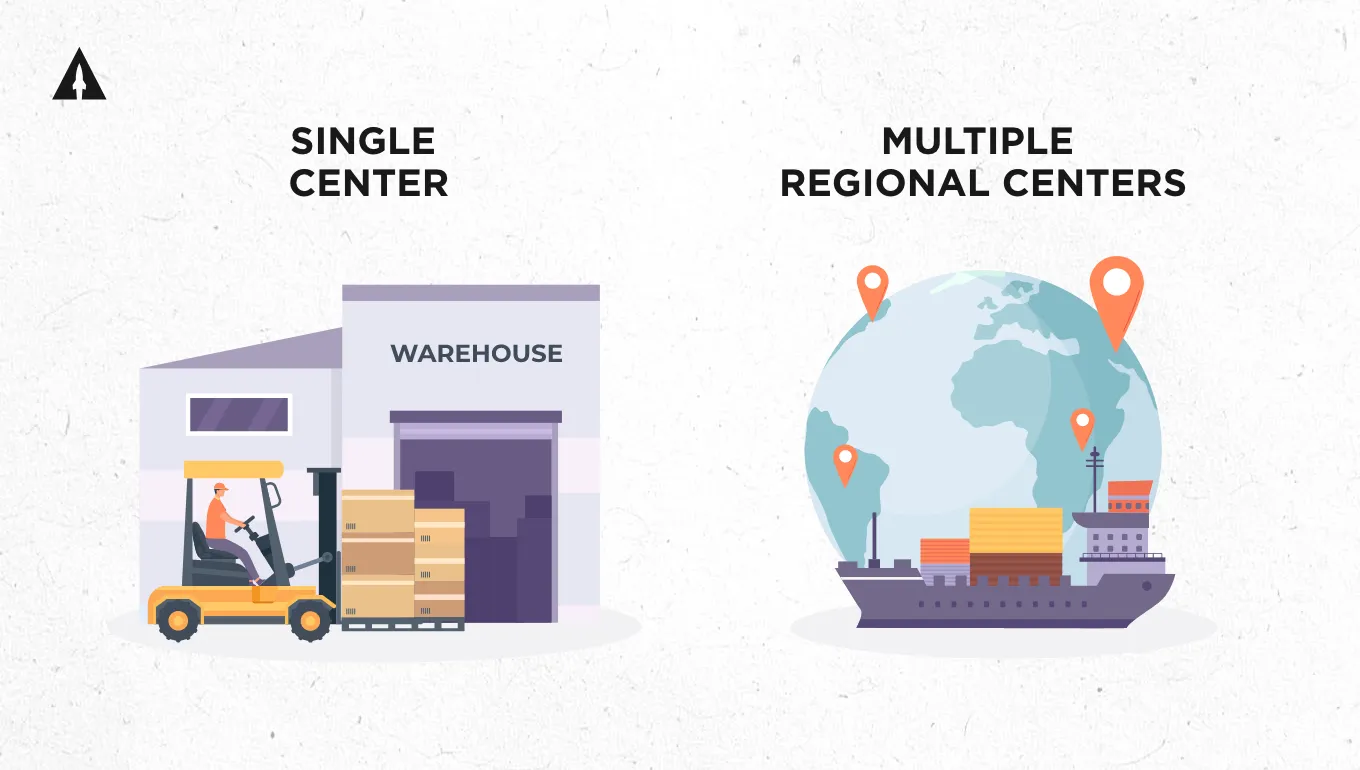
Many campaigns use a combination like Fulfillrite for North America, Spiral Galaxy Games for the EU, and VFI Asia for the Asia-Pacific region. This regional approach makes sense for larger campaigns with significant international backing.
Step 3: Production & Freight
You’ll coordinate with your manufacturer to ship products directly to your fulfillment center(s). This involves arranging freight forwarding (getting your products from the factory to the warehouse) and handling customs clearance if you’re shipping internationally. If you’re using multiple regional centers, you’ll split your production order and ship portions to each location. A campaign with 3,000 units might send 1,800 to the US, 900 to the UK, and 300 to Australia based on backer distribution.
Step 4: Receiving & Kitting
When your products arrive at the fulfillment center, they’ll conduct a physical count and quality inspection. They’re checking that everything arrived intact and matches what was ordered.
Then comes kitting which is combining multiple items into complete reward packages. If your Deluxe tier includes the main product, two accessories, a thank-you card, and stickers, someone needs to gather all those pieces and prepare them for packing. This is where Kickstarter fulfillment gets labor-intensive.
Step 5: Packing & Shipping
The fulfillment center generates shipping labels, creates customs documentation for international orders, and ships via appropriate carriers (USPS, FedEx, UPS domestically; DHL, postal services internationally). They’ll update your backers with tracking information, usually through your pledge manager or a direct integration with Kickstarter’s system.
Step 6: Post-Shipment Support
Even with careful packing, some packages get damaged or lost in transit. Your fulfillment partner (or you, depending on your agreement) handles customer service for these issues, arranging replacements or refunds as needed.
What Happens If a Kickstarter Project Doesn’t Deliver?
The consequences of failed delivery are severe for everyone involved.
For Backers:
They lose their money. Kickstarter isn’t a store, it’s a platform for backing creative projects. There’s no purchase protection, no guarantee of delivery, and no recourse through Kickstarter if a project fails. Backers can pursue legal action, but that’s expensive and rarely successful for individual pledge amounts.
The frustration goes beyond the money. Backers believed in your vision, told their friends, and waited months or years. Failed delivery breaks that trust completely.
For Creators:
Permanent reputation damage: Your name becomes synonymous with failure in the crowdfunding community. Reddit threads and Facebook groups have long memories. Launching a second campaign after failing to deliver the first? Nearly impossible.
Legal exposure: Backers can sue, and some have successfully argued that failed campaigns constitute fraud. Several creators have faced legal action, and a few have even faced criminal charges for gross mismanagement.
Community backlash: Social media amplifies angry backers. Your personal and professional reputation suffers as the story spreads across Twitter, Reddit, and industry forums.
Platform consequences: Kickstarter may ban creators who fail to deliver, preventing future campaigns.
Common Failure Reasons:
Most failed campaigns don’t involve malicious intent. They fail because of:
Underestimated fulfillment costs: Creators budget $10,000 for Kickstarter shipping and fulfillment and discover it actually costs $35,000. Without reserves, the campaign becomes financially impossible.
Poor manufacturing or fulfillment planning: Production delays cascade into missed timelines. Or creators choose inexperienced fulfillment partners who can’t handle the complexity.
Cash flow mismanagement: Spending campaign funds on personal expenses or non-essential business costs, leaving nothing for fulfillment.
Lack of logistics experience: First-time creators don’t realize how complicated international shipping, customs, and freight forwarding actually are.
How to Avoid Failure:
Build realistic budgets with a 20-30% contingency fund. Things will cost more than expected, plan for it.
Partner with experienced Kickstarter fulfillment companies that have shipped hundreds or thousands of campaigns. Their expertise prevents costly mistakes.
Start planning early. The timeline I shared earlier isn’t optional, it’s essential.
Communicate transparently with backers. If you hit delays or problems, tell people immediately. Honest communication doesn’t prevent frustration, but it maintains trust.
Can I Fulfill My Own Kickstarter?
Technically yes, but it’s rarely a good idea beyond 100 backers.
I get the appeal. You want to save money, maintain control, and personally ensure every package is perfect. Those are legitimate concerns. But DIY fulfillment comes with hidden costs that usually outweigh the savings.
When DIY Makes Sense:
Under 50-100 backers: At this scale, you can realistically pack and ship everything yourself in a reasonable timeframe.
Local or regional campaigns: If 90% of your backers are within your state or country, shipping is simpler.
Simple single-item rewards: One product, no add-ons, no complicated kitting required.
You have 1-2 weeks of full-time availability: Fulfillment isn’t something you do in the evenings after work. It requires dedicated, focused time.
Hidden Costs of DIY:
Time investment: Plan on 40-80 hours for 500 orders. That’s a full work week at minimum, often two. What else could you be doing with that time? Developing your next product? Building your business?
Retail shipping rates: You’ll pay consumer prices at the post office instead of the commercial rates that fulfillment centers negotiate. This difference can be $3-7 per package.
Higher damage rates: Professional fulfillment centers know how to pack products to survive the shipping journey. Your first attempt? Probably not as good. Damaged products mean replacements, which double your costs for those orders.
International shipping complexity: Customs forms, duties, restricted items, country-specific regulations, it’s genuinely complicated. One mistake can mean packages stuck in customs for months.
When You Need a Crowdfunding Fulfillment Center:
200+ backers: The time investment becomes unsustainable.
20%+ international backers: You need expertise in international logistics.
Complex reward tiers: Multiple SKUs, add-ons, and kitting requirements are where professionals shine.
You need to focus on product development: If you’re shipping your first product while developing the next, your time is better spent on growth.
Professional services like Fulfillrite handle thousands of campaigns and can ship rewards in days with commercial rates that often offset their service fees. They’ve packed millions of packages and know exactly how to protect your products in transit.
How Much Does a Fulfillment Service Cost?
Let me break down the real numbers, because transparency here prevents nasty surprises later.
Typical Cost Components:
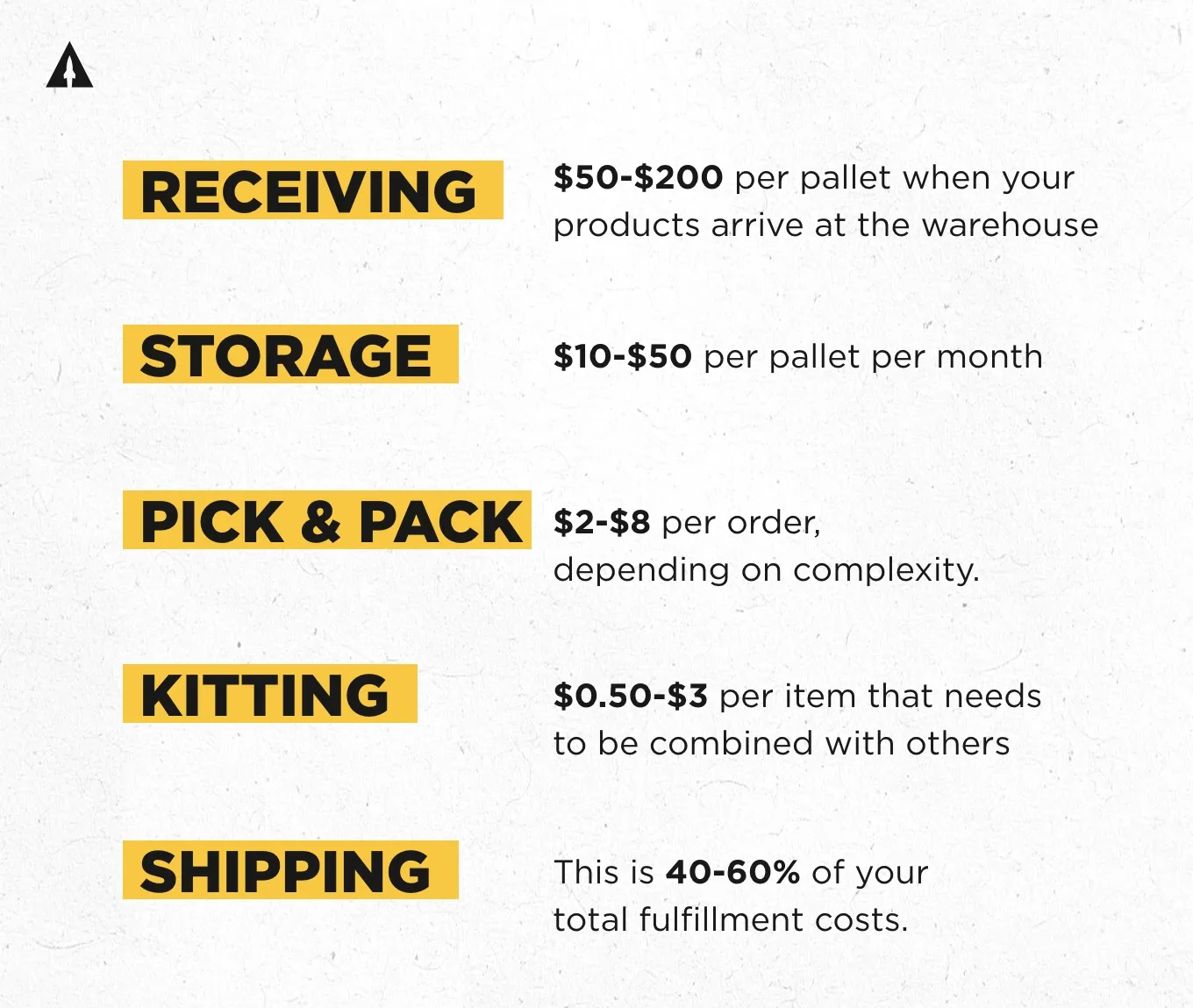
Receiving: $50-$200 per pallet when your products arrive at the warehouse. This covers unloading, counting, and inspecting your inventory.
Storage: $10-$50 per pallet per month. Many fulfillment centers waive this for the first 30-60 days, which helps if your production timeline is tight.
Pick & pack: $2-$8 per order, depending on complexity. A simple single-item order costs less than a reward tier with five different components.
Kitting: $0.50-$3 per item that needs to be combined with others. If your Deluxe tier requires assembling four separate pieces, that’s $2-12 in kitting labor.
Shipping: This is 40-60% of your total fulfillment costs. Weight, dimensions, destination, and carrier all affect the final price.
Real-World Examples:
Small campaign (200 backers, simple product):
- Receiving: $100
- Pick & pack: $800 (200 orders × $4)
- Shipping: $2,650 (average $13.25 per package)
- Total: $3,550 ($17.75 per backer)
Medium campaign (1,000 backers, board game with multiple components):
- Receiving: $300
- Kitting: $3,000 (1,000 games × $3 for assembly)
- Pick & pack: $6,000 (1,000 orders × $6)
- Shipping: $23,200 (average $23.20 per package, heavier product)
- Total: $32,500 ($32.50 per backer)
Large campaign (5,000 backers, regional fulfillment strategy):
- Receiving (3 centers): $900
- Kitting: $12,500
- Pick & pack: $30,000
- Shipping: $66,600 (reduced rates due to regional distribution)
- Total: $110,000 ($22 per backer)
- Savings vs. single center: $40,000+
Notice how the large campaign with regional fulfillment actually costs less per backer than the medium campaign? That’s the power of strategic planning.
Cost-Saving Strategies:
Regional fulfillment for international audiences: Shipping from a UK warehouse to Germany costs $8. Shipping from the US to Germany costs $28. Multiply that across hundreds of backers.
Optimize packaging: Reducing your box dimensions by two inches in each direction can drop you into a lower shipping tier, saving $2-4 per package.
Batch shipping: Some fulfillment centers offer discounts if you’re not in a rush and they can consolidate your orders with others.
Negotiate volume discounts: On campaigns with 2,000+ backers, you can often negotiate better per-unit rates.
How Do I Choose the Right Kickstarter Fulfillment Center?
Choosing your fulfillment partner is one of the most important decisions you’ll make post-campaign. The wrong choice costs you money, time, and backer goodwill.
Key Criteria:
Crowdfunding experience: How many Kickstarter campaigns have they actually shipped? Can they provide references from creators with similar products? A fulfillment center that mainly handles e-commerce subscriptions won’t understand the unique challenges of reward tiers and backer data management.
Customer service: Check response times and read reviews on Trustpilot and Google. When problems arise (and they will) you need a partner who responds in hours, not days.
Technology integration: Do they work with major pledge managers like BackerKit and PledgeManager? Can they provide real-time tracking and reporting? You need visibility into what’s happening with your inventory.
Shipping capabilities: Do they have expertise in international logistics? Can they handle duties-paid shipping (where import taxes are prepaid, so backers don’t get surprise bills)? This matters enormously for international campaigns.
Services offered: Beyond basic shipping, what else do they provide? Kitting and assembly? FBA prep if you’re selling on Amazon post-campaign? Returns handling? Storage for your next campaign?
Geographic coverage: If you’re considering regional fulfillment, do they have multiple warehouses or partnerships in key regions?
Capacity: Can they handle your volume? What about if you 10x your funding goal? You need a partner who can scale with unexpected success.
Pricing transparency: Are all fees clearly outlined, or are there hidden charges that appear later? Get everything in writing.
Red Flags to Watch For:
- No crowdfunding experience or can’t name recent campaigns they’ve handled
- Poor reviews mentioning damaged products, slow shipping, or unresponsive service
- Unable or unwilling to provide creator references
- Pricing that seems too good to be true (it probably is)
- Slow response times during the evaluation phase (it won’t get better after you sign)
Questions to Ask Potential Partners:
- “How many Kickstarter campaigns have you fulfilled in the past year?”
- “Can you provide 2-3 references from creators who ran similar campaigns?”
- “What’s your average fulfillment timeline from receiving products to completing shipment?”
- “How do you handle international customs and duties?”
- “What’s your process when damaged items or fulfillment errors occur?”
Top Recommended Companies:
Fulfillrite: They’ve fulfilled 3,500+ Kickstarter campaigns, maintain 4.9-star reviews, and work with all major pledge managers. They’re the gold standard for North American fulfillment.
Quartermaster Logistics: Based in Orlando, they specialize in crowdfunding fulfillment and understand the unique needs of Kickstarter creators.
Spiral Galaxy Games: UK/EU specialists, particularly strong with board games and tabletop products. If you have significant European backing, they’re worth considering.
Do I Need More Than One Kickstarter Fulfillment Center?
For campaigns with 1,000+ backers and 30%+ international support, multiple regional centers usually save money and improve backer satisfaction.
The decision between single-center and regional fulfillment is fundamentally about math and experience level.
Single Center Best For:
Small campaigns under 500 backers: The coordination complexity of multiple centers outweighs the savings.
80%+ domestic audience: If nearly everyone is in your home country, regional fulfillment doesn’t make sense.
Lightweight products: If your product weighs under a pound and ships inexpensively, international shipping costs are manageable from one location.
First-time creators wanting simplicity: Your first campaign has enough complexity without adding multiple fulfillment partners.
Multiple Centers Best For:
1,000+ backers: At this scale, the savings from regional fulfillment become substantial.
30%+ international audience: Significant international backing means significant savings from local shipping.
Heavy or expensive-to-ship products: Board games, hardware products, and anything over 3 pounds benefits enormously from regional distribution.
Experienced creators: If you’ve shipped a campaign before and understand the process, you can handle the added coordination.
Cost Comparison Example (1,000-backer board game campaign):
Single US center:
- US shipping (600 backers): $13,800
- EU shipping (250 backers): $8,750
- Asia-Pacific shipping (150 backers): $6,450
- Total shipping: $29,000 ($29/backer)
Regional centers (US, UK, Australia):
- US shipping (600 backers): $13,800
- EU shipping from UK (250 backers): $2,500
- Asia-Pacific from Australia (150 backers): $1,800
- Additional receiving/coordination: $1,200
- Total shipping: $19,300 ($19.30/backer)
- Savings: $9,700 (33% reduction)
For board games and heavy products, multiple centers almost always make sense at 1,000+ backers. The savings are just too significant to ignore.
Regional Strategy That Works:
North America: Fulfillrite handles US and Canada from their warehouses.
Europe: Spiral Galaxy Games or GamesQuest manage UK and EU distribution, navigating post-Brexit complications.
Asia-Pacific: VFI Asia or Aetherworks cover Australia, New Zealand, and Asian countries.
Rule of thumb: If regional Kickstarter fulfillment saves $10+ per international backer and you have 200+ international backers, the complexity is worth it. That’s $2,000+ in savings that can go toward your next campaign or unexpected costs.
Final Thoughts
Your campaign’s success doesn’t end when the funding clock hits zero. In many ways, that’s when the real work begins.
Fulfillment deserves the same attention, planning, and budget that you gave to product development and marketing. The creators who treat it as an afterthought are the ones scrambling with angry backers, blown budgets, and damaged reputations.
The ones who plan early, choose experienced partners, budget accurately, and communicate transparently? They’re the ones launching second and third campaigns to communities that trust them completely.
Start researching fulfillment options months before launch, not weeks after. Get real quotes and build them into your reward pricing. Consider regional fulfillment if your audience is global. Choose partners with proven crowdfunding experience. And budget for contingencies, because something will cost more than expected.
Your backers believed in your vision enough to give you money before your product even existed. Honor that trust by delivering their rewards successfully, on time, and with the care they deserve.
We’ve helped over 1,000 creators navigate Kickstarter fulfillment successfully, and we’d love to help you too. If you’re planning a campaign and want to make sure you get fulfillment right from the start, let’s talk about how LaunchBoom can help you build a launch strategy that includes realistic fulfillment planning from day one.
Kickstarter Fulfillment FAQs
When should I start planning Kickstarter fulfillment?
You should start researching fulfillment options 3-6 months before your campaign. Finalize your partner during or immediately after the campaign ends. Early planning ensures your budget is accurate, helps you avoid expensive mistakes, and allows you to take advantage of cost-saving strategies like regional fulfillment.
How does Kickstarter fulfillment work?
Kickstarter fulfillment involves several key steps from the moment your campaign ends to when your backers receive their rewards:
- Backer Data Collection: Gather shipping addresses via a pledge manager or by reaching out directly. Clean and validate the data, organize by reward tiers and add-ons.
- Choose Your Fulfillment Strategy: Decide between a single fulfillment center or multiple regional centers, depending on your backer distribution and product complexity.
- Production & Freight: Ship products from the manufacturer to the fulfillment center(s), including customs and freight forwarding if international.
- Receiving & Kitting: Inspect and count products, then assemble multiple items into complete reward packages.
- Packing & Shipping: Generate labels, prepare customs documentation, and ship to backers.
- Post-Shipment Support: Handle lost or damaged packages, replacements, and customer inquiries.
Can I fulfill my own Kickstarter campaign?
Technically, yes. But DIY fulfillment is usually only feasible for under 50-100 backers, simple single-item rewards, local campaigns, or if you have 1-2 weeks full-time to dedicate. DIY comes with hidden costs:
- Time investment: packing and shipping hundreds of orders can take 40-80 hours.
- Retail shipping rates, which are higher than commercial fulfillment rates.
- Higher damage rates due to lack of professional packing.
- International shipping complexity, including customs, duties, and restricted items.
When do I need a professional fulfillment center?
You should consider a professional Kickstarter fulfillment center if you have:
- 200+ backers, because DIY becomes unsustainable.
- 20%+ international backers, since international shipping requires expertise.
- Complex reward tiers with multiple SKUs, add-ons, or kitting requirements.
- A need to focus on product development rather than shipping logistics.
Professional centers like Fulfillrite, Spiral Galaxy Games, or VFI Asia have experience with thousands of campaigns and can help ensure timely, cost-effective delivery.
How much does a fulfillment service cost?
Fulfillment costs depend on the service and complexity of your rewards. Typical cost components include:
- Receiving: $50-$200 per pallet.
- Storage: $10-$50 per pallet per month (many waive this for the first 30-60 days).
- Pick & pack: $2-$8 per order, depending on complexity.
- Kitting: $0.50-$3 per item to assemble rewards.
- Shipping: 40-60% of total fulfillment costs (varying by weight, dimensions, and destination).
For larger campaigns, regional fulfillment can reduce shipping costs significantly, sometimes saving tens of thousands of dollars.
How do I choose the right Kickstarter fulfillment center?
Choosing the right partner is critical. Look for experience with crowdfunding campaigns, strong customer service, and technology integration with pledge managers like BackerKit and PledgeManager. Check that the center can handle international shipping, kitting, and returns, has multiple warehouses if needed, and can scale with unexpected success. Ensure pricing is transparent and ask for references from creators with similar campaigns.
Do I need more than one fulfillment center?
For campaigns with 1,000+ backers and 30%+ international support, multiple regional centers usually save money and improve backer satisfaction. Single centers work best for smaller campaigns, mostly domestic backers, lightweight products, or first-time creators seeking simplicity. Multiple centers are ideal for heavy or expensive-to-ship products, larger campaigns, and experienced creators. A regional strategy can save money, speed up delivery, and improve the overall backer experience.
