


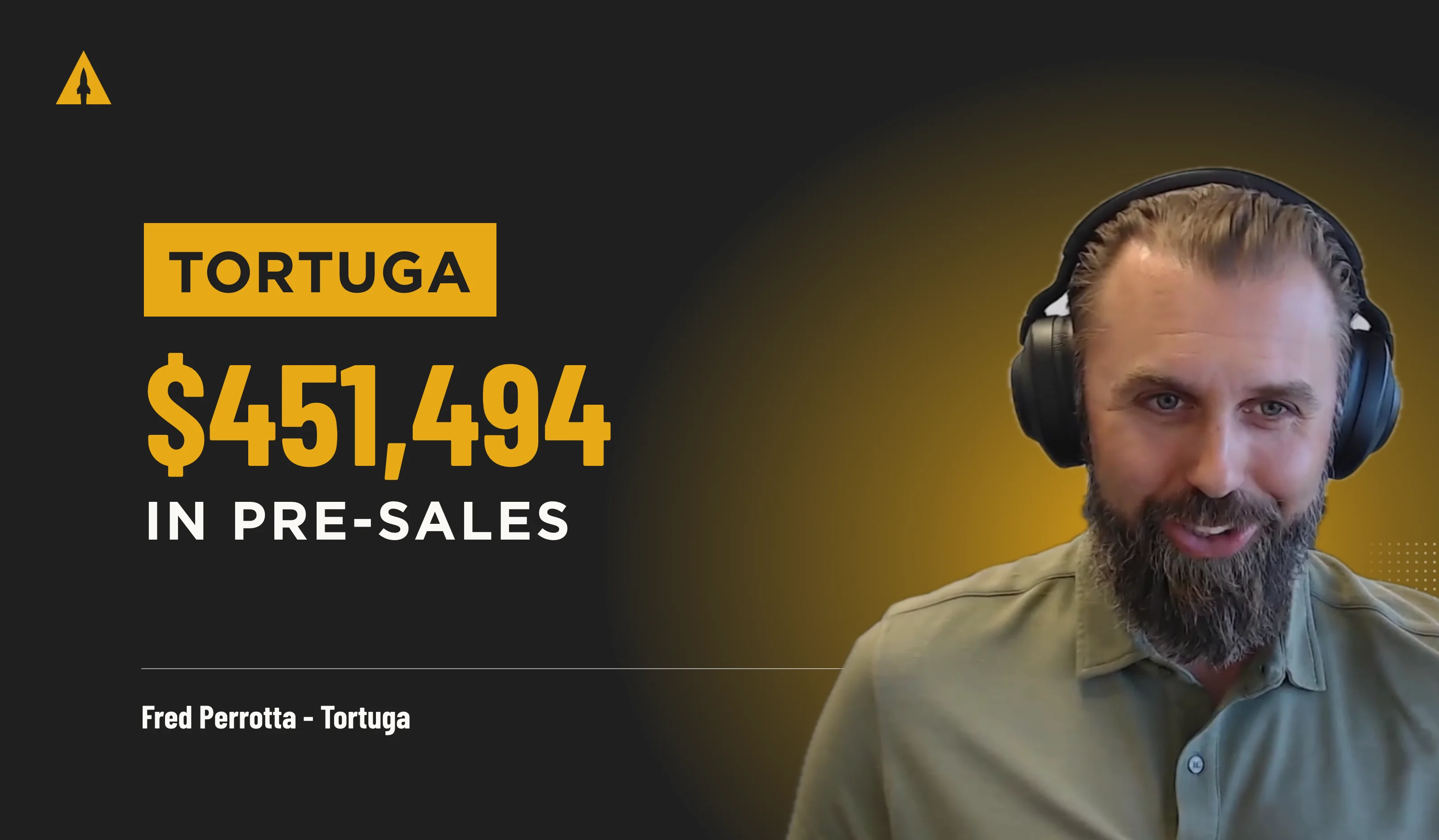
Tortuga had been selling travel backpacks since 2010 before it ever tried Kickstarter. Then, in June 2026, Fred Perrotta and his team launched the Superlite Backpack, a 2.2 lb carry-on, and finished their very first Kickstarter campaign with $451,494 in pre-sales.
And most of the VIPs who reserved it weren’t on Tortuga’s list.
So how does a brand that’s been around that long find so many new people? A $1 VIP prelaunch, ads to strangers before emails to fans, and a product built on one simple idea. Let me walk you through it.
If you’d rather listen, here’s my chat with Fred on our podcast, Masters of Crowdfunding:
Key Takeaways
- Kickstarter beat their own pre-sales: Even for a brand that started in 2010, the Kickstarter brought in more top-line revenue than most of the pre-sales Tortuga had run on its own site.
- Cold traffic first: Tortuga ran Meta ads to strangers before it emailed its own list, so it got an honest read on whether new people wanted the bag.
- One big idea sells: The Superlite Backpack led with its exact weight, 2.2 lb, and answered the obvious worry (is it strong?) right after.
- A $1 ask works with cold ads: A $1 VIP reservation is a much easier yes than a full-price backpack, which gave Meta more conversions and more data to work with.
- Get feedback before you lock the product: Tortuga ordered bags before its VIP group weighed in, so it couldn’t act on what people asked for.
Who Tortuga Is and Where the Superlite Came From
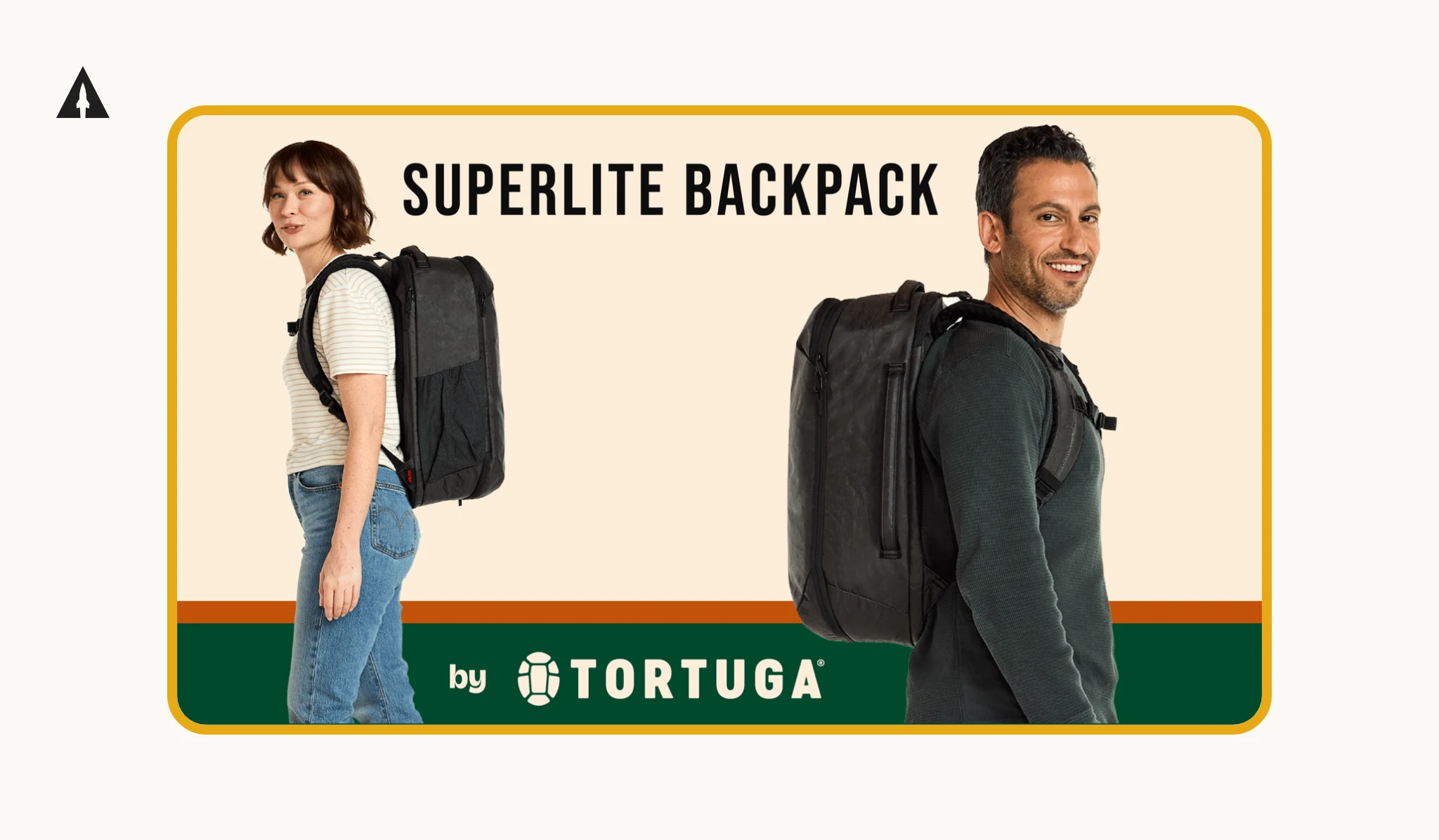
Tortuga is a travel backpack company that started in 2010, and Fred Perrotta came on the podcast to talk about its first Kickstarter. Their flagship bag, the Pro, is the kind of bag you’d expect to see on Kickstarter. It’s big, it has a lot of pockets, and the fabric is interesting. There’s a lot to talk about.
That’s also its weak spot. A bigger, feature-rich bag is heavier, and for some people (Fred mentioned shorter or petite travelers) it can be physically overwhelming.
So the team wanted the opposite bag. Really light. Really simple. Built for people who pack light, travel minimalist, or work as digital nomads.
They’d tried this once before. Years earlier, Tortuga made a lighter bag, but the fabric was noisy and a little weird, and it never clicked with people. This time they found a fabric that was very light and still strong. That fabric made the Superlite possible.
Why Tortuga Finally Tried Kickstarter
Kickstarter had been on Tortuga’s list of ideas for years. By the time other backpack brands started launching there, Tortuga was already established, and the team wasn’t sure how people would react to a known brand showing up on Kickstarter.
Then a few things lined up at once.
First, one of their goals this year was to push their sales peaks higher (think Black Friday) with something that wasn’t just another sale. Second, the Superlite was new enough to deserve a launch. It wasn’t a new size or color. And the third reason was money and timing.
“The product we were making was designed to be simple, but the fabric is quite expensive. And because of lead times, we need to order that ahead of time. So just financially and logistically, Kickstarter would also be helpful in that regard this time around,” Fred said.
In other words, Kickstarter could help pay for an expensive fabric order before the bags existed. As Fred put it, “Some of these things are starting to align and we have two or three reasons to do it.”
What They Tried Before: Pre-Sales on Their Own Site
Tortuga wasn’t new to selling before inventory arrived. They’d run a few pre-sales on their Shopify site over the years. Usually the product was already ordered and made, and they were just selling during the gap while it sat on a boat. Sometimes they’d pre-sell a bag that had sold out before it came back in stock.
Those pre-sales followed a simple pattern. Tease the product in a few emails and social posts, then open a pre-sale discount for a week or so.
The catch: the bags were already made, so if a pre-sale flopped, Tortuga was still stuck with them. On Kickstarter, if it doesn’t fund, you don’t make anything.
I asked Fred to compare the two, because I was really curious which one works better for a brand that’s been around this long. His answer was clear: “From a pure top line dollars perspective, the Kickstarter was definitely better than most of our pre sale launches, whatever you want to call it that we’ve done that I just described.”
It wasn’t free. Tortuga gave a bigger discount on Kickstarter, so margins were lower, and the money came in later than it would on Shopify, where you collect the same day.
So why was it bigger? Fred pointed to the extra work before launch. Instead of a few teaser emails, Tortuga ran ads to a $1 VIP offer for a couple of months, built a Facebook group full of people talking about the bag, and gave VIPs a special deal on day one. Kickstarter’s time limit adds urgency on its own, too.
One Big Idea: Light, but Still Strong
For a long time, backpacks on Kickstarter sold on long feature lists. Every pocket, every zipper, as many call-outs as possible.
Tortuga went the other way.
The Superlite weighs 2.2 lb (1 kilo), and it’s still big enough to be a carry-on. That’s much lighter than a lot of comparable bags. But light bags usually come with a problem: people assume they’re thin and won’t last. So the second point did the work of answering that worry before anyone asked. Light, but still strong.
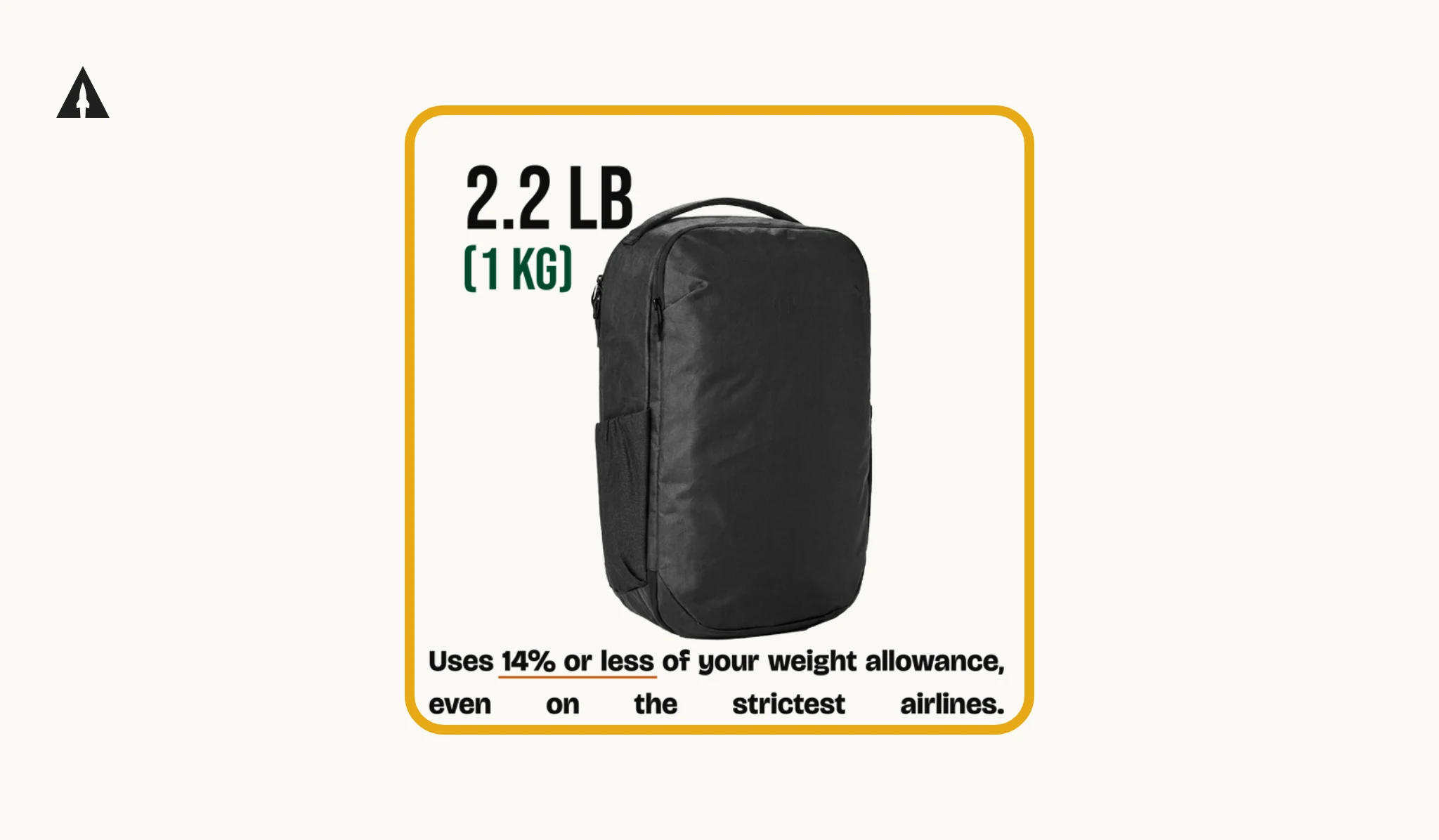
“So we had the good headline, and then the second bullet would answer the first question you would have,” Fred explained.
Keeping it light meant keeping it simple, and that meant saying no. In the Facebook group, people kept asking Fred to add just one more thing. He kept saying no. In his words: “Any given thing you might want to add doesn’t seem like a big deal, but if you do that for everyone, then you end up again with that feature rich bag that has everything and ends up heavy.”
I love this. One of the biggest mistakes I see entrepreneurs make, especially first-time founders, is trying to make every single person happy. Constraints around your product are a good thing. You’re never going to make everyone happy anyway.
Fred admitted the team wasn’t sure a simple bag would work on Kickstarter, since it went against what they’d seen in their category. It did.
The $1 VIP Prelaunch: Cold Traffic First
If you’re new to how we work, this is the core of it. We drive traffic from Facebook ads to a funnel that collects an email address, then we ask people to reserve the best discount for $1. We call that upgrading to VIP. It’s a big part of the strategy we recommend to founders.
Tortuga’s prelaunch started around January and February and ran for a couple of months.
Here’s the part I want every established brand to notice. At first, Tortuga didn’t email its customers at all. It only ran Meta ads to cold traffic. The team didn’t want their own list inflating the VIP numbers, because then they couldn’t tell if only existing fans wanted the bag or if anybody else did.
The project also got picked up in a couple of subreddits that are big in Tortuga’s space, which brought more attention.
Once the VIP numbers looked good, and they’d learned which messages worked, Tortuga took that winning messaging and emailed its own list, inviting people to become VIPs. The VIPs also came in at a better cost than the team expected based on our calculators.
Then Fred checked the overlap. “When I looked at it later though, once we had built up the VIP list a little bit bigger, I tried to see what the overlap with our existing list was. And it did end up being mostly new people,” he said.
Honestly, that was more new people than I would have guessed.
Fred’s explanation makes sense. A brand that’s been around a long time has a lot of cold emails on its list. People bought a bag years ago and don’t need another one. Meta, on the other hand, is very good at finding the right people when you give it a simple offer.
And that’s why the $1 matters. Tortuga’s customers do a lot of research, and according to Fred, it’s hard to get a good ROI from Meta ads on an expensive backpack. A $1 reservation converts a lot better. More conversions every day means better data, which means Meta can find more people who look like the ones already reserving.
The Ads That Worked
Tortuga followed our advice on ads. Start with just a handful of simple ads that are clearly different from each other. Once you get some signal, test a lot more ads and messages.
The winners stayed simple. Ads about the weight and the exact number did well: only 2.2 lb, never check your bag. Ads built around the $1 VIP offer did well too, because a backpack for $1 to reserve catches your eye.
Fred was clear about what an ad is for: “But that initial positioning and ad is really its job is just to get someone to click, right?” The ad doesn’t have to tell the whole story or explain the VIP deal. The landing page and the campaign do that.
Then there was the best ad of the whole prelaunch. “Actually, our number one ad is kind of interesting, but we took a bunch of still photos that we had of the product. And turned it into a turntable video, basically,” Fred told me.
They used AI to turn those photos into a video of the bag spinning in space, so you could see the whole thing from every side. There was some text with the benefits, but most of it was just a bag turning in a circle. I think that’s a really smart use of AI: take images you already have and turn them into a format that grabs attention.
The VIP Facebook Group
The Facebook group did more than keep people excited.
When people joined, Facebook asked them a question: what interested you about the project, and what are you unsure about? After a week or two of answers, the team dropped them into an AI tool to see what people liked and what worried them. Then they answered those worries in the campaign.
The group also gave plenty of product feedback. That’s where the one real regret of this launch comes in, and I’ll get to it in the advice section.
Launch Day
Tortuga used a few levers to push people to day one.
VIPs got the biggest discount and an email before everyone else. For everyone else, the best public deal was on day one, then it got less generous over the next few days.
It worked. “There are a few things pushing people to that first day, but yeah, campaign ended up being pretty concentrated, I think, in that first day,” Fred said. Most of the money came in on day one and during the first week.
Fred compared it to watching Shopify’s live view on Black Friday. You know you should be answering emails, but mostly you just want to watch the number go up.
The Results
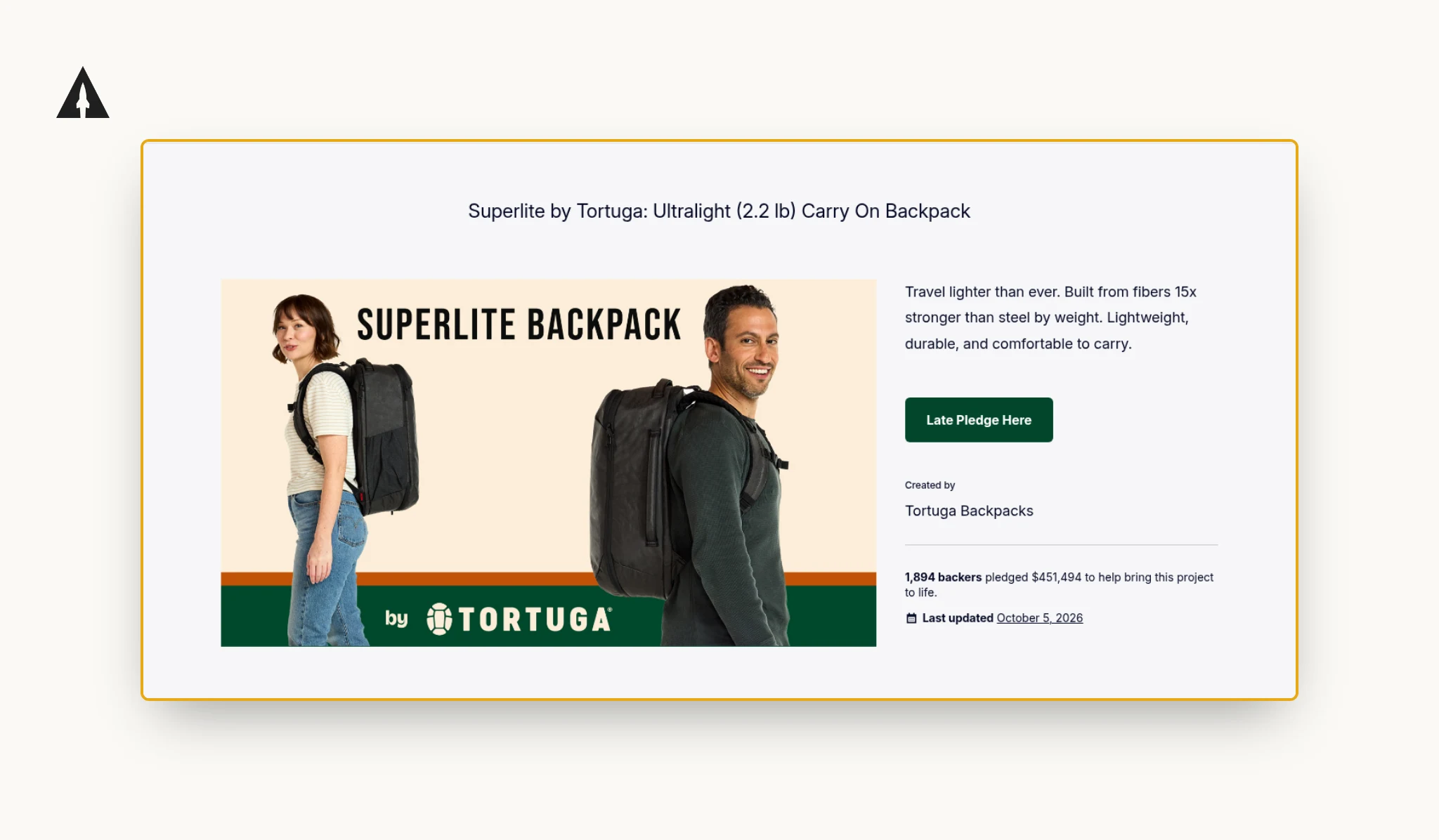
The Tortuga Superlite Backpack Kickstarter ran from June 16 to July 15, 2026, and finished with $451,494 in pre-sales.
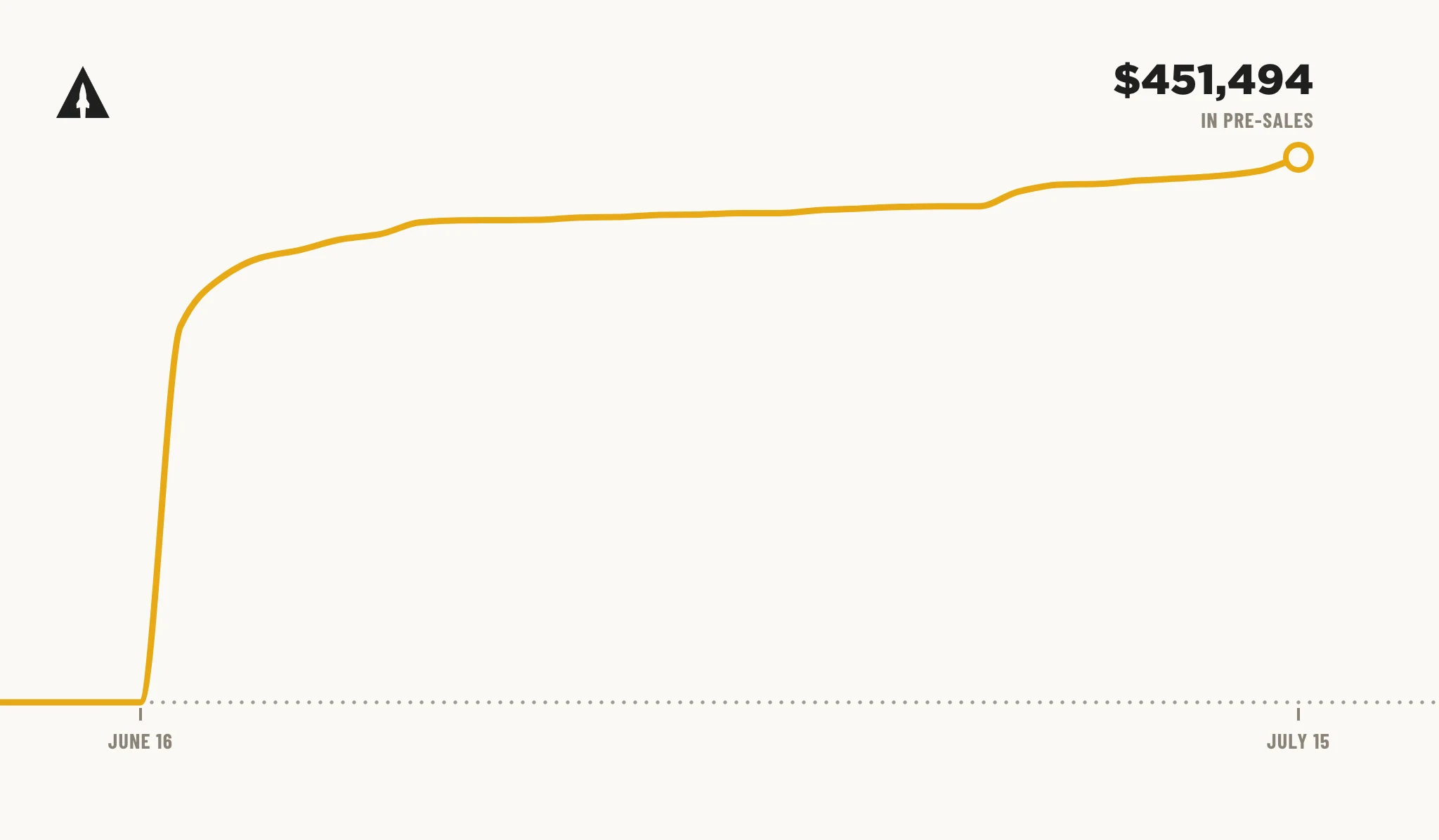
Here’s what that meant for Tortuga:
- More top-line revenue than most of the pre-sales they’d run on their own site
- A VIP list made up mostly of new people, not existing customers
- A VIP list built at a better cost than they expected
- A Facebook group they plan to keep using for future launches
There were trade-offs, and Fred was honest about them: a bigger discount and slower cash than Shopify. Still, for Fred the overlap result settled it. Since most of the VIPs were new, it was worth doing a Kickstarter instead of just pre-selling to the people who already knew them.
Fred closed our chat with this: “Thank you for having me and appreciate the whole LaunchBoom team for all the help we got.”
Fred’s Advice for Founders
Get feedback before you lock the product
This is the one thing Fred would change. Tortuga ordered bags early, and at that point the product was set. They didn’t want early customers getting one version and later customers another. So when good feedback came in from the group, they couldn’t use it.
Next time, Fred wants to get people into the group and collect their feedback before the product is final.
He added that you need something close to final so people can give specific feedback. Asking about general positioning is hard. Showing the product and hearing people ask you to drop one thing or add another is useful. Tortuga has already played around a bit with turning its designer’s sketches and tech packs (the blueprint for a bag) into renderings to get there earlier.
I’d push this even further. You can run Meta ads to a funnel with photorealistic renderings before you even have a physical prototype. Cost per lead and cost per reservation tell you what the market thinks, and your VIPs tell you the rest. Then you can make changes to the digital bag before you commit to making it.
Test more than one idea
Fred’s next step is to run two or three product ideas through the same funnel and see which one works, instead of testing one idea and hoping.
Build around one idea
Not every product needs Kickstarter. In Fred’s view, a line extension of something they already sell probably wouldn’t go on Kickstarter. A new collection (a new problem, new fabric, new type of customer or trip) goes to Kickstarter.
And those new products need the same kind of focus the Superlite had. Fred calls them hedgehog products, after the fable where the fox knows many things but the hedgehog knows one. His explanation: “So we’ve been calling them hedgehog products of like it’s got one idea. It’s not a list of stuff, it’s one idea. Either you’re into that or not.”
The Takeaway
Tortuga had been in business since 2010. That’s exactly why their story matters: even a brand with a list, a flagship product, and a few pre-sales behind it found a bigger launch on Kickstarter.
It came from a few simple choices. One clear idea. A $1 VIP offer. Cold traffic first, so the numbers were honest. And a launch day built to pull everyone in at once.
If you’re a founder with a new product, or an established brand with an idea that’s different enough to deserve a launch, I’d love to hear about it. Book a call with a LaunchBoom strategist and we’ll talk through your project.
