


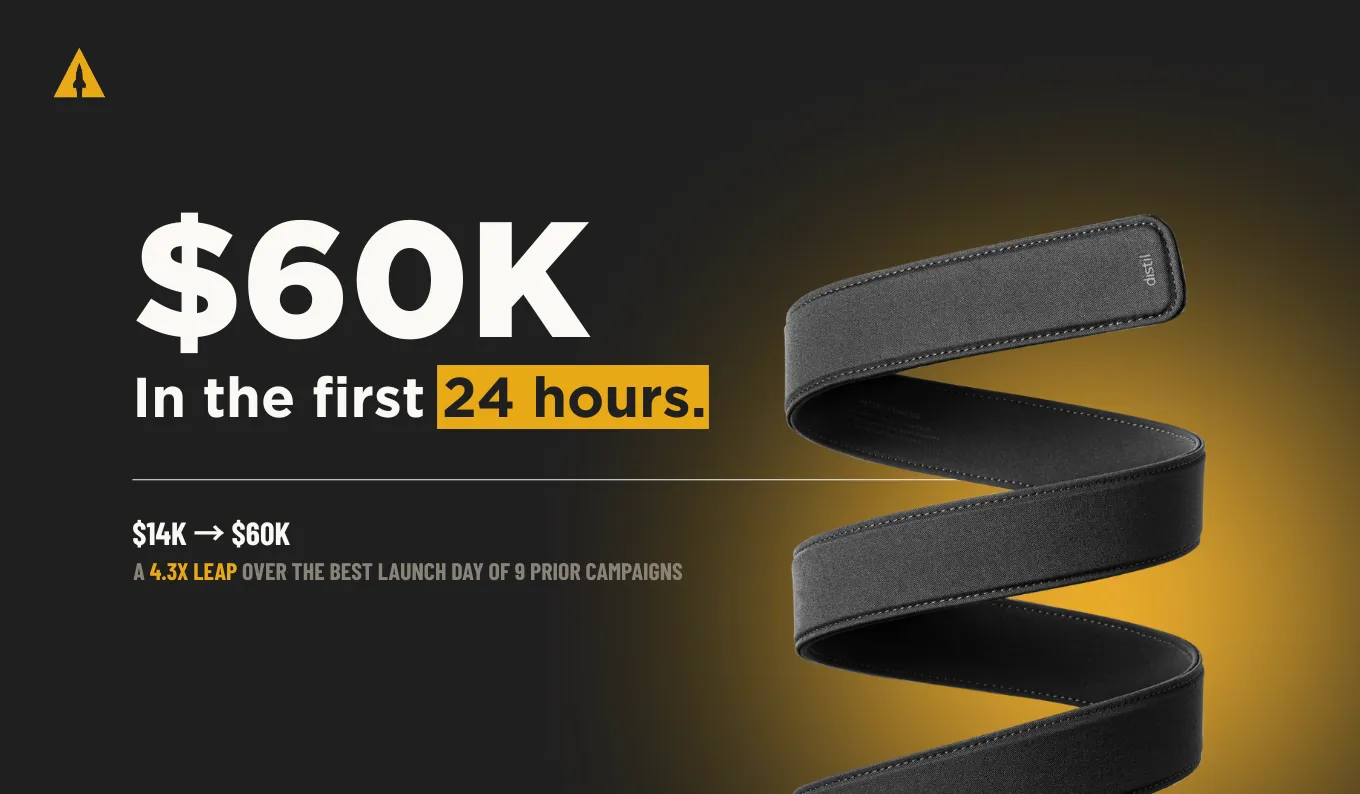
Nate Justiss had already launched nine products on Kickstarter. He knew the grind. He knew the exhaustion. He knew what a “good” launch day looked like for his company. $14,000 on day one. That had been the best Distil Union had ever done.
Then he tried something different, and his 10th campaign opened with $60,000 in the first 24 hours.
Let me walk you through exactly how that happened, and what 14 years of building a product business taught Nate along the way.
If you’d rather listen, here’s my chat with Nate on our podcast, Masters of Crowdfunding:
Key Takeaways
- Pre-launch can transform campaign performance: Distil Union’s 10th Kickstarter generated $60,000 on day one, more than 4× its previous best, after a two-week pre-launch campaign.
- Test before you launch: Pre-launch testing helped Distil Union validate messaging, creative, and conversion potential before committing fully to the campaign.
- Know your numbers early: Understanding COGS, advertising costs, landed costs, and margin buffers can help prevent years of struggling to make the business sustainable.
- Focus is critical for small teams: Expanding across wallets, eyewear, stands, and other categories stretched Distil Union’s limited resources and made it harder to give each product the attention it needed.
- A better launch strategy can unlock a proven product: After nine Kickstarter campaigns, Distil Union’s biggest campaign came from changing how they prepared and built momentum before launch.
The Origins of Distil Union
Nate Justiss is an industrial designer and co-founder of Distil Union. The company’s name comes from their product design philosophy: distilling an idea down to its essence. Their buckle-less MagLock Belt is a perfect example. It’s literally just a strap with positive and negative slots that fasten together, as minimal as a belt can get.
Before Distil Union existed, Nate and his co-founder Lindsay worked in the design department at Philips Electronics. Then Philips changed the location of their office and nobody took them up on the move. So suddenly, Nate and Lindsay were without jobs in Charleston, South Carolina.
They thought freelancing would be easy enough. And they had all these product ideas that Philips would never launch because they couldn’t get them past the marketing managers. So they started their own company and turned to Kickstarter, which was still pretty new at the time.
Back in 2012, their first product was an iPhone dock called Snooze. The campaign raised enough to pay for that first batch of inventory… and then they immediately ran out of cash.
The Entrepreneurial Trap
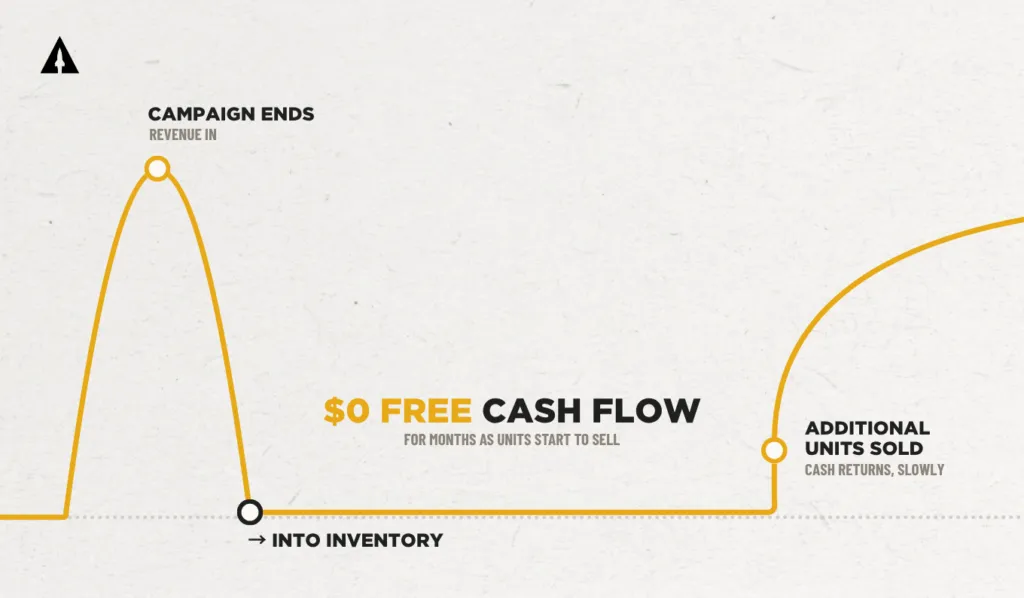
Here’s what happened after that Kickstarter ended: All the revenue turned straight into inventory. There was zero free cash flow until they sold through additional units. And selling through took time.
Nate and his co-founder Adam were assembling the product by hand. Putting it in packaging themselves. Warehousing everything in the apartment they shared, which also doubled as their office. Lindsay would come over to work from that same space.
They quickly learned something critical about starting a product business: there are way more jobs than you expect. Fulfillment, shipping, assembly, customer service. All of it pulled them away from the work that could actually grow the company.
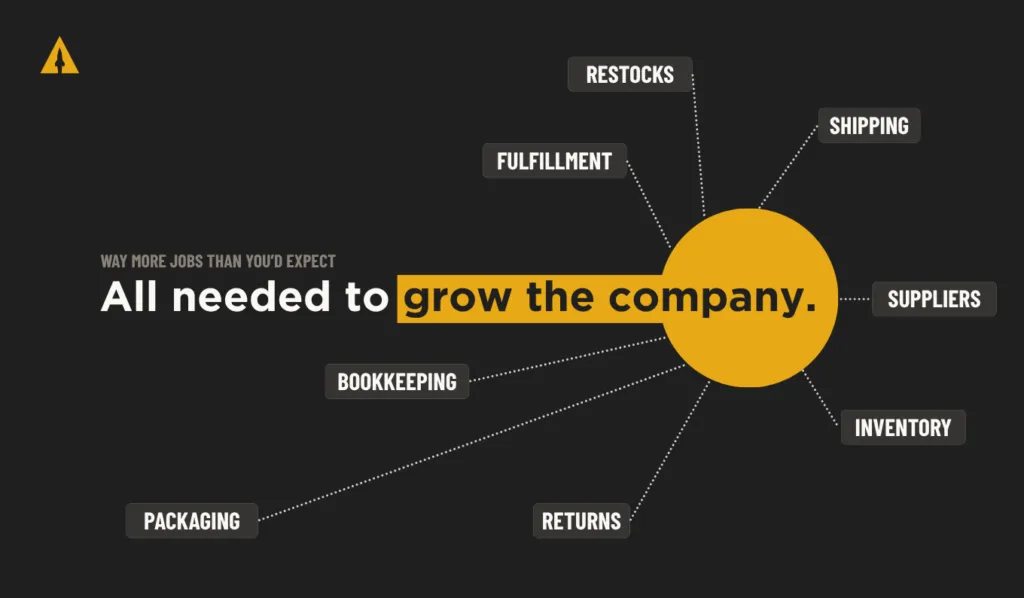
“There’s an entrepreneurial trap from not making enough to have to wear all those hats,” Nate explained. They couldn’t afford to hire help, so they did everything themselves. The website stayed live, selling maybe five or six units a day from organic traffic. That wasn’t nearly enough to pay three people.
For the first three years, Distil Union ran in the background while the team sustained themselves with freelance design work. They weren’t paying themselves a meaningful wage from the business until about year three.
Finding Traction With Wallets
Despite the slow start, they never stopped getting excited about new ideas. Their next product was a credit card wallet with a pull tab that stuck on the back of a phone. It was the first one out there. And once again, it was super minimal.
That second Kickstarter campaign raised around $90,000. The margins were better, and they didn’t make the same mistake of dumping all the revenue into inventory. That gave them some breathing room.
From there, they launched four wallet-related campaigns over three years. Wally cases, the Wally Micro, different variations on the same concept. They’d found a niche and leaned into it.
Still, the real turning point didn’t come from Kickstarter at all. One of their former marketing managers from Philips encouraged them to list products on Amazon. They set it up, stocked about 500 wallets, and then something unexpected happened. Slate published an unsolicited review of the Wally Bifold. The article pointed readers directly to their Amazon store. Those 500 wallets sold out almost immediately. And because of how Amazon’s algorithm worked at the time, that sudden surge of sales pushed the product to page one. The momentum kept going for an entire year of strong, business-sustaining revenue. “We went from just sort of struggling to some really solid sales,” Nate said.
Then the knockoffs came. Half the price. Similar look. At first the quality wasn’t great, but it didn’t matter. Nate watched sales erode over the second year and further into the third.
Expanding Beyond Wallets
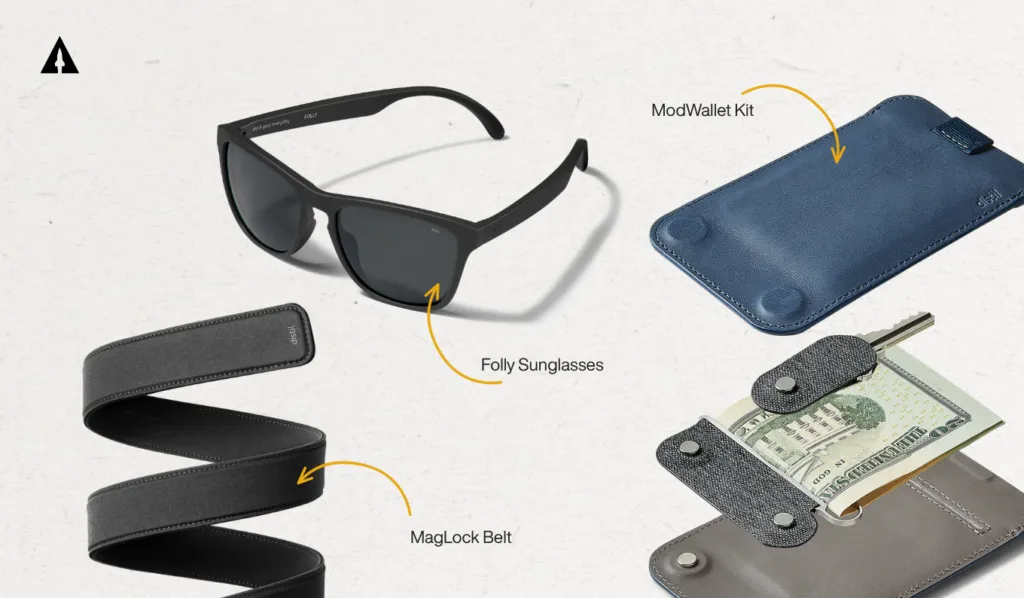
Nate and Lindsay started exploring other product categories. A bendable leather phone stand called Stanley. MagLock sunglasses with press-fit magnets that keep them attached to your shirt. A magnetic modular system called Ferris for organizing keys, wallets, and everyday carry items.
Some of these did well. The MagLock sunglasses raised close to $100,000 on Kickstarter. Others, like Stanley, basically just covered costs. The margins on that US-made product were terrible.
The challenge was focus. Every new category meant learning a new market. Eyewear has its own trade shows, its own retail ecosystem, its own dynamics. Wallets are different from stands, which are different from sunglasses. And Distil Union was still a tiny team.
“Our focus is a little split,” Nate admitted. “If I had a sales guy just running out and selling sunglasses at retail, I think they’d have a lot more potential. But that isn’t a hat we’ve worn yet.”
They started seeing themselves as an everyday carry company, tweaking the things you walk out the door with every day. It was a smart positioning. Yet being spread across multiple categories with a small team meant none of them got the full attention they deserved.
The Six Year Kickstarter Break
After the Ferris campaign, Nate and Lindsay hit a wall. They’d been digital nomading, living in Hong Kong in 2019, developing a complex modular system with tons of pieces and parts. They were exhausted.
They moved back to the States to be closer to family. Then COVID hit. Lindsay took a sabbatical for all of 2020 (though she jokes she was cheated since everyone basically took that year off).
During this period, Nate focused on refining existing products. Improving the bifolds based on customer feedback. Releasing new sunglasses styles. Testing new wallet designs to see if the category was worth expanding. It was a slower pace. Iterative. Important work, but not the kind that generates big revenue spikes.
For six years, they stayed away from Kickstarter. Nine campaigns had worn them down. The platform had also gotten more ad-driven over time, which eroded the margin advantages that had originally made it attractive.
Why They Came Back
So what brought Nate back to Kickstarter for a 10th time? It came down to survival math. Lindsay was planning to step away from the business. Advertising costs on Facebook and Amazon kept climbing. More and more of their revenue was going to the platforms’ CEOs rather than back into the business.
Nate looked at the data and noticed a clear pattern: the business did better when they regularly launched on Kickstarter. It generated excitement, brought new customers into their ecosystem, and was more efficient from a marketing perspective.
He also knew he needed to try something new. He’d heard about pre-launch campaigns and how they help creators launch a successful Kickstarter campaign through a solid pre-launch phase in the current crowdfunding climate. He’d never explored them before, partly because Distil Union had always been conservative about spending money before revenue came in.
“We’re always nervous about spending before we’re able to generate revenue,” he said. “But at this point, something has to change. Let’s try a new experiment.”
The Accelerated Pre-Launch
Nate reached out to LaunchBoom and learned that the recommended pre-launch period was about two months. There was a problem though. They were running up against Black Friday and the holiday season. Everything they’d read and experienced said don’t run a Kickstarter during December. They didn’t have two months.
They asked if the process could be compressed into two weeks with heavier ad spend. The LaunchBoom team didn’t recommend it but acknowledged there had been some success with compressed timelines. So Nate committed to the accelerated approach.
Going through the LaunchBoom ultimate product launch strategy was a lot of work, but Nate found it incredibly valuable. It forced discipline around messaging, marketing assets, and positioning. Distil went through the process of finding out how to choose the best crowdfunding marketing agency and then split the workload with the agency, dividing and conquering through the video content and setup materials.
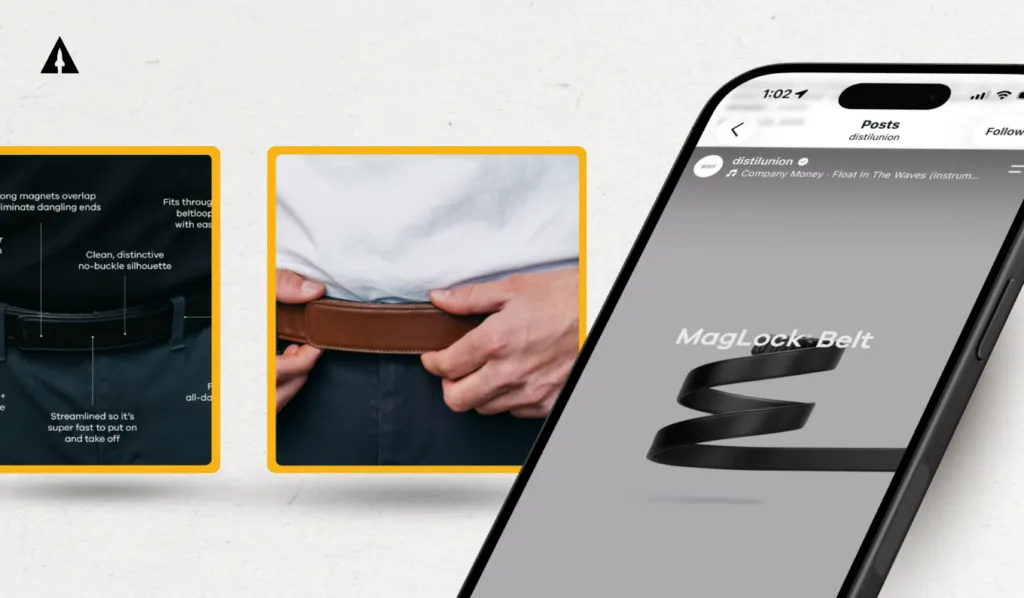
Over that two-week pre-launch window, they spent just over $7,000 on ads. Nate wanted to spend more because the results were promising, but scaling up quickly without hurting profitability is always tricky.
The conversion benchmarks LaunchBoom provided were especially useful. They gave Nate a clear way to judge whether the campaign had a real chance of being profitable before he ever launched.
“It was a great test,” Nate said. “If we ever launch outside of Kickstarter, it’s a really good process to go through just for testing an idea in general. I’d already spent $50,000 developing this product. If I could test ideas before spending a whole year on development, that could be really valuable.”
The Results
The numbers told the story. Distil Union’s previous best day one on Kickstarter had been about $14,000 with the Ferris campaign. No pre-launch behind it. Day one of the MagLock belt campaign? $60,000.
Off of $7,000 in pre-launch ad spend and a lot of focused effort, they more than quadrupled their best opening day ever. The campaign went on to raise more than two and a half times any project Distil Union had done before.
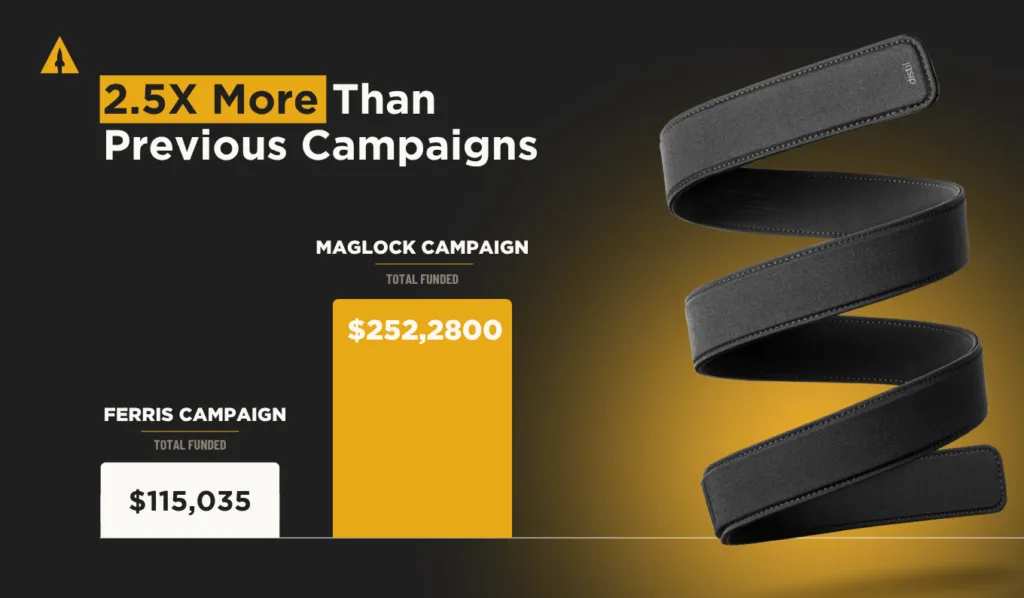
That first-day momentum matters enormously on Kickstarter. Strong opening numbers build social proof and confidence among potential backers. They signal to Kickstarter’s algorithm that this is a project worth featuring. And they create a flywheel of attention that carries through the rest of the campaign.
“I really wish I could go back and have done pre-launch on some of those others,” Nate said. “When you go through the system, you see, my goodness, I should have been doing this. It really makes sense.”
Nate’s Advice for New Product Creators
As someone who’s been building a product business since 2011 and has launched 10 Kickstarter campaigns, Nate has earned a perspective that most creators simply don’t have.
His advice for someone thinking about starting today comes down to two things:
1. Really Understand Your Costs
Build a cost of goods sold sheet and know your numbers inside and out. Understand your landed product costs, which have been wildly unpredictable since the 2025 tariff changes. Build enough margin to cover advertising in your specific market. Then add a buffer on top of that. “So that you can pay yourself sooner than three years,” Nate said.
This isn’t glamorous advice. It’s not the creative, exciting part of launching a product. But Nate learned the hard way that ignoring the business fundamentals can keep you struggling for years longer than necessary.
2. Do a Pre-Launch Campaign
Going through the pre-launch process forces you to develop your messaging, create the right assets, and test what actually resonates with your audience before your campaign goes live. That matters because there’s a lot you can’t change once a Kickstarter launches.
“Testing on the fly, you’re just not going to get what you need,” Nate explained. “There’s a better ecosystem to test.”
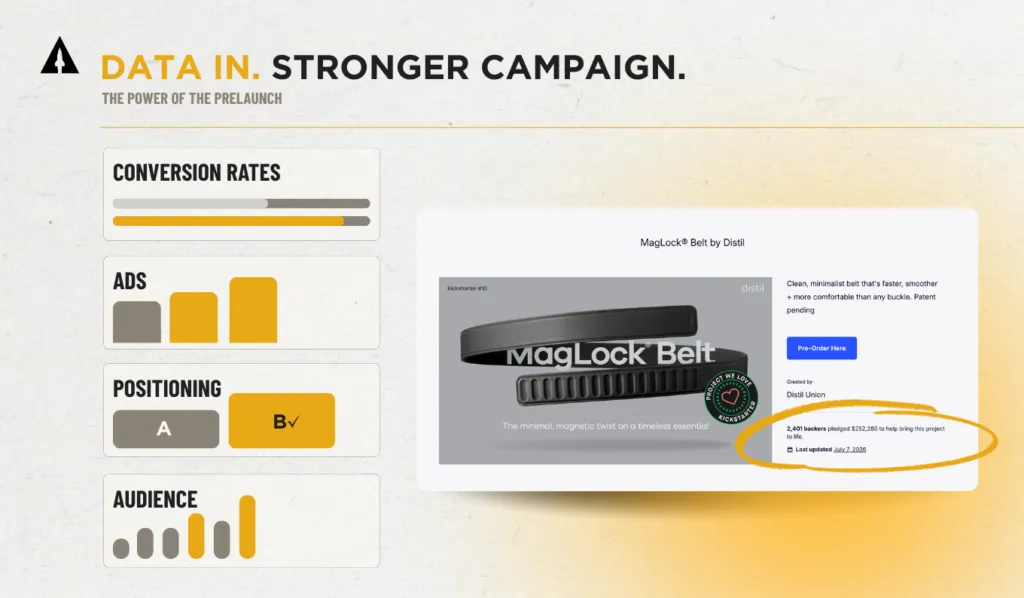
The data you collect during pre-launch, conversion rates, ad performance, audience response to different positioning, all of it feeds directly into a stronger campaign. You’re not guessing. You’re making decisions based on real evidence.
The Takeaway
Nate Justiss spent 14 years building Distil Union. He launched nine Kickstarter campaigns the old way. Some did well. Some just covered costs. All of them were exhausting.
His 10th campaign, with a compressed two-week pre-launch through LaunchBoom, outperformed every single one that came before it. Not by a little but by multiples.
Sometimes the difference between a product that struggles and a product that takes off isn’t the product itself. It’s the launch strategy behind it.
Want results like Nate’s on your next product launch? Whether you’re a first-time creator or a seasoned veteran looking to level up, LaunchBoom can help you build a pre-launch strategy that sets your campaign up for the strongest possible start. Book a free call with a LaunchBoom strategist to talk through your project and see how we can help.
