

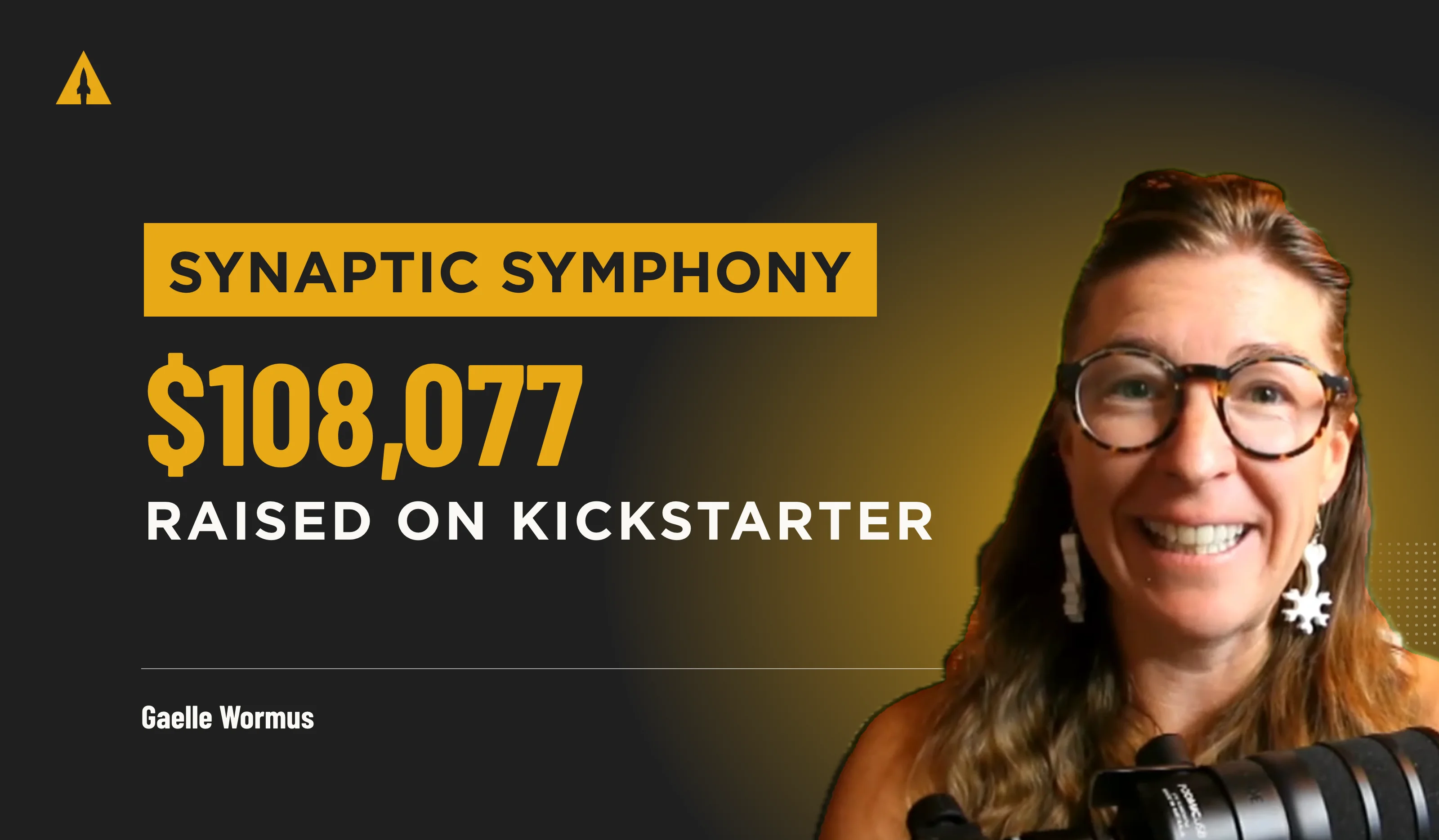
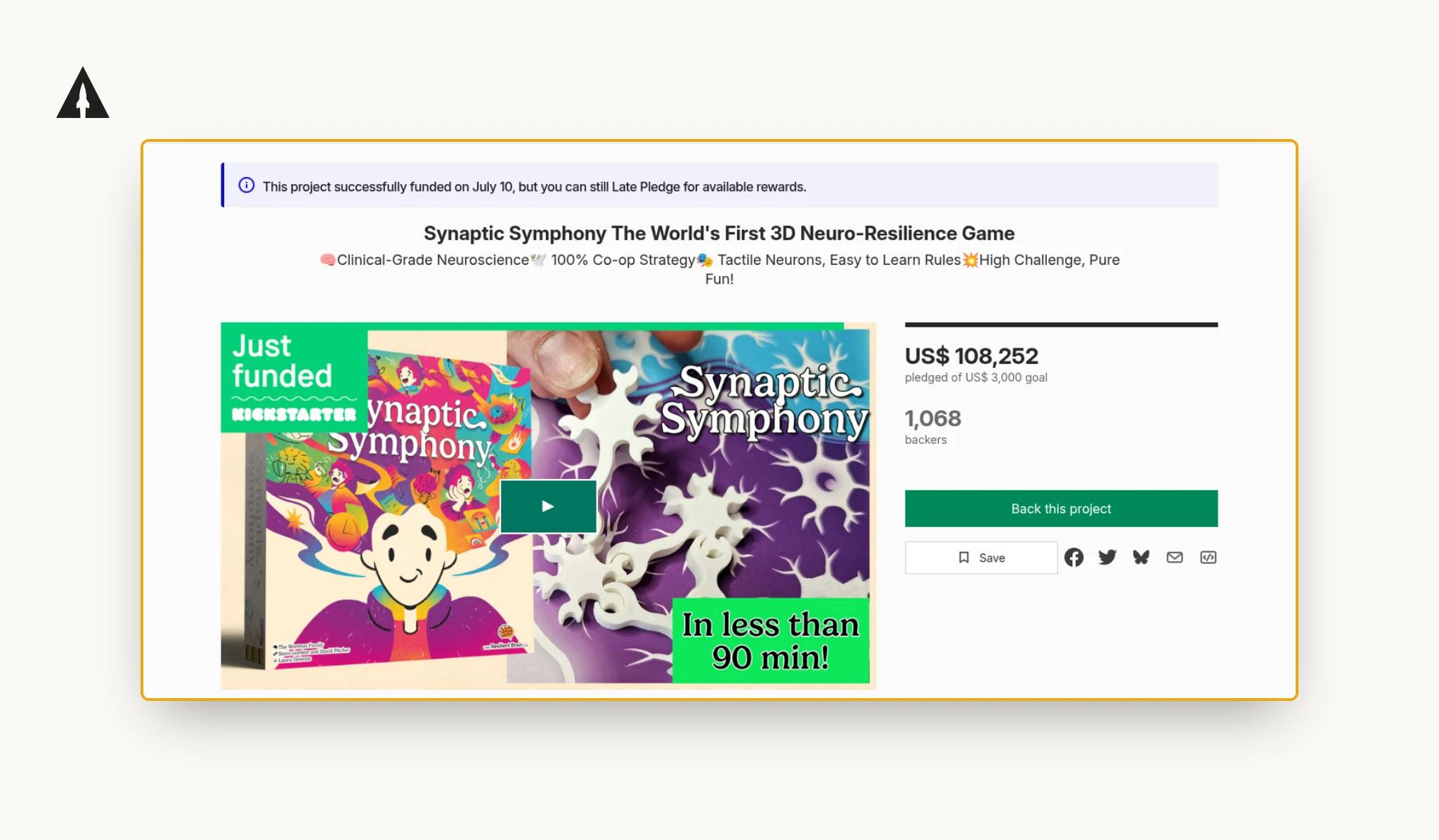
Gaelle Wormus had never played a board game. Then she decided to make one to teach her sons resilience, and the Synaptic Symphony Kickstarter from The Resilient Brain Co went on to raise $108,077.
The turning point wasn’t launch day. It was the moment she realized she wasn’t ready, and pushed her launch back. That decision, plus a big leap of trust on Facebook ads, is most of this story. Let me walk you through it.
If you’d rather listen, here’s my chat with Gaelle on our podcast, Masters of Crowdfunding:
Key Takeaways
- Thinking you’re ready isn’t the same as being ready: Gaelle joined LaunchBoom a year before she launched and found big gaps in her audience, visuals and messaging that were worth fixing first.
- Ad testing finds your best visual: Testing showed the game’s neuron piece pulled people in more than anything else, which the team never expected.
- Trust the ads, and the person guiding you: Spending money on ads felt scary, but day-to-day guidance from the LaunchBoom team turned that fear into confidence and a real prelaunch list.
- Harsh comments can make the game better: Gaelle talked with the people who sent her mean messages during prelaunch, and some of what they said changed the game.
- Pace yourself: The campaign nearly broke her, and her biggest advice is to set a time to stop each day.
Who Gaelle Wormus Is and Where Synaptic Symphony Came From
Gaelle is French, and she’s lived in the US for 18 years. She grew up in the Basque area of France and now raises her own meat and grows her own vegetables on a little farm in Colorado. Resilience has been a core part of her life for a long time.
When she started raising her sons, she saw that the US has a mental health crisis for men. She couldn’t bear the idea of finding out later that her kids were struggling. So she studied mental health, became a life coach, started coaching a lot of men, and did all of it with one goal in mind: being ready to help her own boys.
Her first plan didn’t work. In Gaelle’s words:
“I started doing PowerPoints and I was like, okay, I’m going to lecture my kids about resilience and how to become [resilient]. And I was like, this is not going to work.”
So she changed her approach. “Games [are] how people learn, adults and kids,” Gaelle said.
She decided that a cooperative board game fit perfectly. Everyone at the table is on the same level, learning and planning together. And in 2022, she started making it, even though she knew nothing about board games.
Synaptic Symphony is a co-op strategy game about neuroplasticity, neuroscience and resilience. The players are neuro-builders, hired by a regular guy named Jay who’s having a hard time handling the challenges life throws at him. You use the game’s neuron pieces to build new skills inside Jay’s brain, so he can stay in a river of well-being instead of getting stuck or overwhelmed. The life events that hit Jay are ridiculously funny and very relatable, like paying your bills or cooking dinner your kids hate.
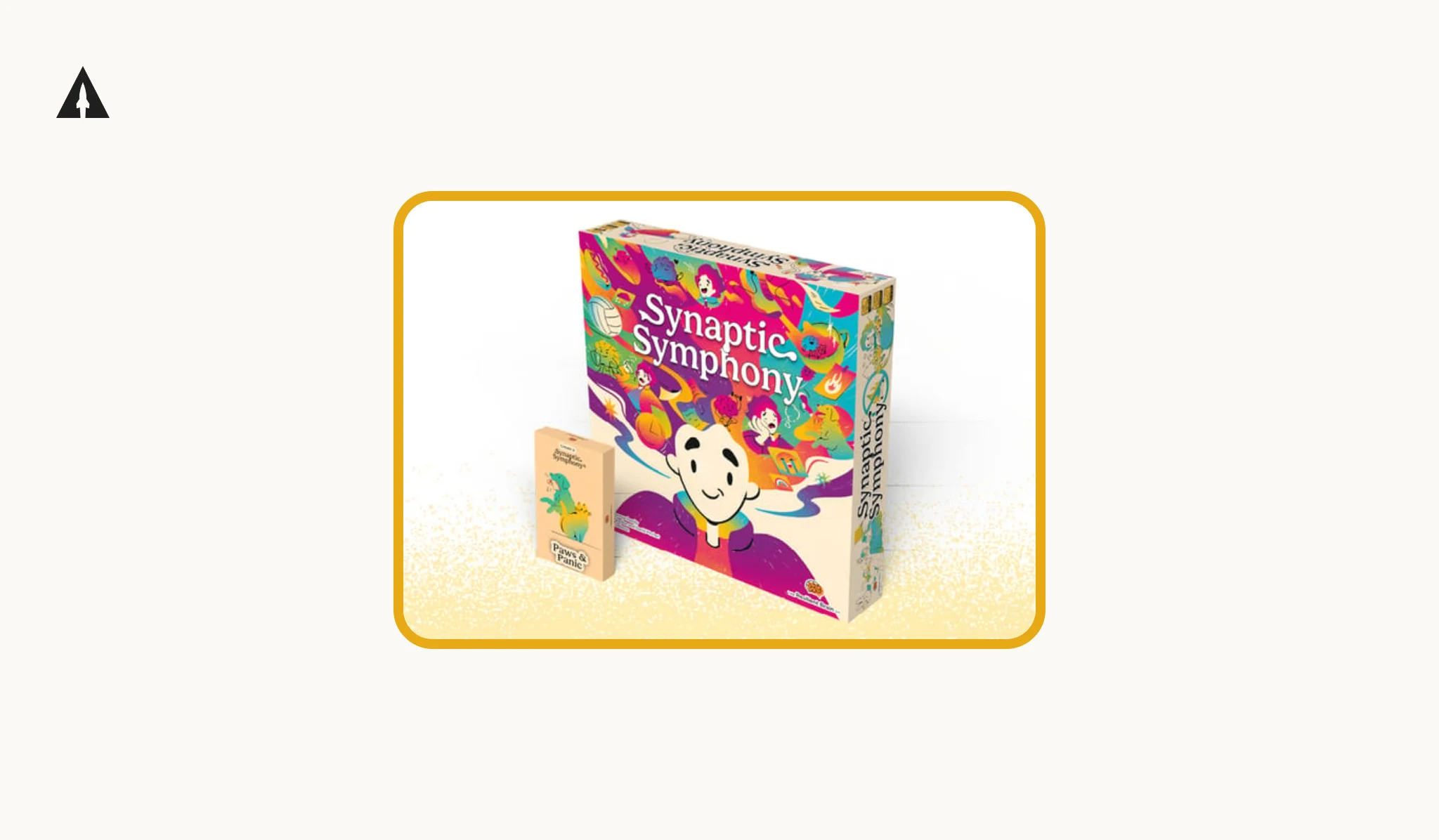
It’s a fun strategy game first. The learning is in there, but it’s not a learning game.
Building the Game with a Team of Experts
Because she didn’t know board games, Gaelle partnered with professional game designers. That ended up being one of the best calls she made.
Her first designer had been a teacher, so he knew how to turn science into game mechanics without making the game feel like homework. That was their main goal. As she put it, “We wanted to hide all the learning in the mechanics.”
He then said the game needed a physical piece to make the neurons fun to connect. His friend David, an inventor, joined the team and came up with the neuron design fast. Everything grew from there.
They playtested with families, then with leaders in mental health and neuroscience, including Dan Siegel. That’s when Gaelle started to realize this had grown past a hobby for her family. Nothing like it existed, and it was solving real problems for families and for play therapists, which she never expected.
Her lesson from this stage is simple. Surround yourself with experts, communicate your side of things clearly, and then let them do their work. That’s where the magic came from.
The Problem: She Thought She Was Ready
Gaelle found LaunchBoom through our team member, Maria, who sat down to play the game at Gaelle’s table at Gen Con.
At that point, Gaelle thought she was totally ready to launch. Then she saw our process and realized how much was missing. She joined LaunchBoom a year before she actually launched.
Before she teamed up with us, she thought she had the answers to the big questions, but she quickly found out that she didn’t. Here’s how she described it:
“Who would be my target audience and what are the visuals that would be important and what to say and create your super fan and all this I had no clue.”
Now, I understand that pushing a launch back feels terrible when you’ve already been working on a game for years. But for Gaelle, launching without knowing her audience, visuals and message would have meant launching without knowing who to sell to or what to show them.
What Changed with LaunchBoom: Doing the Prep Work
Working through the process step by step took real time. In her own words, “It took me about maybe six months really, because I was so not ready.”
That prep did two things for her. First, it laid the foundation for the launch. And more importantly, it changed how she saw the whole thing. She started out wanting to make one game for her boys. The process made her start thinking about the company she was building.
She also leaned on the LaunchBoom community. She could ask questions to other founders who had already done this, and when she hit a problem she didn’t know how to solve, she knew where to go to find the right expert. She said it felt like being part of a family.
By the time she launched, she also had concrete projections for what to expect. That meant she went into the Kickstarter with a lot more confidence, because she actually knew where she was going.
Trusting the Facebook Ads
This was the hardest part for Gaelle.
She didn’t trust paid ads at all, and she said so:
“I was really not trusting that. I was super skeptical with your whole process really of doing the ads.”
They set some money aside and decided to try it. Every day they checked the results, and it was scary. Our Director of Games, Victor Shiu, made a big difference. He answered her questions back and forth and guided her through the spending, so she could make decisions with confidence instead of fear.
That mattered a lot for someone like Gaelle. She’s a small entrepreneur who wanted her hands in the work, and she didn’t want a marketing company that does everything and hides how it’s done.
The neuron surprise
The testing also showed something nobody expected. Gaelle explained it this way:
“You guys at LaunchBoom, when we go through the whole process of trying to define the visuals that will work to do some ads and through all the testing that we went through with your team, the number one biggest attraction was the neuron, which we didn’t anticipate.”
The team thought the neurons were cool. They didn’t know the neurons would be the thing. At game conventions, people even started calling Gaelle the neuron lady. Some people bought the game just to use the neurons in a classroom to show how neuroplasticity works.
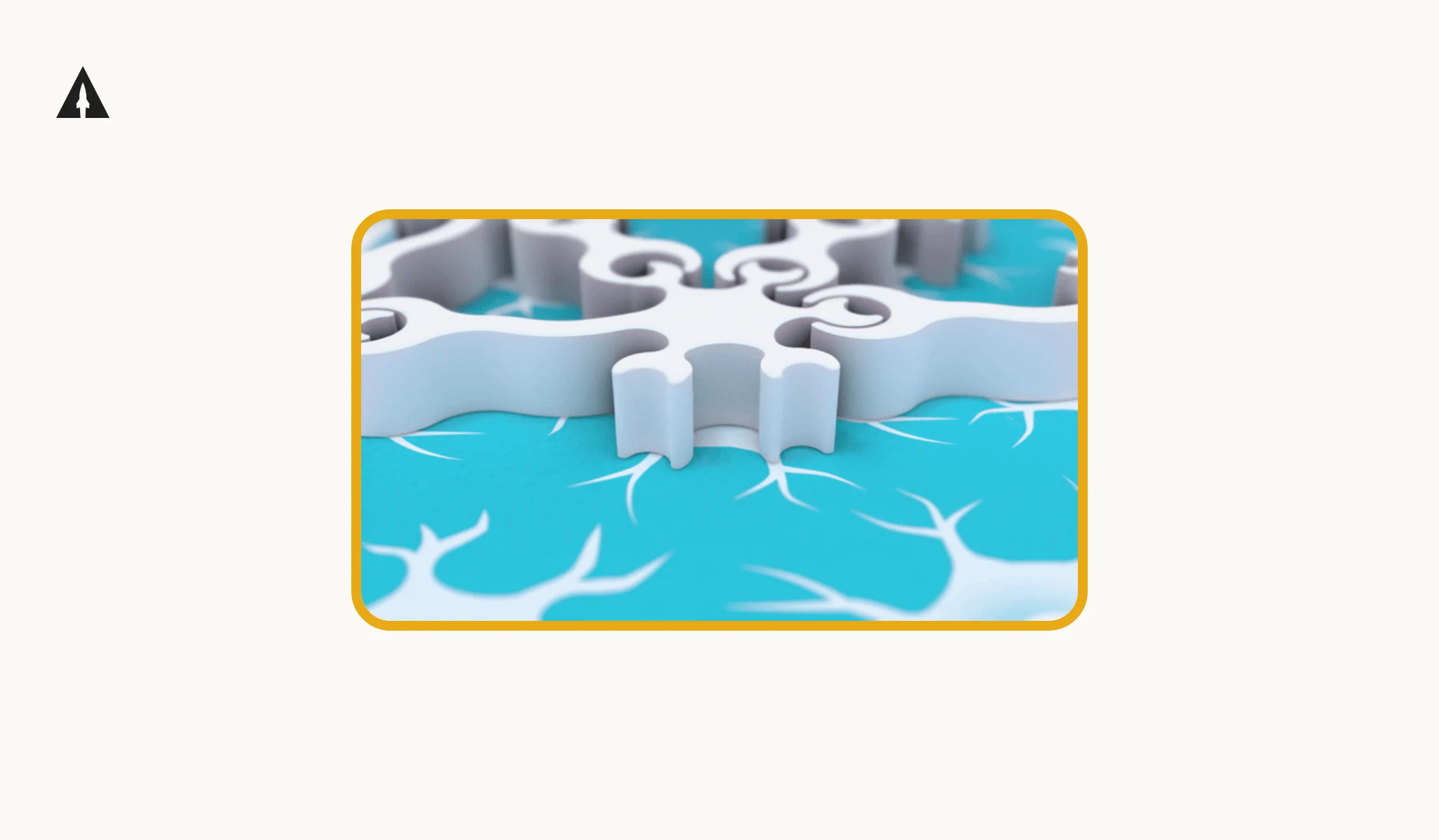
I see this same pattern across a lot of successful games. Having one unique piece people can associate with your game is really, really important. And you often don’t know which piece it is until you test it.
One mistake: wasting an email
Gaelle didn’t follow every piece of advice. During prelaunch she planned a special Q&A event and wanted to email her list about it. Victor told her not to.
Gaelle Wormus is honest about what happened next:
“I did a QA special event and I emailed my email list and he was like, No, don’t waste your emails for that and he was right because I lost some emails in that process.”
The lesson: one extra email to her list before launch lost her subscribers she wanted on launch day, because as Gaelle put it, the momentum you create in those first 24 hours is key.
Prelaunch: Listening to the Harsh Comments
Prelaunch ran from March to June. Along with the Facebook ads, Gaelle kept a very active Instagram account, posting about the game and what was going on behind the scenes. People talked back, gave advice, and some sent mean messages.
Some founders I’ve worked with get very scared when they see any negativity. Gaelle did the opposite. When someone was harsh, she’d take a day to digest it, then reach out and ask for their input. They often came in mad, and once they saw her intentions were good, they were on her side.
Some of those talks changed the game. For example, the game used the word tantrum. Someone told her some people take that word as offensive, and it should be meltdown instead. Words really matter in mental health, so she changed it.
Gaelle sums up that stretch of prelaunch like this:
“That was an amazing learning phase really to start interacting with people that I didn’t know about the game and that gave a lot of input.”
I love this mindset. When a few people start pointing things out with strong opinions, it usually means you’re making some noise and you’re onto something. As long as the majority of your comments aren’t super negative, a few harsh ones are normal, and often a good sign.
Launch Day from France
For launch day, Gaelle went back to her parents’ house in France, the house she grew up in. Her whole family was there. They had the day planned out, down to the time they’d push the button.
Then emails started coming in saying the link didn’t work.
Because of the time change, the launch email went out before the campaign was live. Her husband was still reading through the Kickstarter page, checking her English. Gaelle remembers the moment like this: “We just took a deep breath and we just clicked anyway.”
Then the whole family got on their phones. A text to grandma, a text to the neighbor, a text to everyone. They kept at it for hours.
Some people in their network said they were being spammed. Gaelle didn’t care: “Everyone needs to know. This is the most important thing ever.” When they finally stopped, they went for a walk, came back, and watched the numbers keep rising every time they checked.
The best part was her dad. Her parents had always been scared of her entrepreneurial side. Here’s how Gaelle tells it:
“They were like, my gosh, she’s going to lose everything and she’s going to be bankrupt and seeing my dad, he’s past 70, waking up the third day or with thirty thousand dollar and he looked at me like, You did that?”
She felt like she’d proved to her dad that she wasn’t just a dreamer. She actually makes things happen.
The Results
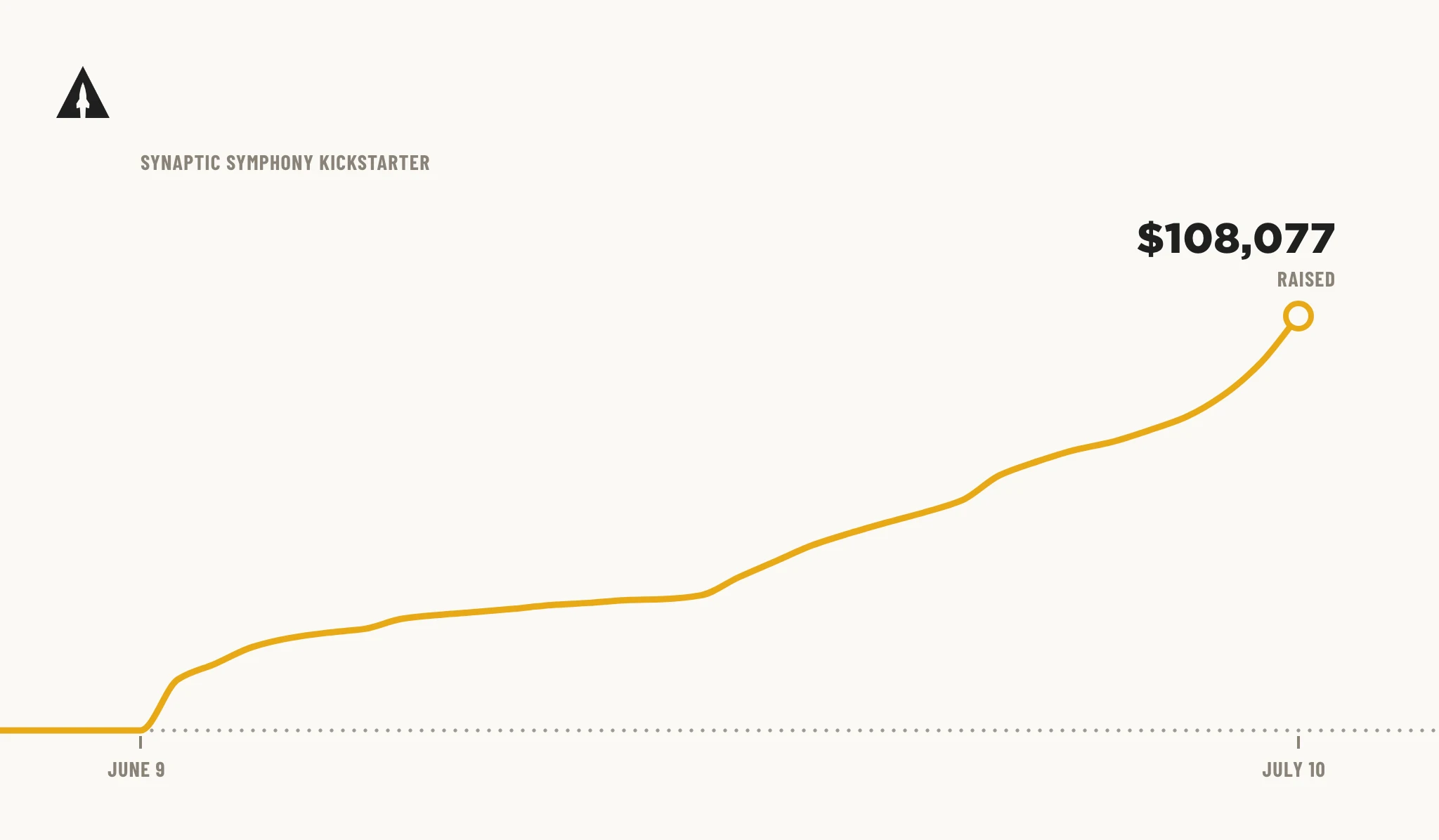
The Synaptic Symphony Kickstarter ran from June 9 to July 10, 2026, and raised $108,077.
The launch gave The Resilient Brain Co a lot more than money:
- $30,000 raised by the third day, which amazed her dad
- A prelaunch list built through Facebook ads with LaunchBoom
- A game made better by the people who pushed back on it during prelaunch
- A validated market, and a base to start selling online after Kickstarter
Gaelle sees the Kickstarter as just the beginning. It proved there’s a real need for the game. Her next step is e-commerce.
She was also clear that she wouldn’t have done the Kickstarter without the LaunchBoom team. “I feel your team has nailed exactly our needs as a small company with some big dreams to make it happen,” Gaelle said. She called the offer affordable and customizable, which is exactly what a small team needs.
Gaelle’s Advice for Founders
Pace yourself
This is the big one. Gaelle calls herself a workaholic. Give her a long list of things to do and she won’t go to bed until they’re done. She took vacation days off her full-time job to focus on the campaign, and it nearly broke her:
“And that at one point I thought during the Kickstarter I was going to break down because it was just so many little things because I’m I wanted to give it all and I took some vacations off from my full time job and really just focused on this.”
She’s aware of the irony. It’s a board game about mental health. Her fix was a timer and a set hour to stop each night. “Don’t go to bed at midnight because you want to do more. You can always do it tomorrow,” she said.
If she could talk to her younger self, she’d keep it short: “I would go back and I would just chill a little more sometimes.”
Follow the steps in order
There are so many things to do in a launch that a lot of founders end up all over the place at first. Gaelle said our framework helped her know when to think about each thing and kept her effort organized.
Let the experts do their work
Her game designers and an inventor came up with the piece people now remember the game by. When she ignored Victor’s advice and emailed her list about a Q&A event, she lost some emails, and she says he was right. Over and over, the best results came from finding the right people and trusting them.
The Takeaway
Gaelle started with a PowerPoint for her kids and no board game experience. She ended up with a Kickstarter that raised $108,077.
What got her there wasn’t luck. She admitted she wasn’t ready and did the prep work. She trusted the ads even when it was scary, and the testing found her best visual. She talked with her harshest critics instead of hiding from them. And on launch day, her whole family got on their phones to build momentum.
If you’re a founder with a game you believe in and you’re not sure if you’re really ready, that’s a great time to talk. Book a call with a LaunchBoom strategist and we’ll talk through your project.
