


Picture this. You’re cruising home from the golf course in your Tesla on autopilot, completely relaxed. Then it hits you: you just spent four hours hauling a heavy trolley around 18 holes in the heat, and your shoulder is killing you.
If a car can drive itself on an open road, why can’t a golf trolley follow you around a private course?
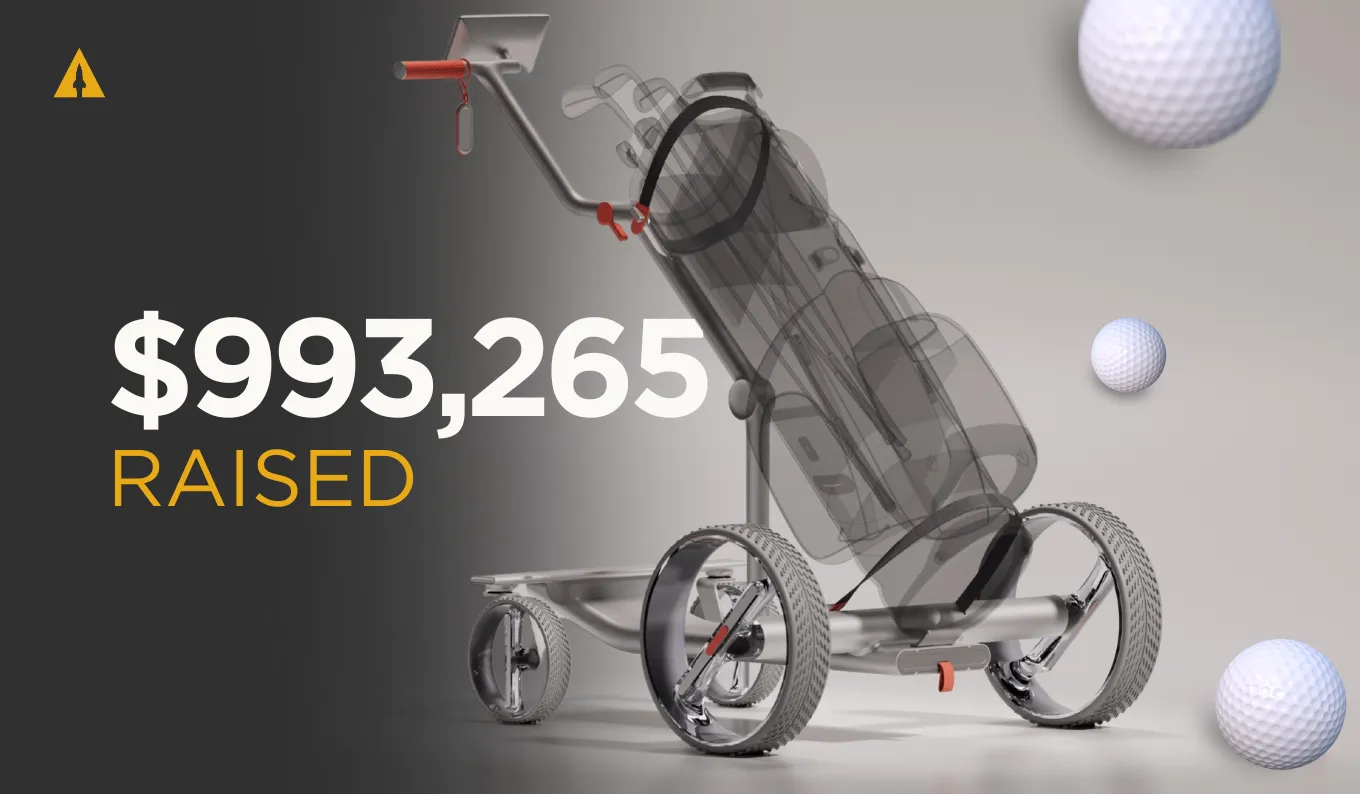
That single thought launched iXi, a Belgian startup that would go on to raise €860,115 in pre-sales on Indiegogo for the world’s first autonomous golf trolley. And they did it with a remarkably efficient marketing strategy that returned almost every euro they spent on ads.
From Late-Night Side Project to Full Product Company
iXi started the way a lot of great companies do: on a shoestring. The two founders, both engineers, were working full-time jobs. Every night after work, they’d grind away on their idea, trying to prove to themselves that autonomous technology on a golf course was actually possible.
Their first funding came from the classic 3F round: Friends, Family, and Fools. Some people contributed €500. Others gave as much as €2,000. It wasn’t huge, but it was enough to keep going.
The original plan was safe. Build the autonomous technology, then retrofit it onto existing golf trolleys already on the market. Simple. Low risk.
They were wrong. When the team looked at what was actually available, the existing trolleys were shockingly basic. We’re talking about a motorized cart with a two-button remote control. That’s it. Trying to bolt revolutionary AI-powered autonomy onto something that simple just didn’t work. It wasn’t beautiful or sleek. It didn’t match the vision.
That’s when a key investor stepped in and challenged them: “What you’re doing needs to be bigger. You need to be more ambitious.”
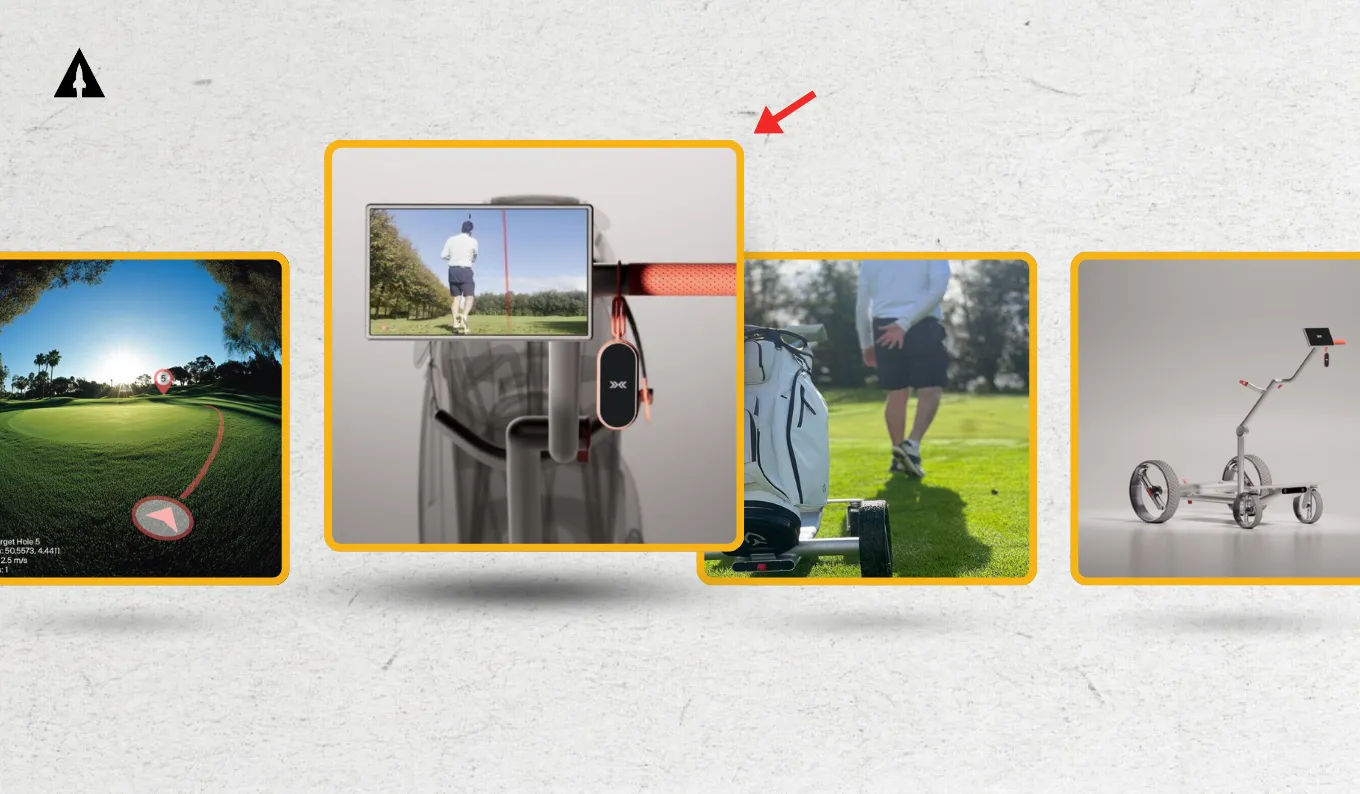
So the team made a pivotal decision. They wouldn’t just build the software. They’d design and manufacture the entire product from scratch. A beautiful, Tesla-inspired golf trolley with integrated autonomous technology. It was the right call but it also made everything significantly more expensive.
Enter Laetitia and the Business Side
Around the one-year mark, Laetitia Freysen heard the founder pitch at an entrepreneurship event and immediately saw the potential. There was just one problem with the team. “It was all engineers,” Laetitia explains. “All they could do was develop a product. But in a startup, that’s not enough.”
They needed a business person. Not a specialist, but a Swiss Army knife. Someone who could handle marketing, finance, contracts, and IP all at once. Laetitia raised her hand, and the team finally had its missing piece.
Next came the big question: how do you prove that people will actually pay thousands of euro for a product that doesn’t exist yet?
Choosing To Crowdfund
iXi didn’t launch on Indiegogo to generate revenue. They launched to prove there was a market. The distinction matters because it shaped every decision they made throughout the campaign.
Building a full hardware product meant massive fixed costs. Software development, industrial design, materials, manufacturing setup, payroll for a growing team. They needed to raise serious investment capital. And investors had one question: “Is there actually a market for this?”
Crowdfunding was the answer not because of the money it would bring in directly, but because getting real people to put down real money is the purest form of market validation that exists.
“Even if you have a great idea and people around you say it’s a great idea, market validation with data beats everything,” Laetitia says. “Crowdfunding is where you’re completely naked. It’s only when people put their money down that you know it’s for real.”
The Pre-Launch Strategy That Made Everything Work
Here’s where the LaunchBoom framework came in. As a team of engineers, iXi loved data and facts. What they didn’t love was the idea of launching a crowdfunding campaign and just hoping for the best. That felt opaque and risky.
The strategy was built around a reservation funnel. Before the Indiegogo campaign ever went live, the team ran Meta ads driving traffic to a landing page.
On that highly effective pre-launch landing page, visitors could reserve a VIP seat for the upcoming launch. The VIP promise was straightforward:
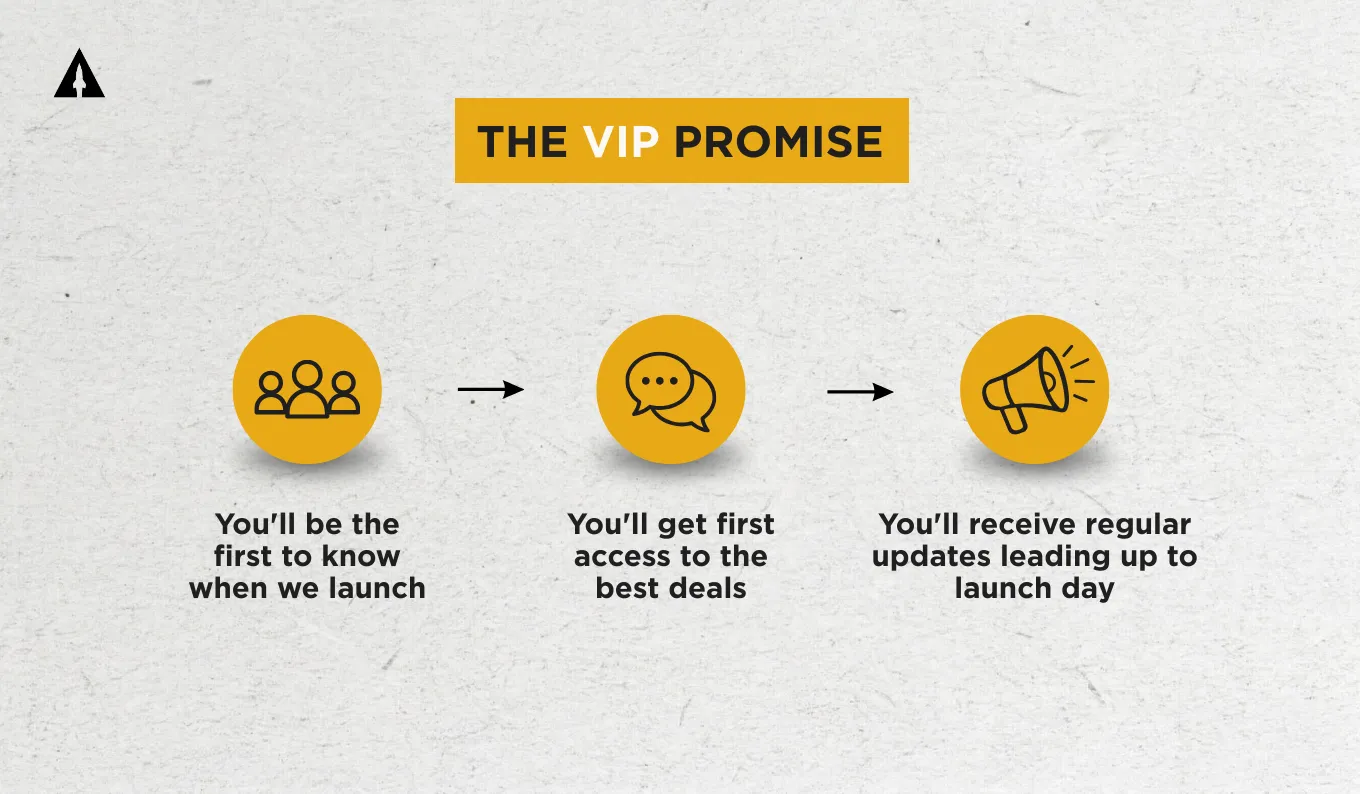
- You’ll be the first to know when we launch
- You’ll get first access to the best deals
- You’ll receive regular updates leading up to launch day
After figuring out how to build a huge prelaunch email list, the team used the reservation funnel as a tool for demand forecasting.
“We had ideas about when to launch,” Laetitia recalls. “Everyone had a different opinion. One month, six months. The answer was no. We need this many VIP reservations first. Only when we have that number do we know we’re ready.”
Because they had historical conversion data to work with, the team could calculate roughly how many reservations they needed to hit their campaign goal. There’s always risk, but you’re minimizing it with math instead of guessing.
The $50 Reservation That Changed Everything
Initially, the VIP reservation cost just $1. Then they increased it to $50. It was an uncomfortable decision. The team wrestled with it. “We thought, we’re not money grabbers,” Laetitia explains. “Fifty euro is real money. Do we feel comfortable asking people for that?”
The counter-argument won out. The retail price of the trolley is around €5,000. At a $1 reservation, you attract a lot of people who are casually curious. At $50, you attract people who are genuinely serious about buying. The quality of the data improves dramatically, and the conversion assumptions become much more reliable.
Think about it like Tesla’s approach. When they launch a new vehicle, they collect $200 reservations. Same concept. The company that inspired iXi’s product also inspired their go-to-market strategy.
Here’s what happened when they made the switch: the conversion rate on Meta ads didn’t drop. People were still signing up at roughly the same rate, even at 50x the price.
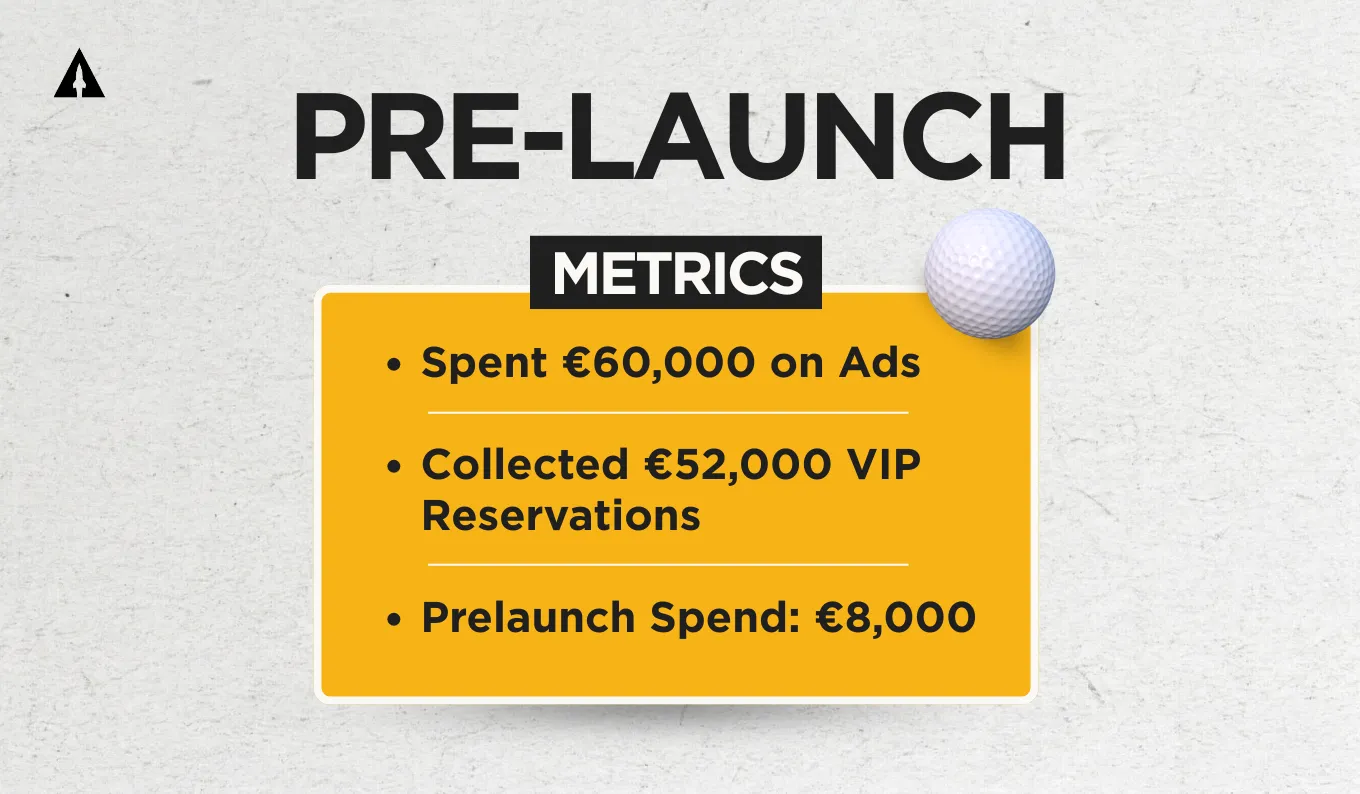
And there was an unexpected bonus. Over the course of the pre-launch, the team collected approximately €52,000 in reservation deposits. They’d spent about €60,000 on ads. That means the pre-launch marketing campaign essentially cost them only €8,000 out of pocket.
Launch Day
After roughly two and a half months of building their VIP list, iXi was ready. The emails went out. The Indiegogo page went live. “The first two minutes were exhilarating,” Laetitia remembers. “Every time you refresh the page, boom, boom, boom. These are real people. They really like what we do. You feel like you’re being liked a lot.” The numbers tell the story:
- 10 minutes in: Over $200,000 in pre-sales (125 units sold)
- 4 hours in: Between $500,000 and $600,000
- Final total: €860,115
Then reality kicked in. Messages started flooding every channel. Email, social media, the campaign page. Credit cards not working. People claiming they didn’t receive the VIP email. Frustrated customers who missed the best deals. “All of a sudden it turned into a not-so-much-fun experience,” Laetitia laughs.
Being engineers, the team did what engineers do. They analyzed the data. They categorized every complaint by topic. The people who reached out got solutions.
The takeaway? Launch day is an unpredictable rollercoaster. Prepare for both the exhilaration and the chaos.
Adding Fuel with Viral Video
Beyond the paid advertising strategy, one organic effort punched way above its weight. The team filmed a video with an influential Belgian golfer, the president of the PGA Pro Association, using the trolley on a course. They posted it to social media mostly because Instagram needed content.
It went viral. More than three million views. The watch time was off the charts. “We weren’t good enough at putting all the tracking in place because we just thought we’d do a video for Instagram,” Laetitia admits. “But it was viral. Working with influencers, when you find the right one, it can really help tap into your target market. It’s very powerful.”
The Numbers That Matter
Let’s break down the overall return on this strategy:
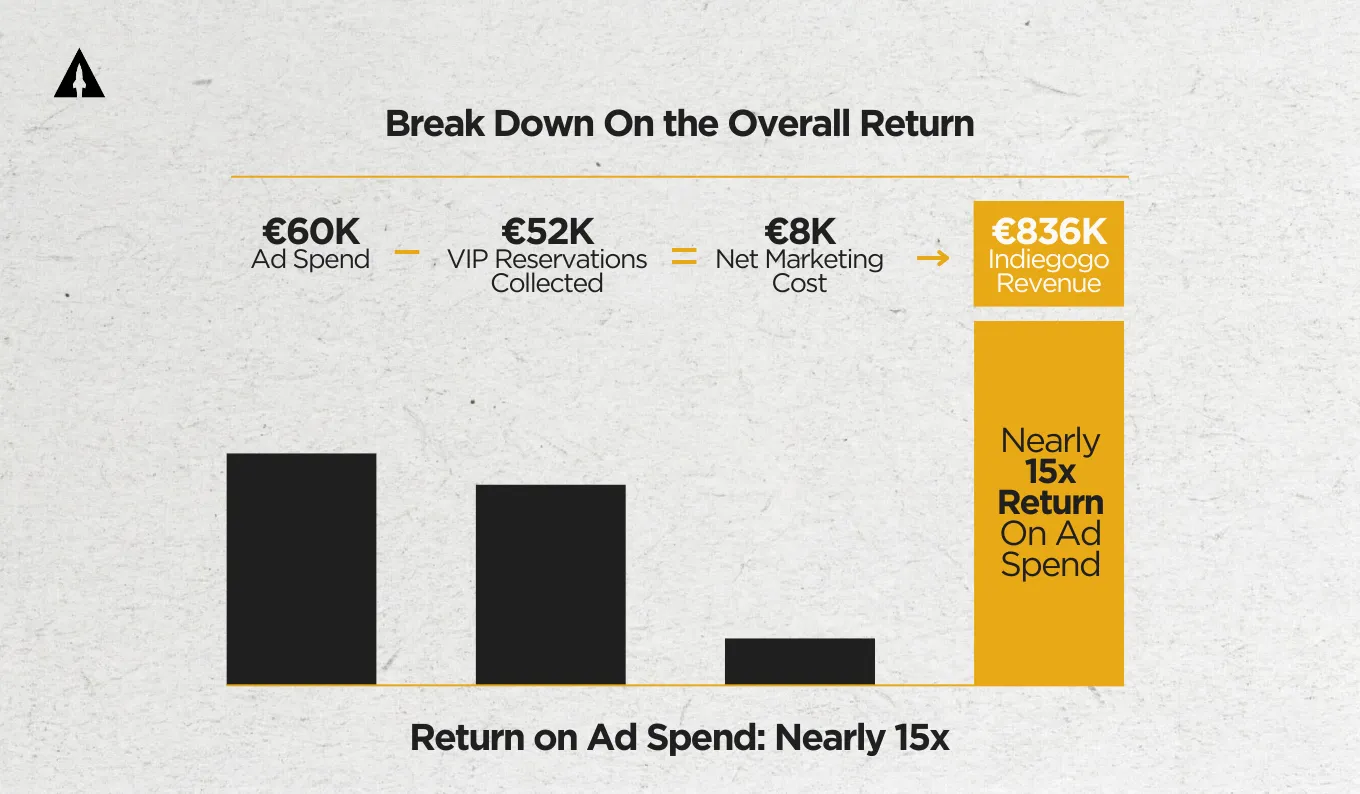
- Ad spend: ~€60,000
- VIP deposits collected: ~€52,000
- Net marketing cost: ~€8,000
- Total Indiegogo revenue: €860,115
- Return on ad spend: Over 14x
And here’s something that’s easy to overlook. iXi didn’t spend a single euro on ads during the live campaign. All of that revenue came from the pre-launch marketing effort. Every euro of campaign revenue traces back to the reservation funnel. That’s rare. And it shows just how effective a well-built pre-launch can be.
Using Crowdfunding Results to Raise Investment Capital
Remember, the whole point wasn’t revenue, it was validation. When iXi went to raise their next round of investment capital, the Indiegogo results became the centerpiece of their pitch. Selling 125 units in 10 minutes is the kind of proof point that makes investors pay attention. “If we had put more volume out there, we would have sold more,” Laetitia notes.
The team intentionally capped sales at 300 units to manage risk, since manufacturing costs weren’t fully locked in yet. Even so, they sold 281 units and could have easily moved the remaining inventory. For investors, that kind of constrained demand is actually more compelling than unlimited sales. It signals that demand exceeds supply, which is exactly what you want to demonstrate.
Lessons for Founders Ready to Launch
Laetitia’s advice for anyone considering a product launch comes down to one core belief: Data beats opinions. Every time. “I think crowdfunding should almost be a compulsory step in the guidebook of entrepreneurs,” she says. “Money aside, it validates if you’re on the right track.”
And the pre-launch reservation strategy? After going through it herself, her perspective is pretty firm. “It’s obvious now that I’ve done it. Why would you do it any other way?”
Here are the key principles that made iXi’s launch work:
- Define your goal before you start. Are you launching for revenue or market validation? The answer shapes every decision.
- Build a reservation funnel before you launch. Don’t go live until you have enough qualified leads to feel confident in your numbers.
- Charge a meaningful reservation fee. Especially for high-price products. A $50 deposit filters for serious buyers and gives you much better data.
- Let the data tell you when to launch. Don’t pick an arbitrary date. Wait until your reservation numbers support your campaign goal.
- Cap your units to manage risk. You can always sell more later. Overcommitting on a first production run when costs aren’t finalized is dangerous.
- Invest in beautiful visuals. iXi’s product renders and motion design videos performed consistently well across their ad campaigns. Great imagery of a great product goes a long way.
- Don’t underestimate organic content. One well-placed influencer video drove millions of views. You can’t always predict virality, but you can create opportunities for it.
Ready to Launch Your Product?
iXi went from a late-night side project to nearly a million euros in pre-sales by following a data-driven process. They proved their market, raised investment capital, and built a community of passionate early adopters, all before manufacturing a single unit. If you’re developing a product and want to validate demand, build an audience, and launch with confidence, that’s exactly what we help founders do at LaunchBoom. Book a free call with our team to talk through your project and find out how we can help you build a launch strategy that’s backed by data, not guesswork.
