

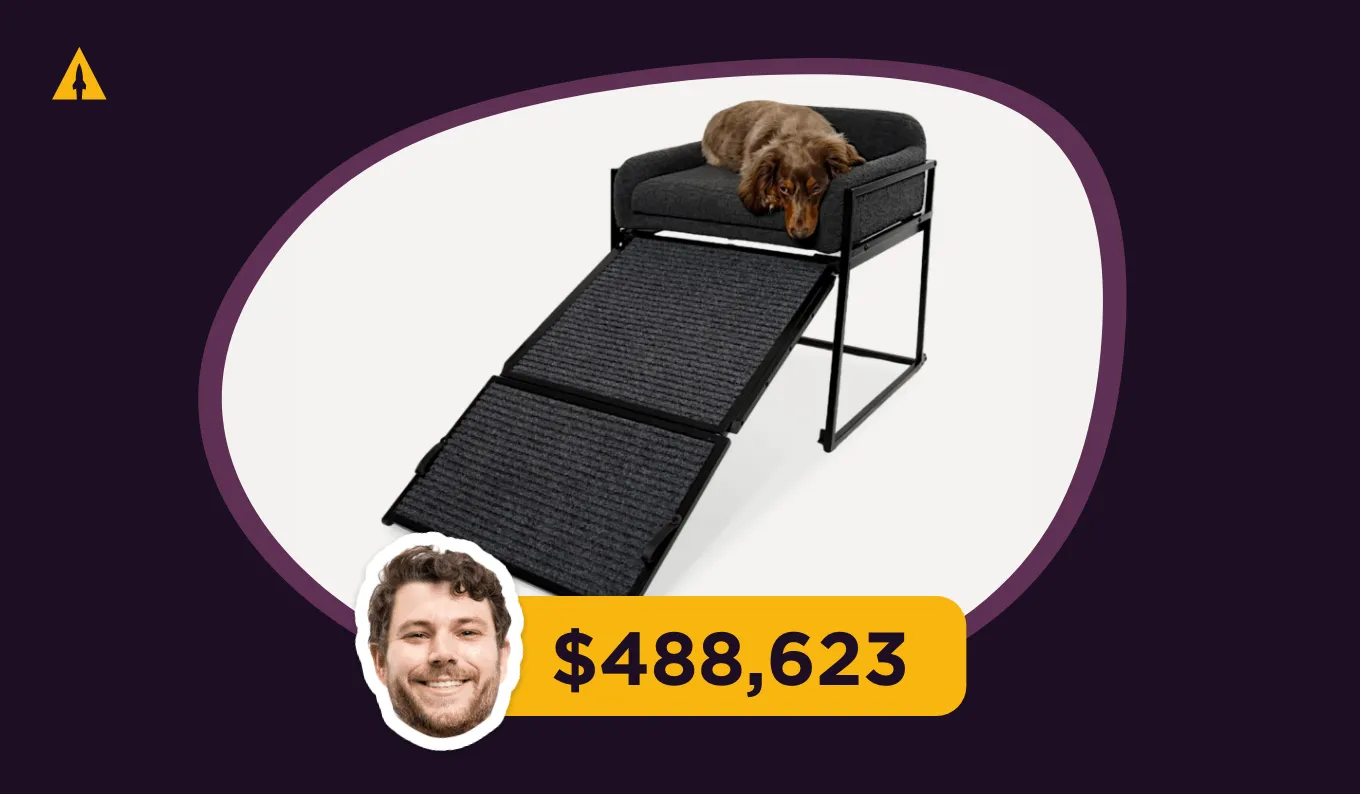
When Andrew Mueller got laid off from AWS during the 2022 tech layoffs, he didn’t panic. Instead, he went to his dad’s tool shop in Missouri and built a solution to a problem that had been driving him crazy: his dachshund Willie wouldn’t stop climbing all over him during Zoom meetings.
That prototype became SeatMate. The viral pet furniture brand that’s generated over a billion organic views and raised nearly $500,000 on their first Kickstarter campaign.
But here’s what makes their story different. Most founders stumble into virality by accident. Andrew and his co-founder Jake Singer engineered it from day one, baking shareability directly into their product design process.
The result? 210,000 social media followers, $216,000 raised on launch day, and a framework for creating remarkable products that practically market themselves.
Before we dive in, if you’d rather watch this case study, check out the podcast I did with them here:
The Origin Story: From Corporate Layoff to Viral Product
Andrew’s background was in tech sales and recruitment. Manufacturing and e-commerce? Completely new territory. “I had no experience in the manufacturing realm,” Andrew explains. “All my experience prior was either tech sales or tech recruitment. So manufacturing, e-comm, that was a whole new world to me.”
After building the first prototype with his dad, Andrew knew he needed help. That’s where Jake came in.
Jake had 14 years of product development experience. He’d designed products for Crayola, worked on a barbecue brush for Scrub Daddy, and even developed adult toys for Trojan. More importantly, he already had products in PetSmart and successful Kickstarter campaigns under his belt. “When I met Jake and he already had products in PetSmart, he already had products that were successful Kickstarters, I felt like it was the perfect marriage,” Andrew says.
Jake started as a contractor. But Andrew’s enthusiasm was contagious. “He was absolutely on fire with enthusiasm and just like every single day had new ideas about how to market the product,” Jake remembers. “It was contagious.”
What started as a contract job evolved into a full partnership. Jake saw something special: an innovative product that resonated with pet owners, combined with a founder who had serious marketing chops. “I’ve always had been a pet owner my whole life,” Jake explains. “So that really resonated with me. It was innovative. It was different. I hadn’t seen anything like it. And just like it had that instant kind of wow factor.”
The Billion-View Strategy: How They Engineered Virality
Before spending a dollar on ads, SeatMate generated over a billion organic views. That’s not a typo.
Andrew brought on two friends from college who understood virality at a scientific level. One had grown his own account to 200,000 followers. The other had created hype tape videos for NFL player Najee Harris.
Together, they cracked the code on viral pet product content. “It’s really the first like second, second and a half that grabs the attention of the consumer,” Andrew explains. “Attention shrinking with TikTok and Instagram reels, like no one watches things fully through. So you really want to grab them and hook them in the first second, second and a half.”
They discovered their visual hook: the mechanism. The ramp pulling out of the chair. The transformation happening right before your eyes.
Here’s one of the videos that shows the ramp hook: https://www.tiktok.com/@seatmatechairs/video/7371536159123508523
Jake breaks it down: “For people who are not familiar with it, we have a pet chair where there’s a ramp, and the ramp pulling out in the first three seconds of the video is what hooks people. They want to figure out what is this person doing or what’s happening here.”
But the hook was just the beginning. They studied what was going viral in both the dog space and the product space, then created their own versions. “Great artist copy, better artist steal,” Andrew says. “Like you really like take it and make it your own. But like honestly, what works for them will work for you if you can edit your video in a similar manner.”
For example, the prototype versus final product trend. They created a duct tape prototype that looked janky, then revealed the sleek manufactured version. That video went extremely viral.
The results speak for themselves: 210,000 followers between TikTok and Instagram, with Instagram being the majority.
The Validation Process: From Donations to Dollar Reservations
Virality is great. But it doesn’t mean people will actually buy your product.
Jake and Andrew needed validation before committing to a full manufacturing run. So they got creative. “We were having all this virality, but we had nowhere to send anyone,” Jake explains. “So the next piece, the next thing that we did, we started researching.”
They discovered LaunchBoom’s pre-launch strategy and decided to test a variation. Instead of starting with the dollar reservation funnel, they created a simple survey that asked people about their dogs. Then at the end, they asked for donations. “We noticed there was some tweaking. Throughout the process, a lot of it has to do with testing for us,” Jake says. “We’re constantly testing things above the fold, like the things that matter most.”
One insight changed everything: asking people their dog’s name first. “I noticed right away, asking people their dog’s name was like this big social lubricant that would get them to share more information with us,” Jake remembers.
The donation funnel brought in a few thousand dollars. Not life-changing money, but real validation that people would actually pay for the product. Eventually, they implemented LaunchBoom’s full dollar reservation system. That’s when things really took off.
The $216,000 Launch Day (And What Made It Possible)
SeatMate’s first Kickstarter campaign raised $216,000 on day one. By the end, they’d brought in nearly $500,000 from backers.
The secret? The dollar reservation funnel.
Here’s how it works: You create a pre-launch landing page where people can sign up with their email to be notified about your launch. Then on the next page, you offer them the chance to reserve the product for one dollar in exchange for a special offer (in SeatMate’s case, the best discount they’d ever offer).
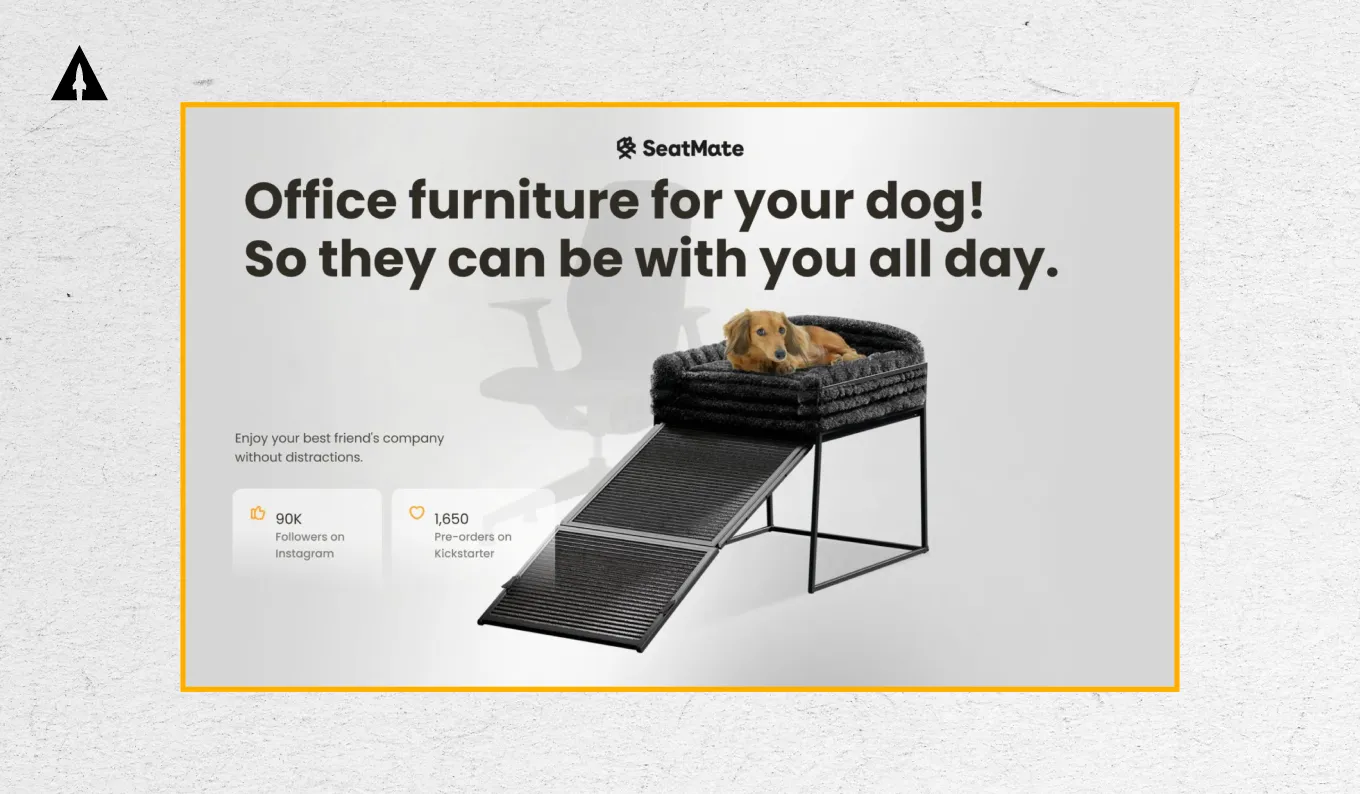
“Getting that buy-in initially leads to more successful campaigns,” Andrew explains.
The psychology is simple but powerful. When someone puts down a dollar, they enter an unspoken agreement. They’ve made a micro-commitment. They’re more likely to follow through.
The data backs this up. According to LaunchBoom’s research, 20 to 30% of people who put down dollar reservations for hardware products typically convert to backers. SeatMate saw exactly that. “The dollar reservation funnel was kind of the magic that glued it together,” Andrew says.
On top of all that, they followed our advice for the best time to launch a Kickstarter campaign and reaped the rewards.
The Comparison That Changed Everything
For their second campaign, SeatMate tried something different. They skipped the dollar reservation funnel and focused on building Kickstarter page followers instead. They figured page followers had converted at 26% on their first campaign, so that must be the key metric.
They were wrong. “We thought it was the page follower metric that was important,” Jake admits. “We got up to 10,000 page followers on the second campaign, where we raised $270,000. On the first one, we only had about 3,000 page followers and we raised almost $500,000.”
The page follower conversion rate on the second campaign? Just 7%. Down from 26% on the first campaign. The difference? The dollar reservation funnel.
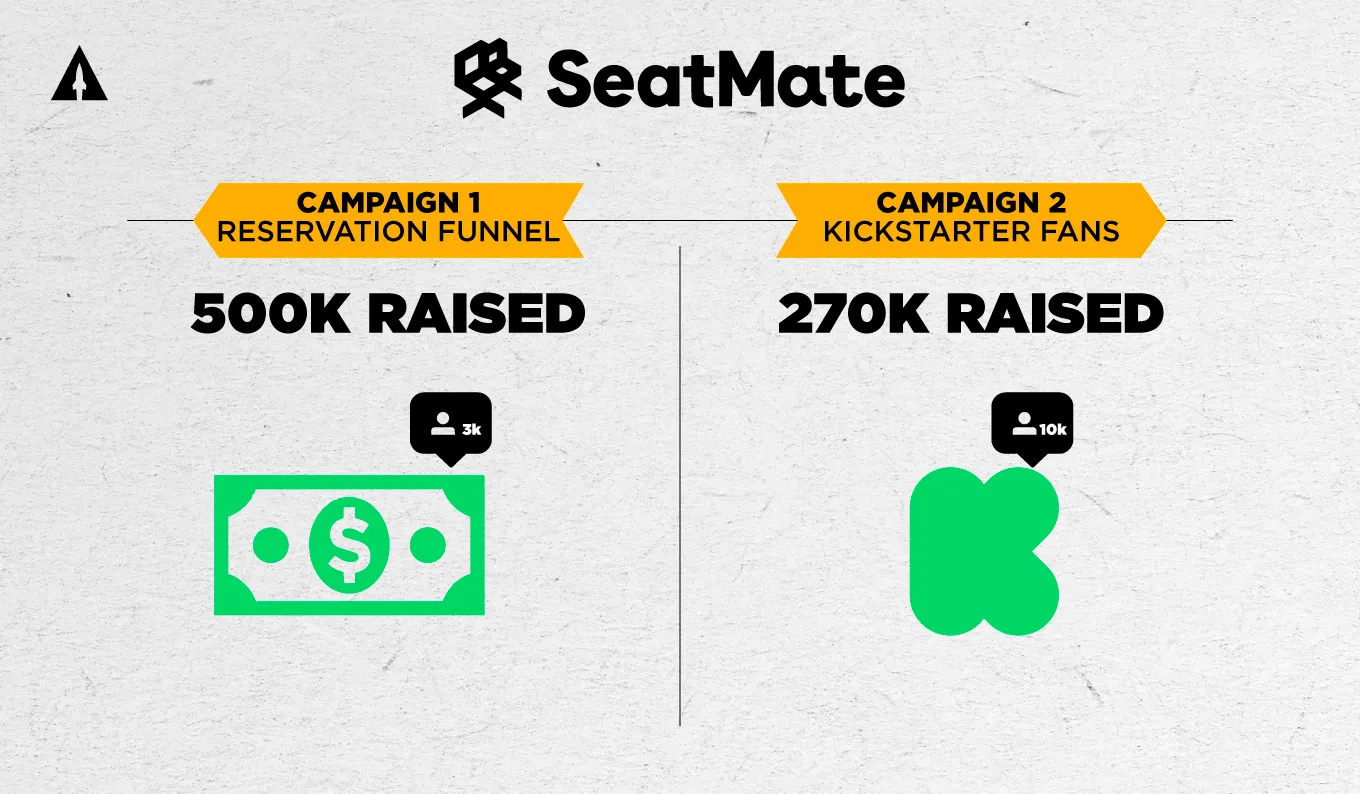
“We really like going back, having the two to compare, we really, you know, the dollar seems to be the actual metric that we want to be able to track,” Jake says.
Andrew thinks he knows why the page follower conversion dropped so dramatically: “Most of our buyers are not familiar with Kickstarter and then Kickstarter gives the language that like, hey, you might not receive this. Which is scary.”
The dollar reservation creates commitment before people hit a platform they’re not familiar with.
Designing for Virality: The Framework Behind Remarkable Products
Most product designers only focus on solving problems. Jake & Andrew do that and more. They also engineer virality directly into the product from the first sketch.
“We’re designing for virality,” Jake explains. “We want to bake the, like Andrew said about the virality in the beginning that we want to bake virality and shareability into the product from day one. We’re engineering it from day one. That is part of the conversation from like the first sketch.”
Jake has a mental framework for creating viral products, built from 14 years of product development experience. He breaks it down into specific mechanisms:
- Fusion: Join two useful things together. Like a pencil and eraser. For SeatMate, it’s an ottoman that’s also a ramp.
- Transformation: Something that changes from one thing to another in a single gesture. The ottoman that opens to reveal a ramp. The ASMR satisfaction of watching something transform.
- Turning it on its side: Taking something familiar and reimagining it. Like when someone stood a stapler upright instead of laying it flat.
- Scale shift: Going from small to big or big to small. Dice that become bean bags. Miniatures that become full-size furniture.
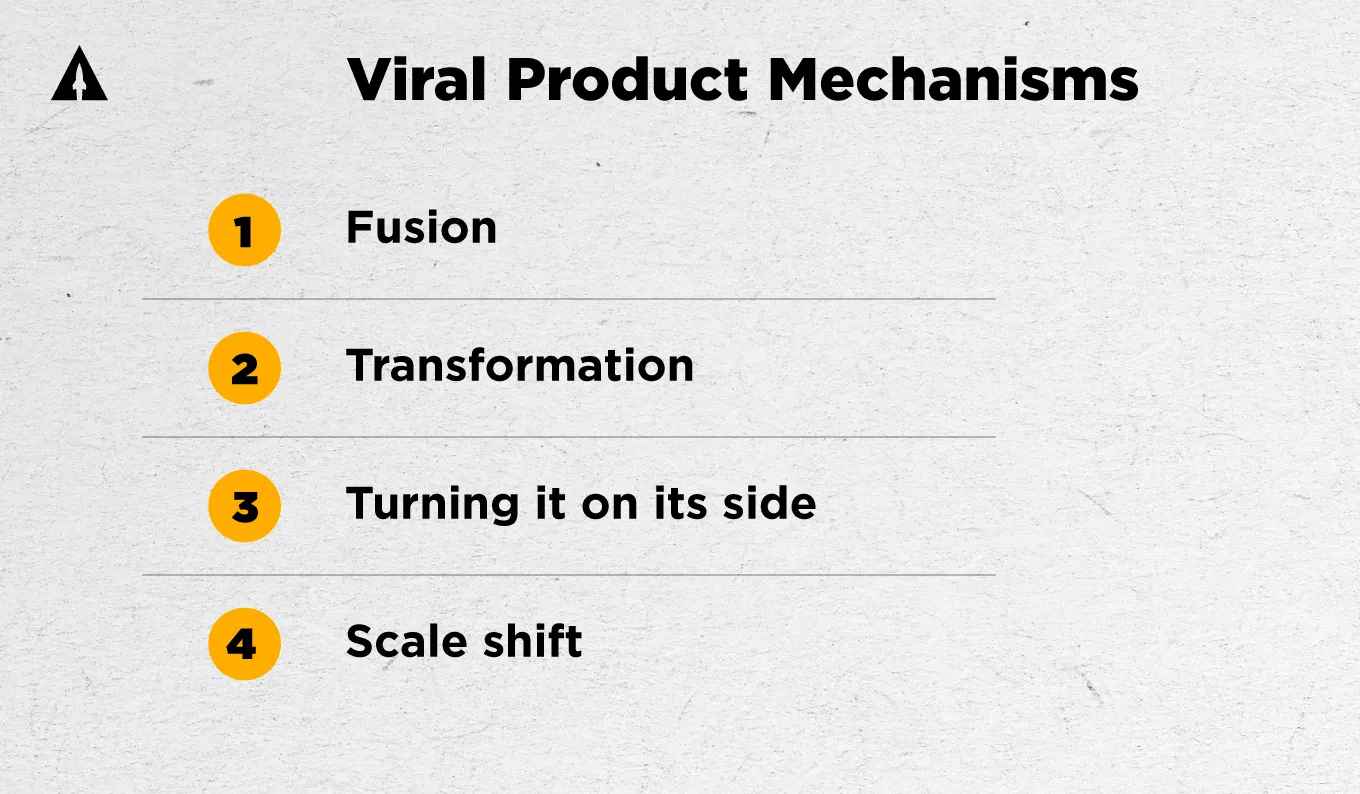
“Those are some of the different approaches,” Jake says. “Some of the mechanisms that I think you can take to use and make your product remarkable and make it worth sharing.”
The philosophy comes from Seth Godin’s Purple Cow: you need to make something remarkable. Something worth sharing. “If you were driving down the highway and you saw a purple cow on the highway, it’s very likely that when you got to town, you would tell someone about it because it was worthy of sharing,” Jake explains.
But in today’s attention economy, it’s even more extreme. “It’s like you’re on a bullet train. What do you see out the window? Cause it’s an attention economy. You’ve got to have that first snappy three seconds.”
The LaunchBoom Effect
Jake is clear about what working with LaunchBoom unlocked for him:
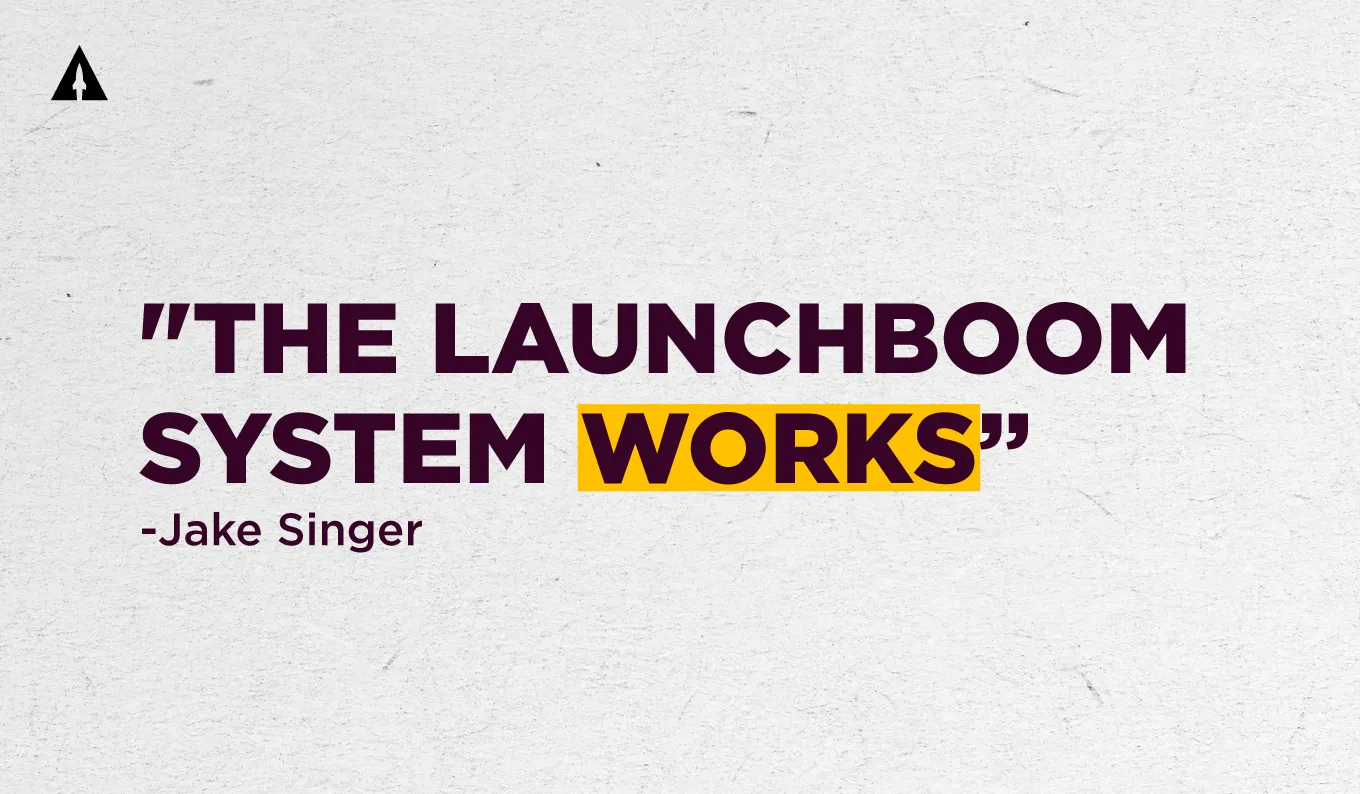
“The LaunchBoom system works and I think that’s, you know, I’d love to just kind of say that out loud. The advice that your team has given us, the system that you put in place, it basically changed my perspective of being a product creator into someone who launches products.”
He’d wanted to launch on Kickstarter for 10 years. But until he met Andrew and connected with LaunchBoom, he didn’t have all the pieces in place. “Even having a background in product development, the one dollar reservation, understanding Facebook ads, landing pages, this has really rounded out my experience as a product designer.”
Clearly, working with the best crowdfunding marketing agency was well worth it.
Ready to Launch Your Own Viral Product?
SeatMate’s story shows what’s possible when you combine remarkable product design with strategic marketing and a proven launch system. They went from a prototype built in a Missouri tool shop to a brand with over a billion organic views and half a million dollars in Kickstarter funding.
But it didn’t happen by accident. They engineered virality into their product from day one. They validated demand before manufacturing. They used the dollar reservation funnel to build real commitment. And they focused relentlessly on creating something remarkable that people wanted to share.
If you’re working on a product and want to explore how LaunchBoom can help you create a successful launch, we’d love to talk. Book a call with our team to discuss your project and learn how we can help you turn your product idea into a funded reality.
