


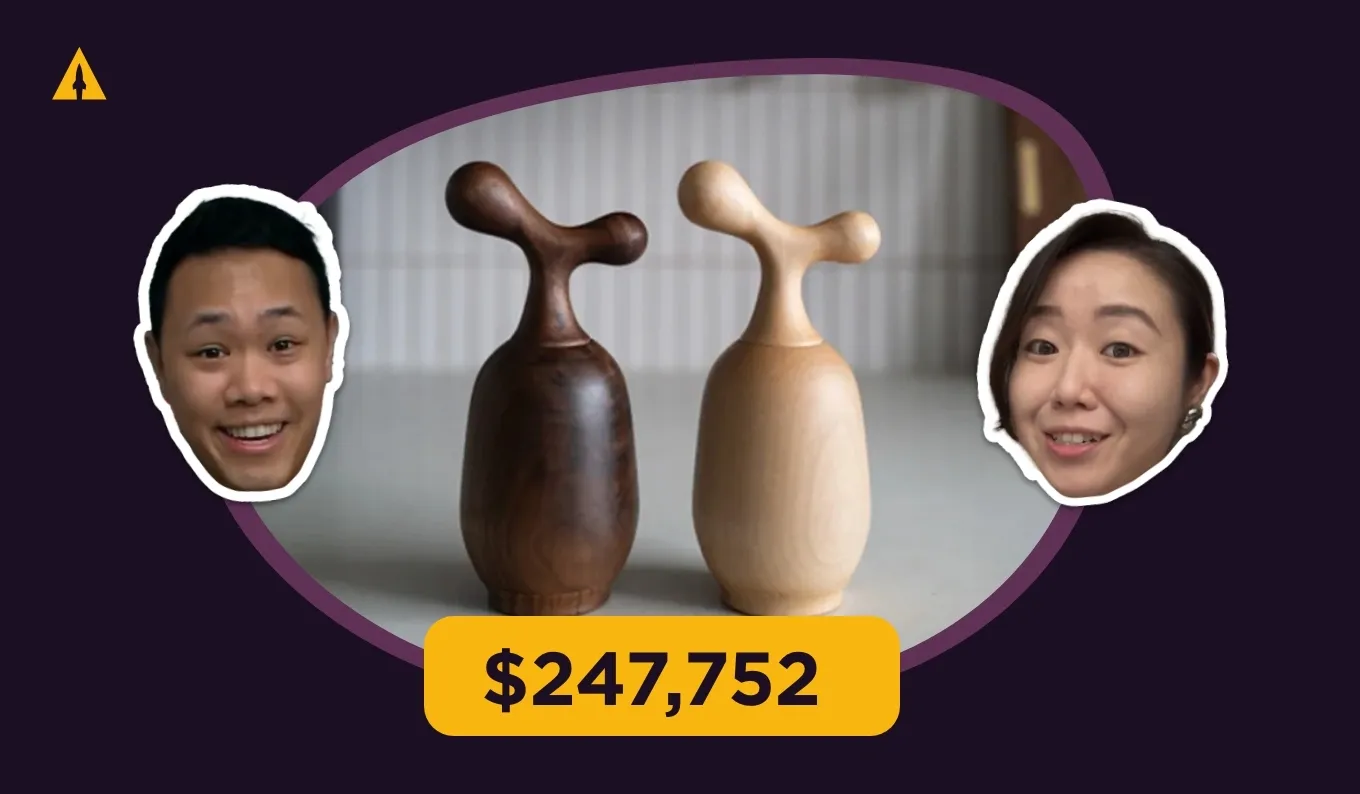
Sometimes the best product ideas come from the most unexpected places. For Jeremy and Layla, it was a single peppercorn in Cambodia that changed everything. What started as a casual food expedition turned into a $247,000 Kickstarter campaign for Piper, their premium pepper grinder that balances both form and function.
But here’s the thing that makes their story even more remarkable: they had zero experience creating physical products before this. And they went from initial idea to a campaign launch in just four months.
Now, their first launch failed, raising only $15K. But they re-launched two and a half months later after working with us and raised nearly $250K. Let me walk you through exactly how they did it.
Also, if you prefer to watch the podcast I did with them instead, check it out here:
The Aha Moment That Started Everything
Jeremy’s story begins with what he calls a “crazy realization” during a trip to Cambodia. As someone who loves exploring different cuisines and ingredients across Asia, he was used to discovering new flavors. But this time was different.
“I had this crazy realization when I was eating a peppercorn from this part of the world that I had been lied to my whole life on what peppercorns could taste like,” Jeremy explains. “It was just this aha moment where I was like, well, I haven’t tasted this before coming from Canada and North America.”
The gap was obvious. Amazing farms were producing incredible peppercorns, but the rest of the world didn’t know about it. When Jeremy brought some premium peppercorns back to Singapore for Layla to try, even her admittedly “untrained palate” could taste the huge difference.
But then they hit another problem. “I didn’t have a proper pepper grinder at home,” Layla recalls. “So I went looking for pepper grinders with the intention to unlock the flavors of the awesome peppercorns that Jeremy brought from Cambodia. And then I realized it’s actually not easy to find a pepper grinder that I like and functionally perform well at the same time.”
That’s when they knew they had found their opportunity.
The Problem with Every Other Pepper Grinder
Before diving into product development, Jeremy and Layla did what any smart entrepreneur would do: they “geeked out” about pepper grinders and studied everything available on the market. What they found were three main categories, each with their own flaws:
Classic Chess Piece Grinders: The most common ones require unscrewing a knob on top to access the pepper chamber. “That for us is quite a hassle,” Layla explains. “And those pepper grinders also tend to have an internal mechanism that is based on technology from like centuries ago. So in order to get a lot of output for pepper, you have to probably do a wrist workout there.”
Performance Grinders: These grind amazingly well but tend to be “more masculine and minimalist.” They identified a potential audience who didn’t resonate with these aesthetics.
Designer Grinders: Beautiful form factors, but they perform the same way as classical grinders with “a little bit of confusing and annoying user experience.”
The solution? Create something that balances both form and function. As one of their customers later told them, “Piper basically created something that passes both the husband test and the wife test.”
Designing Something People Actually Want to Touch
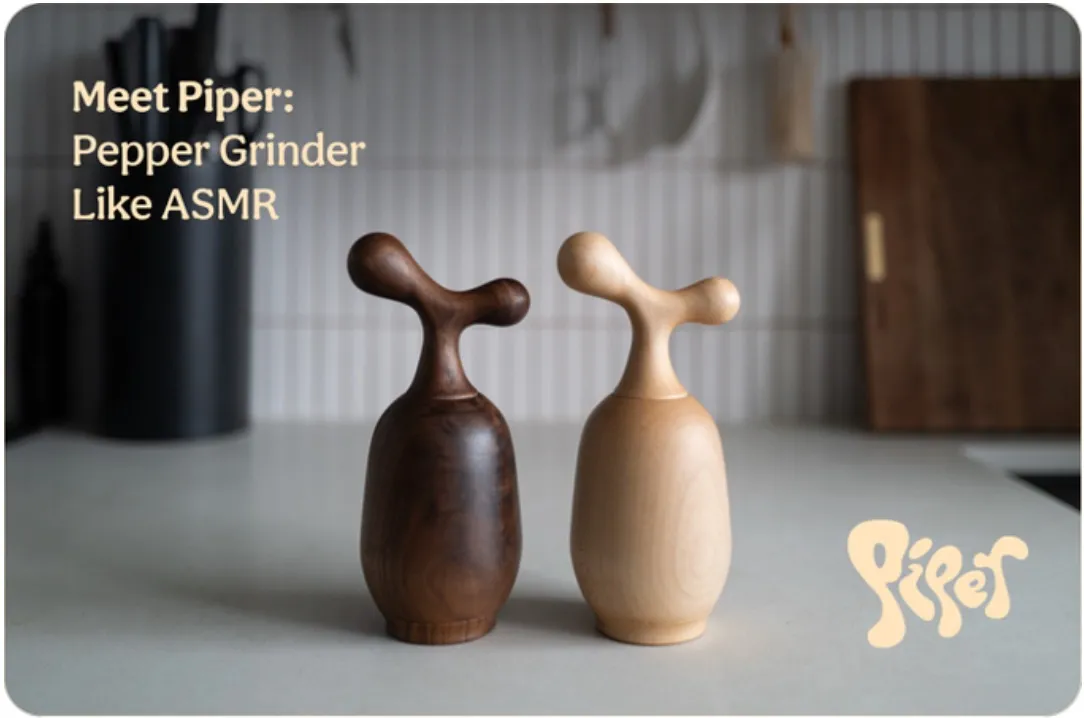
Creating a pepper grinder that looks as good as it performs required a completely different approach to design. “We actually look at a bunch of different inspirations in terms of objects we hold because we wanted to make something that feels really good in your hands,” Layla explains. They studied massagers for tactile inspiration and wine openers with twist handles for intuitive motion.
Instead of hiring expensive design agencies, they leveraged their previous experience with AI tools to rapidly prototype visual concepts. They’d sketch out general directions, then use generative AI to create multiple design variations.
These concepts went straight to what they called their “design committee” – 20 to 30 of their closest friends who represented their target customer persona. This group provided immediate feedback on which designs clicked and “which one sparks most joy among the audience.”
The result? A pepper grinder with a unique, attention-grabbing design that stops the scroll on social media while delivering superior performance.
From Zero to Launch In Just 4 Months (With No Experience)
Remember, Jeremy and Layla had never created a physical product before. So how did they go from idea to working prototype in just three months? “We were just so motivated to build our first physical product and so excited by the energy of our design committee,” Jeremy says.
But motivation alone doesn’t create products. They needed resources and expertise. That’s where serendipity played a role. Jeremy met the co-founder of a coffee grinder company in a coffee shop. Within a week of pitching their pepper tasting idea, this manufacturer agreed to provide technical resources to help evaluate feasibility.
“We ended up getting a couple of resources from his team that could help us on the technical feasibility side,” Jeremy explains. “And so Layla and I were just consistently iterating on product designs on AutoCAD. And these are all new skills that we had to acquire.”
The process became a constant back-and-forth: design something in AutoCAD, ask the manufacturing partner “is this doable?”, iterate based on feedback, repeat. This collaborative approach let them move incredibly fast while learning the technical constraints of physical product manufacturing.
The First Failed Campaign
By the four-month mark, Jeremy and Layla felt ready to launch. They had a working product, positive feedback from their design committee, and enough confidence to go live on Kickstarter.
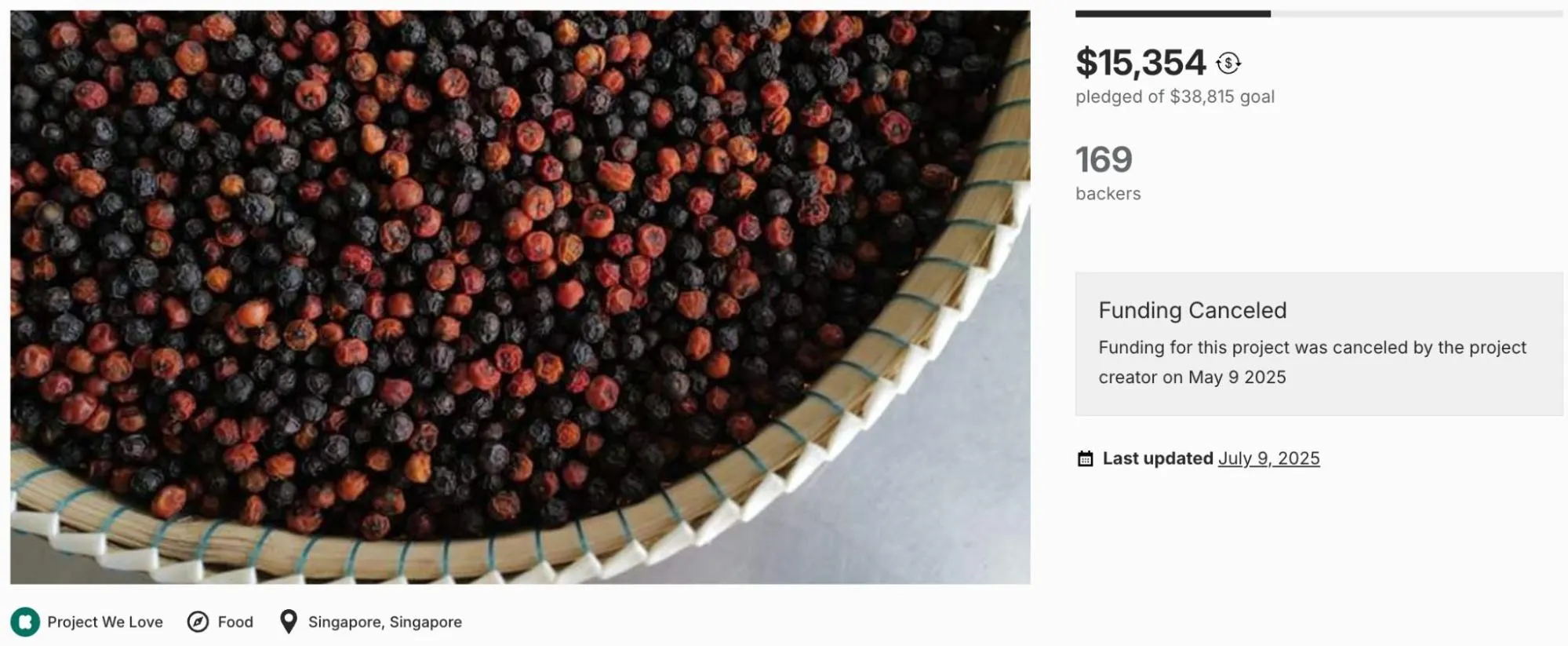
But they made some fundamental mistakes. “We were a pepper company trying to sell a pepper grinder,” Jeremy admits. “We focused too much on the peppercorn and people that were backing our campaign… it seemed from the feedback and the price point and everything like that people were focusing more on the pepper grinder.”
The positioning was completely wrong. Even their main campaign image featured the peppercorns themselves, not the grinder. After seven days and $15,000 raised (mostly from friends and family), they made a tough decision: shut down the campaign and start over.
“We almost needed to relearn how to play the game,” Jeremy says. That’s when they started looking for partners who understood Kickstarter specifically.
The $247K Comeback: What They Did Differently
Two and a half months later, they launched again. Same product, completely different result: $247,752 raised with over $100K on the first day alone.
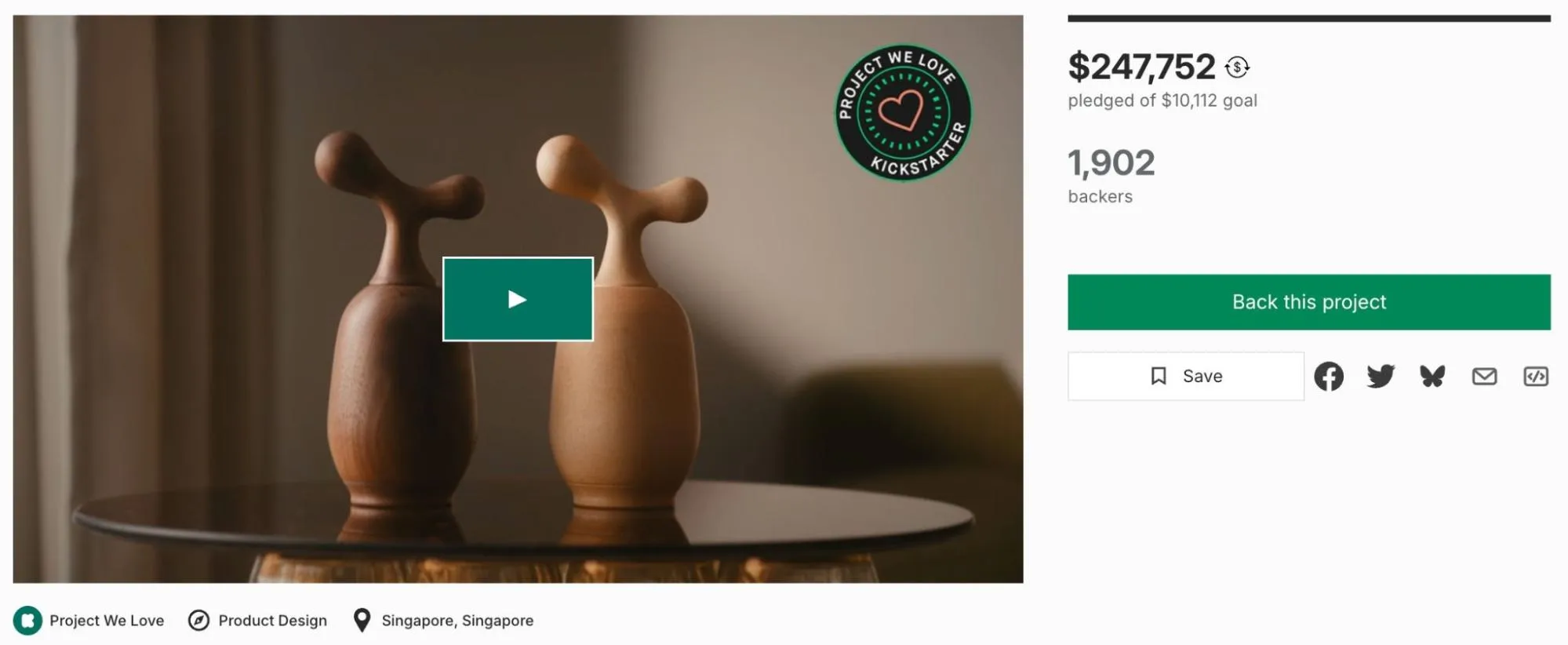
What changed? They worked with us at LaunchBoom. And we changed everything about their pre-launch strategy.
“The truth is we focused on what you guys preach, which is that pre-launch phase,” Jeremy explains. “Mistake number one was focusing too much on organic. Organic will get you that far, friends and family will get you to that $15K number, totally fine… But we knew we had something that the numbers weren’t showing what we actually had.”
The Pre-Launch Playbook
Instead of relying on organic reach, they ran a systematic pre-launch campaign:
- Test ads targeting different customer segments
- Drive traffic to a landing page to collect emails and reservations
- Hit specific benchmarks before going live (10,000 emails and 1,900 reservations)
- Time the launch strategically (they delayed by two weeks to avoid Prime Day and July 4th)
Here’s a look at the top of the landing page they created using our software LaunchKit.
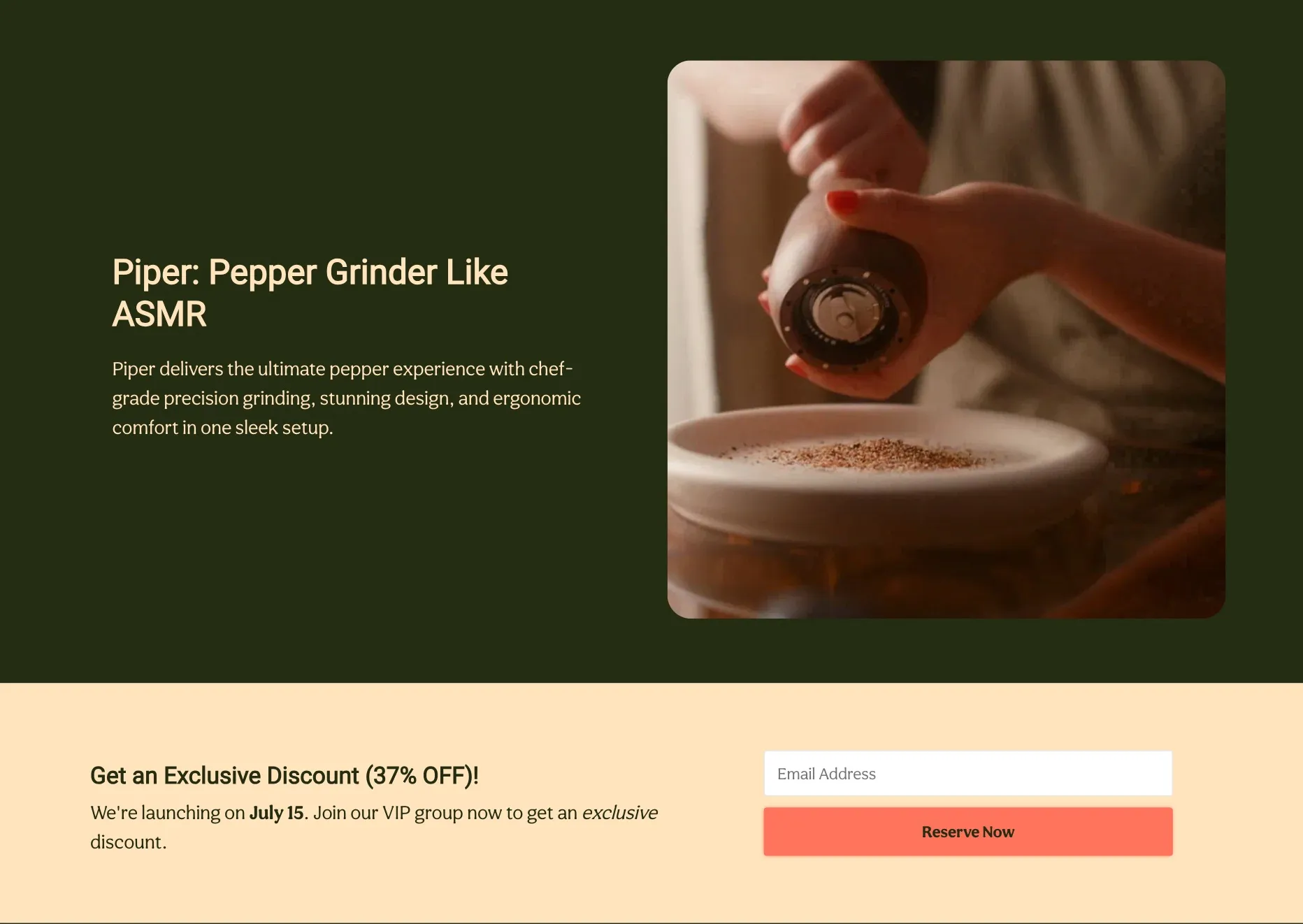
The numbers speak for themselves. They spent $17,000 on pre-launch ads over two and a half months, acquiring reservations for about $10 each. When they launched, they knew they’d smash their day-one goal.
The Ad Testing Process
Jeremy and Layla approached ad testing like complete beginners – because they were. “We’re actually such newbies at this,” Jeremy admits. But they followed the fundamentals: test different ad creative and copy against different customer segments. They hypothesized five customer segments:
- People who watch cooking shows like MasterChef
- People who buy high-end Wagyu beef and do barbecue
- People who buy homewares
- People who buy high-end kitchen appliances like Smeg
- Coffee nerds (clear adjacency with the grinding process and ritual)
Their testing strategy was smart: try everything organically on Instagram first, then turn the best-performing content into paid ads.
The Creative That Actually Worked
Some ad creatives worked across all segments. Others were highly specific to particular audiences – a surprising discovery for the team. The standout performers were:
ASMR Grinding: “We had basically a suggestion for you to turn your audio out. And then people realized this grinder grinds really in a really satisfying way,” Layla explains. This tapped into the popular ASMR ad format while highlighting the product’s premium feel.
Plastic-Free Messaging: Later in the campaign, messaging around being “plastic free” resonated strongly. Many customers were using grocery store pepper grinders with plastic mechanisms and decided “this is a point to upgrade and stop eating microplastics along with their pepper.”
The Live Campaign Strategy
For the live campaign, they spent another $17,000 running their own Meta ads, plus $14,000 through BackerKit in the final seven days to boost volume. But they quickly learned that what worked in pre-launch didn’t translate 100% to the live campaign.
The biggest adjustment was geographic focus. During pre-launch, they tested worldwide markets. But for the live campaign, they doubled down on the US, which ended up representing 60% of their customers due to better conversion rates.
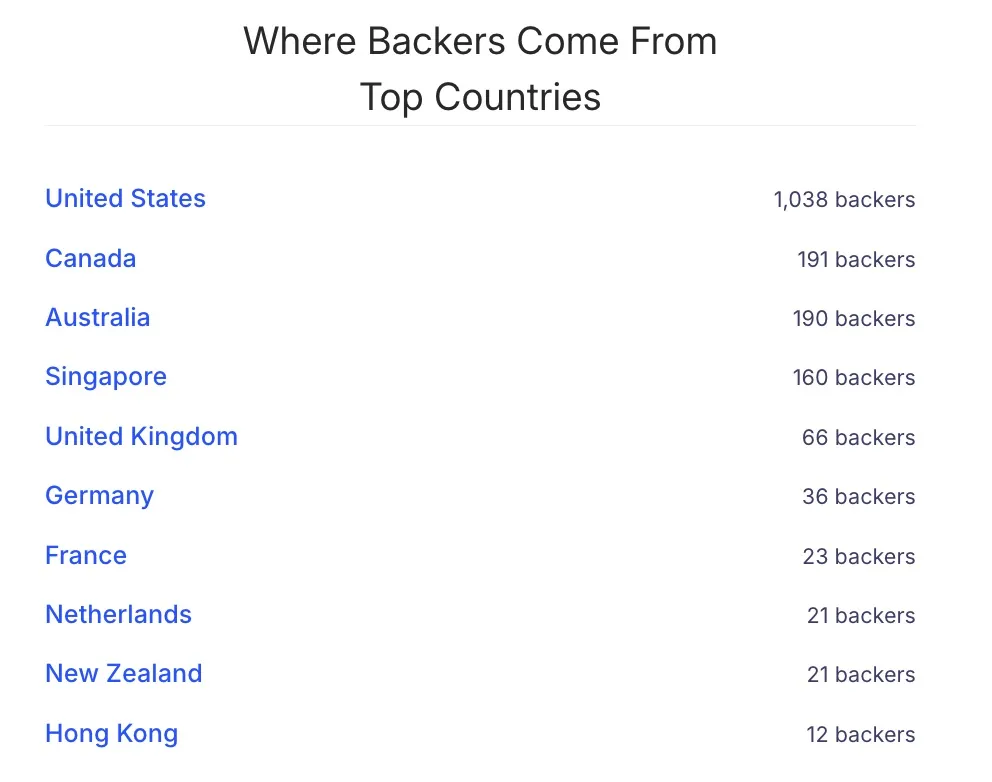
The Numbers Behind the Success
Let’s break down their total ad investment:
- Pre-launch ads: $17,000 (generated 10,000 emails and 1,900 reservations)
- Live campaign ads: $17,000 (self-managed)
- Final week agency ads: $14,000 (3.8x ROAS)
- Total ad spend: ~$48,000
Total raised: $247,752
That’s roughly a 5x return on their advertising investment – and that doesn’t account for the long-term value of the email list and customer relationships they built.
The Advice for First-Time Creators
When I asked what advice they’d give to creators starting from zero, their answers were practical:
Draw from your existing experience: “Although I had no experience in industrial design, building physical products, I basically applied the same principles around building digital products and doing marketing in the past,” Layla explains.
Study successful examples: “We did a lot of research and look at a lot of brands and successful Kickstarter projects in similar categories and basically drilled a lot into what they have done that make them successful.”
Pick something you’ll obsess over: “It’s pick something that you’re willing to obsess over,” Jeremy emphasizes. “For us, it’s pepper and pepper grinders. But for you and for anybody listening, it might be something else. But at the end of the day, it’s just something that you can’t stop thinking about.”
Ready to Launch Your Own Product?
Jeremy and Layla’s story proves that you don’t need years of experience or massive budgets to launch a successful product. You need the right strategy, willingness to test and learn quickly, and partners who understand the crowdfunding game. Their journey from complete beginners to $247K in seven months shows what’s possible when you combine a great product with systematic pre-launch marketing.
If you’re sitting on a product idea and wondering how to turn it into a successful campaign, we’d love to help you avoid the mistakes Jeremy and Layla made the first time around. At LaunchBoom, we’ve helped hundreds of creators navigate the complexities of crowdfunding, from pre-launch strategy to live campaign optimization.
Ready to turn your product idea into our next success story? Let’s talk about how we can help you launch.
